A lot of people ask this because combing feels like “doing something” for your hair. You run a comb through, your scalp wakes up a little, and it is easy to believe you just boosted growth. But hair growth is not like turning on a switch. It is a slow body process, and most of what we notice day to day is actually breakage, dryness, tangles, and shedding.
Here is the honest truth. Combing can support healthy hair, help you keep the length you already grow, and make your scalp feel better when you do it gently. The British Association of Dermatologists also advises avoiding harsh brushing or combing when hair is shedding, which is a good reminder that technique matters more than force. Let us break down what combing can do, what it cannot do, and how to do it the right way so you see real results, not just wishful thinking.

What Does Combing Actually Do to Your Hair and Scalp?
Combing is mainly a hair care tool, not a growth treatment. It helps detangle knots so your strands do not twist, snag, and snap. When knots sit in your hair, they create weak points. The more you pull through them, the more you lose length through breakage.
Combing also helps spread your natural scalp oils. Your scalp makes sebum, which is your built in conditioner. When you gently comb, you move a little of that oil down the hair shaft. This can make your hair look shinier, feel softer, and be less dry at the ends.
On the scalp side, combing can lift away loose flakes and product residue sitting on the surface. Done gently, it can keep the scalp feeling fresher. Done aggressively, it can irritate the scalp, scratch the skin, and inflame follicles.
How Hair Growth Works and Where Combing Fits In?
Hair grows from the follicle under your skin, not from the ends of your hair. Each strand follows a cycle with phases like growth, transition, rest, and shedding. Healthline explains these stages as anagen, catagen, telogen, and exogen. (Healthline) Your growth rate and the length of your growth phase are strongly influenced by genetics, hormones, age, and health.
So where does combing fit in? Combing does not control the follicle cycle. What it can control is how much length you keep. If your hair grows but breaks at the same pace, you will feel like your hair “never grows.” Gentle combing reduces the daily damage that steals your length.
Scalp Blood Flow and Gentle Combing
Any light stimulation of the scalp can increase circulation for a short time, similar to a quick massage. Healthline mentions that brushing gently is like a mini massage and may encourage blood flow.
But here is the key point. Increased blood flow does not automatically mean faster growth for everyone. It is supportive, not magical. Think of it like watering soil. It helps the environment, but it does not change the seed’s genetics.
If you want the circulation benefit without damage, use soft pressure and slow movements. If you feel heat, soreness, or tenderness, you are doing too much.
Can Regular Combing Make Hair Grow Faster or Thicker?
Faster growth is unlikely. Your follicles are on their own schedule. What regular combing can do is help your hair look better while it grows and help you keep more of what you grow.
Thicker hair also depends on how many active follicles you have and the diameter of each strand. Combing can make hair appear fuller in a few ways:
- It lifts hair at the roots, giving more volume.
- It reduces tangles and clumping, so hair spreads out instead of sticking together.
- It reduces breakage, so your ends look denser over time.
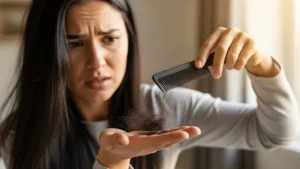
Also, combing removes hairs that were already shed and ready to fall. That is why you may see hair in your comb. It can feel scary, but it is often normal shedding being collected in one place.
Over Combing vs Gentle Combing: What’s the Difference for Hair Health?
Over combing usually means too much force, too many passes, or combing at the worst times, like when hair is soaking wet and fragile or when it is very dry and snarled. Gentle combing is controlled, minimal, and done with a plan.
Use the checklist below to keep combing helpful, not harmful. Two simple changes, pressure and direction, make a huge difference.
- Choose the right comb for your hair type, like a wide tooth comb for thick, curly, or fragile hair
- Start from the ends, then move upward slowly to remove knots without yanking
- Hold the hair above the tangle with your hand to reduce pulling at the scalp
- Comb less when your hair is already smooth and more when you are detangling carefully
- Avoid combing aggressively when you have scalp inflammation, sores, or severe dandruff
- Keep your comb clean so you do not spread oil, sweat, and product back onto the scalp
Realistic Results You Can Expect From Proper Combing
If you comb gently and consistently, the first changes you notice are usually comfort and manageability. Less tugging. Less pain. Easier styling. Your ends may feel smoother because you are not snapping them as much.
Within a few weeks, many people notice less breakage. That looks like fewer short snapped hairs, fewer rough ends, and less frizz that comes from broken strands sticking up. Over a few months, your length retention improves, meaning you actually keep the growth you are already producing.
What you should not expect is an overnight inch of growth just because you combed daily. Hair growth is slow. The win here is keeping your strands strong enough to reach the length you want.
Conclusion
So, does combing help with hair growth? It helps in the way that matters most for most people: it helps you keep your hair healthier so you retain length. Gentle combing supports scalp comfort, spreads natural oils, reduces knots, and lowers breakage. That can make your hair look longer, fuller, and better over time, even though it does not control your follicle speed.
If you want to get more out of your routine, pair gentle combing with a nourishing scalp oil that improves slip and calms dryness. Explore Dr Boogie Secrets and try the Bionic Hair and Scalp Oil as a simple add on to your routine, especially if you struggle with itching, brittle strands, or constant tangles.