Introduction
Bone marrow is basically your body’s blood making factory, and that matters because hair follicles live off what your blood delivers. One review in The Consultant Pharmacist notes that in a healthy adult, bone marrow produces around 500 billion new blood cells every day to keep circulation stable. Now you may be hearing a new claim online that bone marrow can “wake up” hair follicles and bring back thicker hair. Some of that talk comes from real science around stem cells and growth factors, and some of it comes from marketing. Keep reading and I will explain what bone marrow actually is, how it connects to hair health, what it can realistically do, and what you should not expect.
Understanding Bone Marrow and Its Connection to Healthy Hair
Bone marrow is the soft tissue inside your bones that helps your body make blood cells. That matters for hair in a basic way: hair follicles are living structures, and they rely on oxygen delivery and a steady supply of nutrients through the blood. There is also a second reason bone marrow shows up in hair conversations. Bone marrow contains different types of stem cells and support cells that can release signals your body uses for repair. Researchers have been studying these signals for skin and tissue healing, and that is where the hair growth interest comes from. But here is the key point: bone marrow is not a “hair ingredient” in the way shampoo is. It is a complex tissue. Whether it helps hair depends on what people mean by bone marrow, how it is used, and what kind of hair loss we are talking about.How Hair Follicles Respond to Nutrient Rich Support
Think of a hair follicle like a tiny factory. It needs raw materials to build hair fiber, and it needs a calm work environment to keep producing. When your body is low in nutrients like protein or iron, or when stress and illness push the body into survival mode, hair often shifts into a resting phase. That is why hair shedding can happen weeks after a stressful event. Nutrient rich support helps most when it fixes a real gap. If someone is not getting enough protein, improving protein intake can reduce breakage and help hair look fuller over time. If someone has low iron, correcting it can help the hair cycle normalize. But if nutrients are already fine, adding more does not automatically create faster growth.Stem Cells and Growth Factors and Why Bone Marrow Is Uniquely Powerful
Stem cells are special because they can support repair and healing in different ways. Bone marrow is one of the most studied sources because it contains cells that can release helpful signals, including growth factors and messenger molecules that influence inflammation and tissue repair. In hair research, the interest is not that bone marrow stem cells magically become hair. The interest is that their signals might support the scalp environment and encourage follicles to function better. Reviews of regenerative approaches for hair loss discuss stem cell based and stem cell derived therapies as promising, but still developing, with different methods and varying results. When you hear clinics talk about bone marrow for hair, they are usually talking about medical procedures that use your own cells or cell derived concentrates. This is very different from a topical product that simply uses the phrase “bone marrow” on a label.What These Growth Factors Can and Cannot Do for Hair
Growth factors are like signals that tell cells when to repair, when to calm inflammation, and when to build. In the scalp, the theory is that certain signals may support the hair cycle, help follicles stay in the growth phase longer, or improve the condition of the surrounding skin. What they can do, in the best case, is support a healthier scalp environment and improve hair density for some people, especially when used as part of a professional treatment plan. Reviews of regenerative hair strategies describe multiple pathways and signals involved in hair regeneration, but they also show that this area is still evolving. What they cannot do is rewrite genetics overnight or reverse every kind of hair loss. If follicles are inactive for a long time, or if the main driver is hormonal and genetic pattern hair loss, results are usually modest without a full plan. Also, growth factors in topical products face real limits, because skin is designed to be a barrier. Many growth factor discussions in dermatology note practical issues like stability, delivery, and penetration.Hair Strength vs New Hair Growth Understanding the Difference
This is the part that confuses most people. Hair can look thicker for two totally different reasons. One reason is true new growth. That means more active follicles producing hair, or hairs staying in the growth phase longer, leading to better density. The other reason is hair strength and length retention. If your hair breaks less, you keep more length. That makes you feel like your hair is “growing faster,” even though the growth rate is the same. Stronger hair also reflects light better, feels smoother, and looks fuller. A lot of products that claim growth are actually working on strength, softness, and scalp comfort. Those are still valuable wins. They just should not be confused with turning on brand new follicles.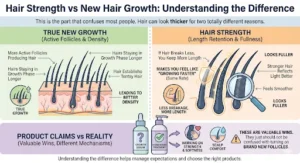
A Look at Bone Marrow Based Hair Products and Whether They Are Worth the Hype
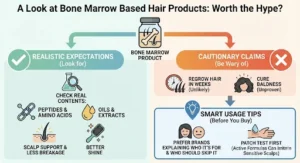
Many “bone marrow” hair products are not actually delivering living bone marrow cells to your scalp. Most are using bone marrow extract, proteins, peptides, or a story that sounds medical. Some may be inspired by stem cell research but packaged as cosmetics. Before you spend money, use this simple filter. Look for clarity, not buzzwords.- Check what it really contains, like peptides, amino acids, oils, or extracts
- Look for realistic claims like scalp support, less breakage, or better shine
- Be cautious with promises like “regrow hair in weeks” or “cure baldness”
- Prefer brands that explain who the product is for and who should skip it
- Patch test first, because active formulas can irritate sensitive scalps
Is Bone Marrow a Magic Cure for All Hair Loss Truth vs Marketing
No single ingredient fixes every type of hair loss, and bone marrow is not an exception. Hair loss can come from genetics, hormones, traction from hairstyles, thyroid issues, low iron, postpartum changes, autoimmune conditions, stress related shedding, or inflammatory scalp problems. These are different problems with different solutions. The marketing trap is mixing them together. A product might show a dramatic before and after, but you do not know if the person had temporary shedding that would improve anyway. You also do not know what else they did, like changing iron levels, using proven treatments, or stopping damaging styling. If you are dealing with sudden shedding, patchy loss, scalp pain, or rapid thinning, a dermatologist is the right next step. That is how you avoid wasting months on guesses.Why Scalp Condition Determines the Success of Any Hair Treatment
When the scalp is inflamed, itchy, flaky, or oily with heavy buildup, follicles can struggle to function at their best. You may also scratch more, wash less, or overuse harsh products, and that cycle can keep the scalp stressed. This is why scalp basics matter even if you pursue advanced options. Gentle cleansing, consistent washing, avoiding heavy layering, and addressing dandruff or irritation early can make every other step work better. It also makes your hair look better faster because shine, softness, and breakage improve when the scalp is comfortable.Nourish and Strengthen Hair with Dr. Boogie Hair Oil
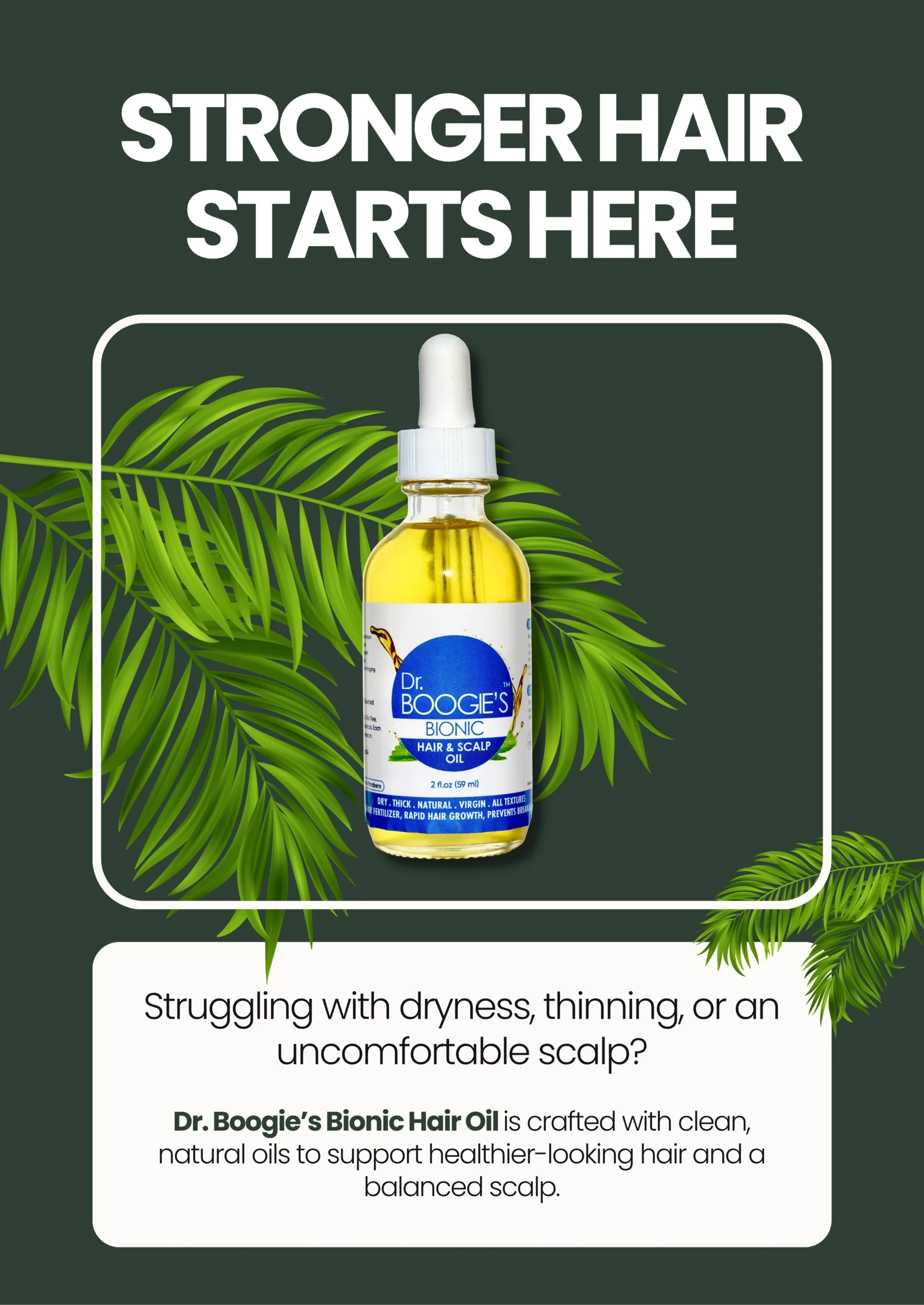
Complementing the internal support that nutrients and bone marrow provide, Dr. Boogie Hair and Scalp Oil delivers external care to strengthen follicles and calm the scalp. With potent oils like Black Jamaican Castor and Jojoba, along with Tea Tree and botanical extracts, it reduces irritation, locks in moisture, and enhances hair elasticity, helping hair appear healthier and more durable while supporting overall follicle function.
Shop Dr. Boogie Hair Oil