Sweet, juicy, and chock-full of vitamins, could this tropical fruit really be the key to stronger, healthier locks? Let’s get a dose of the truth out there first: mango isn’t going to miraculously grow your hair back or cure severe hair loss on its own.
But before you throw up your hands, there is infinitely more good news as well. Mango has specific nutrients in it that promote a healthy scalp, enhance the texture of your hair, and create an environment where you can help your hair to grow, but only with proper maintenance.
The real question is not: Does mango help hair grow? But more about applying mango to prevent hair fall? How will mango fit into the bigger equation of full hair health?
In this guide, we will cut through the hype and give you the real story. We’ll go through the real vitamins in mango that benefit your scalp and hair, clarify what (and what’s not) is possible with mango, and give you a primer on how to include this bountiful fruit as part of, not instead of, your comprehensive hair care approach.
Whether you experience dryness, brittleness, lackluster shine, or are just looking to give your hair the care it needs to be healthy and strong, recognizing mango’s actual function can help you make better choices about how you treat your strands.
Mango’s Reputation as a Nutrient-Dense Summer Fruit
Before we get into how it relates to hair, let’s first take a moment to praise why mangoes have gained such star status in the health and wellness landscape.
Mangoes aren’t just tasty; they’re downright nutritious, with a positive impact on overall health. Mangoes are a nonnegotiable source of nutrition in many tropical regions where the fruit grows abundantly.
What’s Actually Inside a Mango:
One cup of fresh mango supplies:
- Vitamin A (beta-carotene): 25% of your daily dose for cell growth and tissue repair
- Vitamin C: 76% of what you need in a day, crucial for collagen production and antioxidant defence.
- Vitamin E: Vital in protecting cells from oxidative stress.
- B vitamins, Such as folate and B6, are essential for cell metabolism.
- Antioxidants: Such as mangiferin, which is anti-inflammatory.
- Fiber: Indirectly impacts nutrient absorption through the health of your gut.
Why This Matters for Hair:
Hair follicles are among the most metabolically active cells in your body. They never stop dividing and making new cells to form hair strands. And it takes a generous amount of vitamins, minerals, and antioxidants to accomplish this.
When you feed yourself nutrient-rich foods like mango, so the theory goes, you’re giving hair follicles the critical supplies they need to thrive. It’s sort of like providing optimal fuel to an engine.
The Summer Fruit Advantage:
Mangoes are in season during the summer, and that’s pretty good news for your hair. Basking in the summer sun and heat can strain your scalp and parch your hair. Mango, with a high water content (about 83%), helps keep your skin hydrated and provides vitamins that help fight UV damage and environmental stress.
In ancient wellness systems such as Ayurveda, mango is also considered a cooling fruit, meaning it helps temper heat in the body and reduce inflammation (including on the scalp).
Vitamin A and Its Role in Scalp Oil Balance
Let’s get a closer look at one of mango’s key hair-healthy nutrients: Vitamin A, which you get from beta-carotene in the fruit. And that’s where mango begins to demonstrate its true worth for the hair. The role of vitamin A in the production of sebum. Sebum is your scalp’s natural oil, and it’s there to:
- Keep your scalp well-conditioned, as it is your shield.
- Prevent excessive dryness and flaking
- Maintain the follicles in a healthy hair environment.
- Provide your hair with natural luster and smoothness.
Not enough sebum: Your scalp dries out, which leads to itching and irritation. Your hair is dry, making it more likely to snap and break.
An excess of sebum: Your scalp will be oily and greasy. Hair remains flat, and excess oil may block follicles, leading to hair fall.
Vitamin A is one factor that controls this connection. It helps the sebaceous glands (those tiny guys hanging out attached to each hair follicle and putting out sebum) do their job efficiently: not producing too much or too little, but just hanging out in that sweet spot.
How Mango’s Vitamin A Helps:
By making adding mango to your diet a habit, you’re in fact feeding your body with beta-carotene that will convert into vitamin A whenever necessary. This supports:
- Better scalp condition- more moisturized but without excess production of oil.
- Less flaking and dryness , which can make hair appear less shiny
- A better follicle environment for hair growth without interference
- Natural sheen when strands are well-hydrated
The Real-World Impact:
Those who regularly include mango in their diet often report that their scalp feels better, less itchy, less tight, and less flaky within a few weeks. It’s not dramatic hair growth, but it is building a foundation of scalp health for your existing hair to look and feel better.
Vitamin A deficiencies have been known to cause hair issues (dryness and hair loss -if you’re deficient), but again, more isn’t always better. Vitamin A overdose can, in fact, lead to hair loss. What is really neat about getting your vitamin A from whole foods, such as mango, is that you get it in safe, balanced amounts, controlled by your own body the way nature intended.
Seasonal Fruits and Their Impact on Hair Texture and Shine
Here’s something important that doesn’t get talked about enough: the fruits you eat seasonally can take a toll on your hair’s texture and appearance.
This is not about insane growth or texture changes; it’s about slight but real improvements in how your hair looks and feels.
Eating fruits in their natural season (like mangoes during the summer) means that you are eating them at peak nutritional density. The levels of vitamins, antioxidants, and water content increase to the maximum.
For hair, this is what that seasonal health kick means:
Increased Natural Shine
Summer mangoes are high in vitamin C, which helps produce collagen. Collagen is a structural protein that supports your hair shaft’s strength and elasticity.
Stronger collagen formation = smoother cuticles = more refraction of light = shinier hair.
These individuals eat mangoes regularly during this period, but notice that once mid-season arrives, their hair has a healthy sheen.
Improved Texture and Softness
The antioxidant vitamin E found in mango also protects hair proteins from free-radical damage. After consuming mangoes regularly for 4-6 weeks, most people will notice their hair is softer to the touch and less coarse.
This is particularly evident in heat-styled and sun-damaged hair.
Why Deeper Hydration is Going to Happen from the Inside Out
Mangoes contain high water content (83%), which helps hydrate the entire body, and you can see these effects in your hair’s moisture levels. Hydrated hair is stronger, more elastic, and looks shinier.
Reduced Frizz Over Time
The antioxidants in mango help fight oxidative stress, one of the causes of damaged hair cuticles and frizz. One mango won’t polish your frizz, but eating them day in and day out over weeks may leave you with smoother strands overall.
Mango-Based Practices That Support Healthier Hair
Beyond just eating mango, there are specific ways to incorporate this fruit into your routine that can enhance its hair benefits.
Practice 1: Consistent Dietary Inclusion
The Approach: Eat fresh mango 3-5 times per week during peak season.
Why It Works: Consistency matters more than quantity. Your hair follicles need a steady nutrient supply, not sporadic bursts. Regular consumption maintains vitamin levels that support ongoing scalp health.
How to Do It:
- Add fresh mango to morning smoothies
- Include in salads for lunch
- Enjoy as an afternoon snack
- Blend into yogurt or overnight oats
Practice 2: Mango + Protein Pairing
The Approach: Combine mango with protein-rich foods in the same meal.
Why It Works: Hair is made of protein (keratin). Vitamin C in mango enhances iron absorption from protein sources, and iron is crucial for hair growth. The combination supports better nutrient utilization for hair health.
How to Do It:
- Mango with Greek yogurt
- Mango salsa on grilled chicken
- Mango smoothie with protein powder
- Mango with cottage cheese
Practice 3: Hydration Amplification
The Approach: Eat water-rich mango while also increasing overall water intake.
Why It Works: Mango’s nutrients work better when your body is well-hydrated. Proper hydration helps transport vitamins to hair follicles and keeps scalp cells functioning optimally.
How to Do It:
- Drink a glass of water with your mango serving
- Make mango-infused water for flavor
- Eat a mango before or after workouts to replenish
Practice 4: The Scalp Massage Connection
The Approach: Perform a gentle scalp massage shortly after eating nutrient-rich foods, such as mango.
Why It Works: Scalp massage increases blood flow to hair follicles. When you’ve just consumed mango’s vitamins, that enhanced circulation helps deliver those nutrients to your scalp more efficiently.
How to Do It:
- 5-minute gentle fingertip massage
- Focus on areas where you want better hair health
- Use light pressure in circular motions
- Do this 2-3 times per week after mango-rich meals
Why Mango Cannot Restart Hair Growth on Its Own
Hair growth is largely genetically programmed, meaning your growth rate, density, and shedding patterns are primarily controlled by DNA and hormones. Mango’s vitamins can support this process, but they cannot override your genetic blueprint. If your genetics predispose you to thinning or slow growth, mango may help optimize what your body is already capable of producing, but it cannot rewrite those instructions. Similarly, when follicles become dormant due to conditions like male or female pattern baldness, thyroid disorders, or autoimmune issues, they require targeted medical intervention.
Treatments such as minoxidil, finasteride, PRP therapy, hormone regulation, or medical-grade light therapy work at a pharmaceutical or clinical level that nutrients from food simply cannot replicate.
Nutritional deficiency is also rarely the sole cause of hair loss for most people. While severe deficiencies can lead to shedding, most individuals who eat a reasonably balanced diet already meet their basic vitamin needs.
Adding mango in these cases enhances already adequate levels, supporting hair quality but not treating deficiency-driven hair loss. Additionally, many forms of hair loss are driven by inflammation or hormonal imbalance, such as alopecia areata or PCOS-related thinning.
Although mango contains antioxidants with mild anti-inflammatory properties, they are not strong enough to address these underlying conditions. Medical treatment is required to correct the root cause.
Hair Types and Conditions That Respond Best to Mango Nutrition
Not all hair is created equal when it comes to how it reacts to dietary support, and the benefits of mango on your particular hair depend on its texture and condition. Fine, straight hair often yields the most dramatic results, as it tends to reflect light, so you’ll notice differences in its texture and shine sooner after using the treatment.
Tired of dull, damaged highlights that fade 2 weeks after you leave the salon? With most highlights getting brassy and birds-nesty all too soon, the enhanced cuticle integrity mango’s vitamins generally become visible between week 4 and week 6. Hair appears shinier, a bit fuller, and less greasy because vitamin A helps regulate sebum production. To achieve the best results, use mango with light hair products so it doesn’t weigh hair down.
Curly and textured hair usually sees a bit more clumping and frizz reduction when you add mango to your diet. Curly hair is prone to dryness because scalp oils have a tough time reaching the ends of corkscrew strands, making mango’s role in stimulating healthy sebum production and hydrating especially useful. Curls eventually look bouncier, more defined, and less prone to mid-shaft dryness and breakage. And the benefit is maximised when combined with an internal skin-nutrition and a moisture-rich external routine.
For those of you with dry, damaged hair (of any type), this is where some of the most visible change shines. This variety of hair responds particularly well to mango’s vitamin C, which can help mend collagen, and to vitamin E, which repels attempts to damage hair proteins. With regular use, the hair gradually becomes more elastic, holds moisture longer, and shows fewer split ends. The Mango is what really does it here, as a treatment reinforcement on the inside, along with a protein treatment and deep conditioning externally.
Maintain Scalp Balance With Celebrity-Style Care
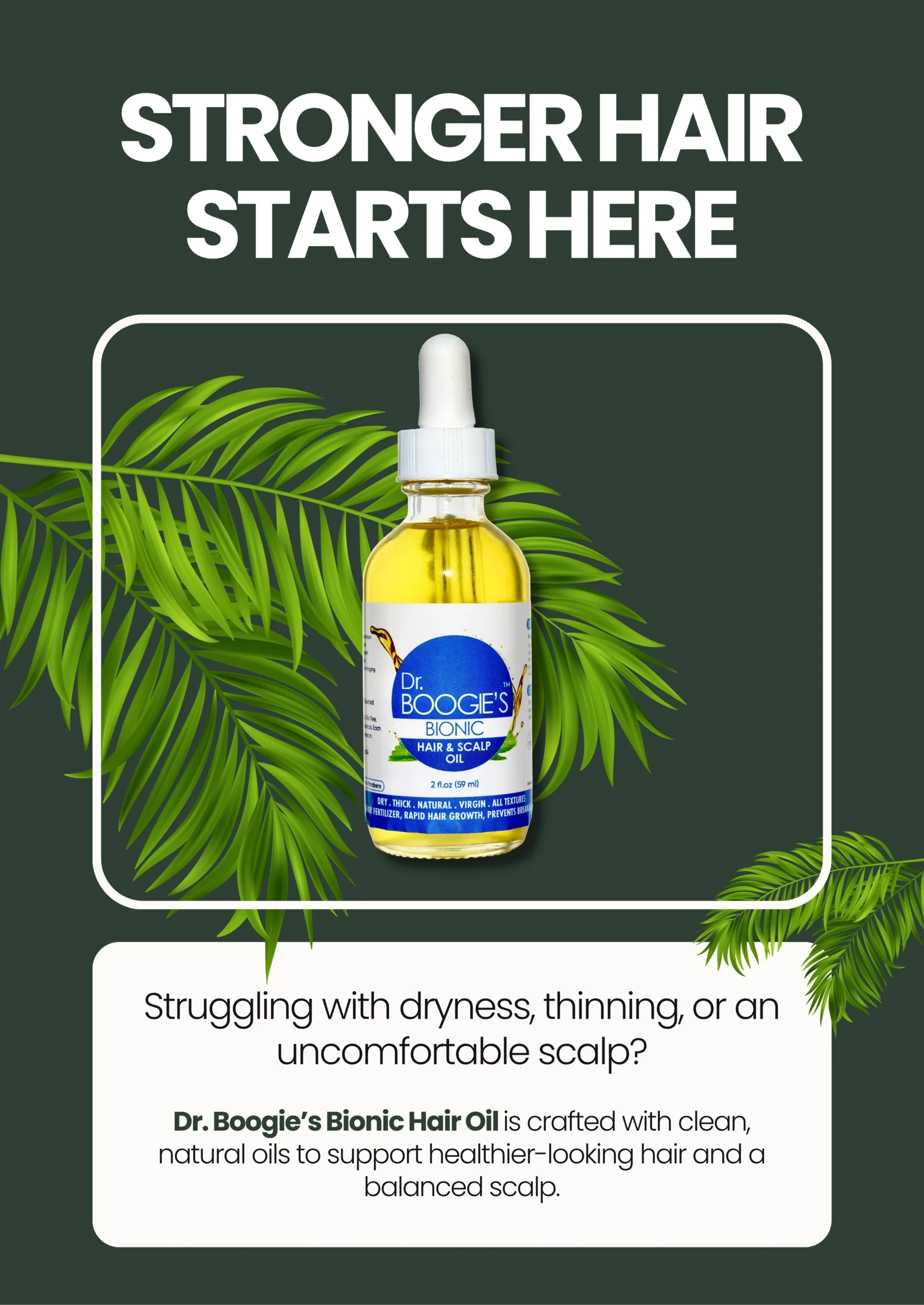
Dr. Boogie’s Bionic Hair and Scalp Oil helps maintain a calm, balanced scalp by delivering
lightweight nourishment without smothering the skin. It supports healthy sebum balance,
easing dryness, flaking, and tightness while strengthening the scalp’s natural barrier
against heat, styling stress, and environmental damage. A well-balanced scalp creates
the foundation for stronger, smoother, and more resilient hair over time.
The Final Word:
Mango is a genuinely beneficial addition to a hair health strategy, but it’s one piece of a larger puzzle, not the whole solution. It works best when you view it as supporting and optimizing hair health rather than dramatically transforming it.
If you already have relatively healthy hair and scalp, mango can help you maintain that health and even improve texture, shine, and strength over time. If you’re dealing with more serious hair concerns, mango should complement (not replace) proper medical care and targeted treatments.
The beauty of mango is that it’s delicious, nutritious, accessible, and safe. There’s no downside to including it in your diet, even if hair benefits are just one of many reasons to enjoy it.
So go ahead: enjoy that sweet, juicy mango. Your taste buds, your overall health, and yes, your hair will all benefit. Just keep your expectations realistic, maintain good scalp care, and view mango as the valuable supporting player it truly is.
Your hair health isn’t about finding one magic food or product; it’s about building a sustainable, comprehensive approach where nutrition, care, and realistic expectations all work together. Mango fits beautifully into that approach, contributing its unique nutritional profile to support the hair you already have in becoming its healthiest, most vibrant version.