Introduction
Quinoa can assist hair health primarily because when it comes to hair it is composed of protein and growth is dependent on your overall nutrition level and health level. Cleveland Clinic points out that a diet with sufficient vitamins that is balanced with protein and iron can contribute to a stronger and faster growing hair and the American Heart Association refers to quinoa as a wholegrain that provides complete protein along with B vitamins and fiber.
In this blog, you will learn what quinoa can realistically do for hair (supporting protein and nutrient intake) and what it cannot do (reverse genetic or hormone driven hair loss), plus simple ways to add quinoa to meals and when it is worth checking for common deficiency related causes of shedding.
Why Quinoa Keeps Showing Up in Hair Nutrition Conversations
It might seem weird that a side dish could alter the texture of your hair but the reasoning makes a certain amount of sense. Your body knows hair to be non-essential tissue. This means that if you are running low on nutrients your body provides those vitamins and minerals to your heart, liver, and lungs first. Your hair gets the leftovers. If your diet is poor, there are not too many leftovers and your hair suffers.
Quinoa has had massive popularity in the beauty world as it is not just a carbohydrate. It is a nutrient bomb. Unlike rice or wheat which are mostly made up of starch, quinoa is loaded with minerals which are linked specifically to the production of hair. We are referring here to iron, magnesium and folate. When people begin to eat quinoa on a regular basis they often report having thicker hair, hair that does not break as much. This is likely due to the fact that they are finally giving their follicles the fuel they need to do their job properly.
Amino Acid Balance and Hair Strength Support
To understand why quinoa is special, you have to understand what hair actually is. Your hair is mostly made of a tough protein called keratin. To make keratin, your body needs building blocks called amino acids. Most plants are missing one or two of these essential building blocks, but quinoa is unique. It contains all nine essential amino acids that your body cannot make on its own.
Here is why a complete amino acid profile will be important to your hair strands:
- Cystine production: This amino acid accounts for a large portion of the keratin structure, which is responsible for giving hair its strength.
- Lysine availability: This particular amino acid is essential in the shape and volume of the hair root and is found in abundance in quinoa.
- Methionine Support: This assists in building the structure of hair and skin, preventing new growth from being flimsy.
- Less shedding: When the body has sufficient amounts of protein, it will not shift hair follicles into resting phase prematurely to preserve energy.
Where Quinoa Helps Strength Elasticity and Reduced Breakage
Dry and brittle hair is the enemy of length. When hair lacks moisture and protein, it loses its elasticity. Elasticity is the ability of your hair to stretch and return to its original shape without breaking. If you pull a healthy strand of hair, it stretches. If you pull a damaged strand, it snaps immediately.
The nutrients in quinoa helps to maintain the moisture level within the scalp and the hair shaft. The B vitamins present in this grain, namely biotin and niacin, are essential for the circulation in the scalp. Better circulation means better oxygen and nutrient concentration to the hair follicle. This has produced a flexible and resilient strand.
Below is a simple breakdown of the specific nutrients in quinoa and how they prevent breakage:
| Nutrient | Function in Hair Health | Result |
| Iron | Carries oxygen to hair follicles | Reduces shedding and thinning |
| Vitamin E | Acts as an antioxidant | Protects hair from environmental damage |
| Magnesium | involved in protein synthesis | Prevents calcium buildup on the scalp |
| Zinc | Supports tissue growth and repair | Keeps oil glands around follicles working |
How to Use Quinoa for Hair Growth Nutrition Focused Use
You do not need to consume a mountain of quinoa on a daily basis in order to see advantages.The goal is consistency. Incorporating it into your diet 3 or 4 times a week is sufficient to increase your intake of nutrients significantly. The thing about quinoa is that it is very versatile. It has a mild and nutty taste which works for breakfast, lunch, or dinner.
Here are a few simple ways to get more of this grain into your routine without getting bored:
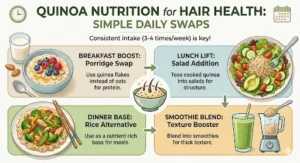
- Swap your oats: For a protein heavy start to the day, try and make a breakfast porridge out of quinoa flakes, almond milk, and berries.
- Boost your salads: Toss a cup of cooked chilled quinoa in your green salad to turn a side dish to a meal that will support hair structure.
- Replace the rice: Quinoa is a good substitute for rice and can be used as the base for stir fries or curry dishes in order to reduce the glycemic index and boost mineral content in your dinner.
- Blend it in: You can even add in cooked quinoa to your smoothies. It blends up smoothly and provides a thick texture without affecting the taste too much.
Why Food Alone Cannot Trigger New Hair Growth
While nutrition is critical, we must be honest about the limitations of diet. If your hair loss is caused by something internal or genetic, quinoa alone will not fix it. Androgenetic alopecia, often called pattern baldness, is driven by hormones and genetics. No amount of protein will change your DNA or completely block the hormones responsible for shrinking hair follicles.
Similarly, if you have a medical condition like a thyroid disorder or an autoimmune disease like alopecia areata, you need medical treatment. Food supports the body, but it is not medicine. Think of quinoa as the foundation. You cannot build a house without a foundation, but the foundation alone is not a house. You need to combine excellent nutrition with proper sleep, stress management, and appropriate hair care practices to see real results.
The Hair Oil Celebrities Trust for Visible Recovery
When internal nutrition needs extra support, targeted scalp care makes the difference.
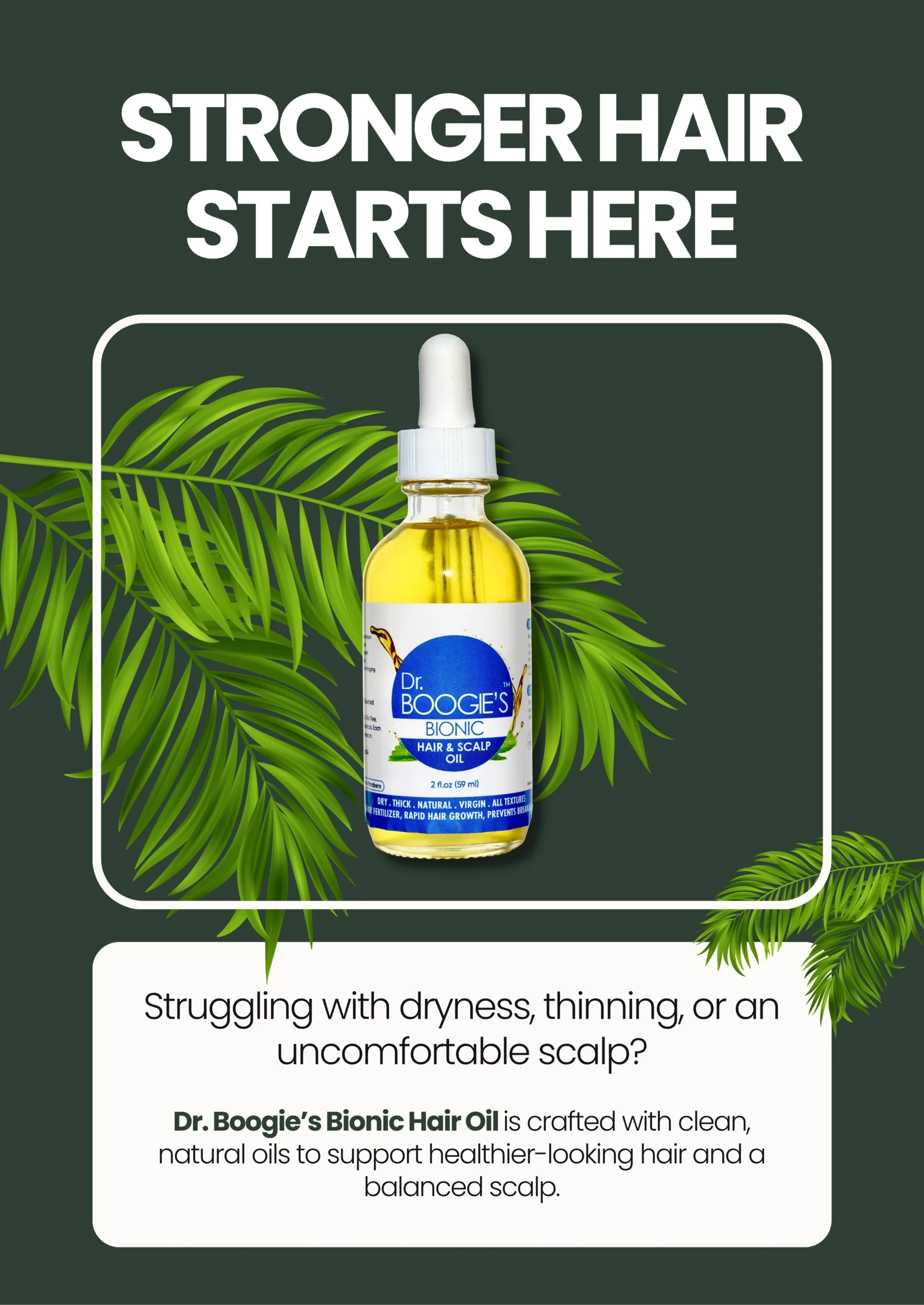
Dr. Boogie’s Bionic Hair and Scalp Oil is a celebrity-grade formula handcrafted with
globally sourced botanical oils and refined over more than 20 years of professional use.
It helps replenish lost moisture, soothe irritation, and restore balance for healthier
looking hair. With Black Jamaican Castor Oil to strengthen roots, Jojoba Oil to balance
natural oils, Tea Tree to calm itch and dandruff, and botanical extracts for shine and
flexibility, it delivers visible recovery without greasy buildup.
When Quinoa Nutrition Works Best Alongside Targeted Scalp Care
The best way to take care of your hair is the holistic way. This means dealing with the problem internally and externally. Eating quinoa gives your body its raw materials for building the hair. Using a quality scalp oil ensures that the environment where the hair grows is healthy and hydrated.
If you eat perfectly but use harsh chemicals on your scalp, your hair will suffer. If you are using the best oils and eating junk food, your hair will be weak. Combining a nutrient rich diet including quinoa with following a soothing scalp routine maximizes your chances at getting thick and shiny hair that you desire.
Conclusion
Quinoa is much more than a trendy health food, it is a legitimate tool for the improvement of the structural integrity and growth potential of your hair. From the fact that it delivers a full protein source inside of an iron and zinc-containing mineral that your body needs to make strong keratin, it gives exactly what you need to get. While it cannot perform a miracle by curing genetic balding, it eliminates the nutritional obstacles, which can slow growth down, or can cause unnecessary shedding.
For those who are seeking to fully transform their hair, using the nutritional power of the quinoa while combining it with expert hair care options such as those offered at Dr. Boogie Secrets can make a major difference. While quinoa is building the hair from within, from outside the hair is being protected and nourished by premium oil treatments. By dealing with both internal health and external moisture, you are setting the stage for the best hair of your life. It is a simple approach that gives visible and lasting results.