Introduction
Ragi (finger millet) is often correlated with hair growth as it can strengthen your overall nutrition and feed your hair especially if the reason for your hair shedding is reduced iron intake or poor diet quality. A recent review published in PubMed Central review mentions that finger millet contains important minerals including calcium and iron (with iron reported in the range of about 3.3 to 14.8 mg per 100g), and other nutrients important for the proper function of body cells.
In this blog, we’re going to give you an explanation of what ragi can realistically do for hair, mainly assisting you with meeting nutrient needs that support healthy follicles, and what it cannot do, like reversing genetic or hormonal hair loss. We will also cover some signs that you should not ignore, and how you can practice building a simple diet routine around ragi without over relying on any single food.
Why Ragi Is Frequently Linked With Hair Strength in Traditional Diets
For generations, people have been dependent on finger millet as a staple source of food in several cultures and their thick hair was often attributed to their simple yet good diet. In the past, people didn’t have fancy supplements and gummy vitamins, so they had to rely entirely on grains such as ragi to give their body the energy and structural blocks they require. This grain was never just about filling the stomach though, the grain was considered the new source of vitality, keeping the bones strong and hair thick well into old age.
The reason for this connection is due largely due to the sheer density of nutrients in every grain in ragi as compared to white rice or refined wheat. Modern diets usually tend to be deficient in complex minerals but traditional ragi-centred diets are rich in protein and iron by nature. Since the hair is composed primarily of protein, those ancient diets naturally fueled the hair growth cycle without the people even realizing the scientific reason behind it.
Is Ragi Good for Hair Growth or Mainly Hair Density Support
It is important to realize the difference between growing new hair from a spot where it is bald and improving the density of the hair that you now have on your head. Ragi is exceptional for the latter because it provides the raw materials your body needs to manufacture keratin, the protein that makes up your hair strands. When your diet is rich with amino acids from grains such as finger millet, each strand can grow out more often and thicker with less chances of snapping, creating the appearance of a fuller and more voluminous mane.
However, we must manage expectations regarding what ragi can do for hair that has already stopped growing due to genetics or age. While ragi supports the health of active follicles, it acts more like a fertilizer for existing plants rather than a seed that plants a new forest. It improves the quality of the hair shaft, making it robust and shiny, which contributes to overall density. If your hair is thinning because the strands are becoming fine and weak, ragi is a powerful tool to help regain that lost volume and texture.
Where Ragi Helps Most Reduced Breakage Thickness and Scalp Balance
The main way that ragi helps your hair journey is by addressing the root causes of hair breakage and scalp issues that prevent your hair from reaching its full potential length. Many people also believe their hair is not growing, when in reality, their hair is breaking off at the ends at the same speed it grows from the roots. Ragi is rich in essential amino acids such as methionine and lysine which play a vital role in the formation of the collagen and connective tissue that keep the hair structure firmly in place.
Here is a quick look at the specific nutrients in ragi and how they directly assist your hair goals:
| Nutrient | How It Helps Your Hair |
| Iron | Increases oxygen flow to the scalp and follicles to fuel growth. |
| Calcium | Helps with cell turnover and absorption of other key vitamins. |
| Protein | Provides the building blocks for keratin to prevent brittle strands. |
| Magnesium | Reduces inflammation on the scalp that can block hair follicles. |
How to Use Ragi for Hair Growth Through Daily Nutrition
You may be asking yourself how you can actually incorporate this grain into your diet, in a way that would allow you to enjoy it and sustain it while living your busy lifestyle. The good news is that ragi is unbelievably versatile and can be used in sweet and savory dishes, which means it is really easy to eat every single day without getting bored. Following are a few simple ways to add ragi to your meal plan so you can take good care of your hair:
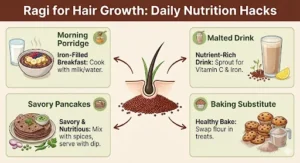
- Morning Porridge: You can cook ragi flour with milk or water to make a warm iron filled breakfast and sweeten it by adding jaggery or honey to start your day right.
- Savory Pancakes/Flatbreads: Mix ragi flour with chopped onions, chilies, and coriander to create savory pancakes or flatbreads that taste great with spicy dips or plain yogurt.
- Malted Drink: Sprouting ragi increases its vitamin C content which helps iron absorption, so drinking ragi malt is one of the most efficient ways to get nutrients.
- Healthy baked treats: You can replace some proportion of regular flour with ragi flour to make cookies or muffins to add a healthy kick to your treats.
Why Diet Alone Cannot Wake Up Dormant Hair Follicles
While eating a diet full of ragi and other superfoods is amazing for your health, it is crucial to be honest about the limitations of nutrition when it comes to hair loss. If a hair follicle has become completely dormant and scarred over, which often happens in advanced stages of male or female pattern baldness, no amount of ragi will be able to bring it back to life. Diet works best as a preventative measure and a support system, not a magic cure for genetic conditions.
Nutritional changes are effective when the cause of hair loss is telogen effluvium, which is shedding caused by stress or deficiency. In these cases, the follicle is resting but still alive. However, if the hair loss is driven by high levels of DHT (a hormone) or autoimmune conditions, diet alone will not be enough to stop the process. You need to view ragi as the foundation of a house; it supports the structure, but if the blueprint says the house should be smaller, the foundation cannot change that design on its own.
Complete the Celebrity Hair Care Ritual
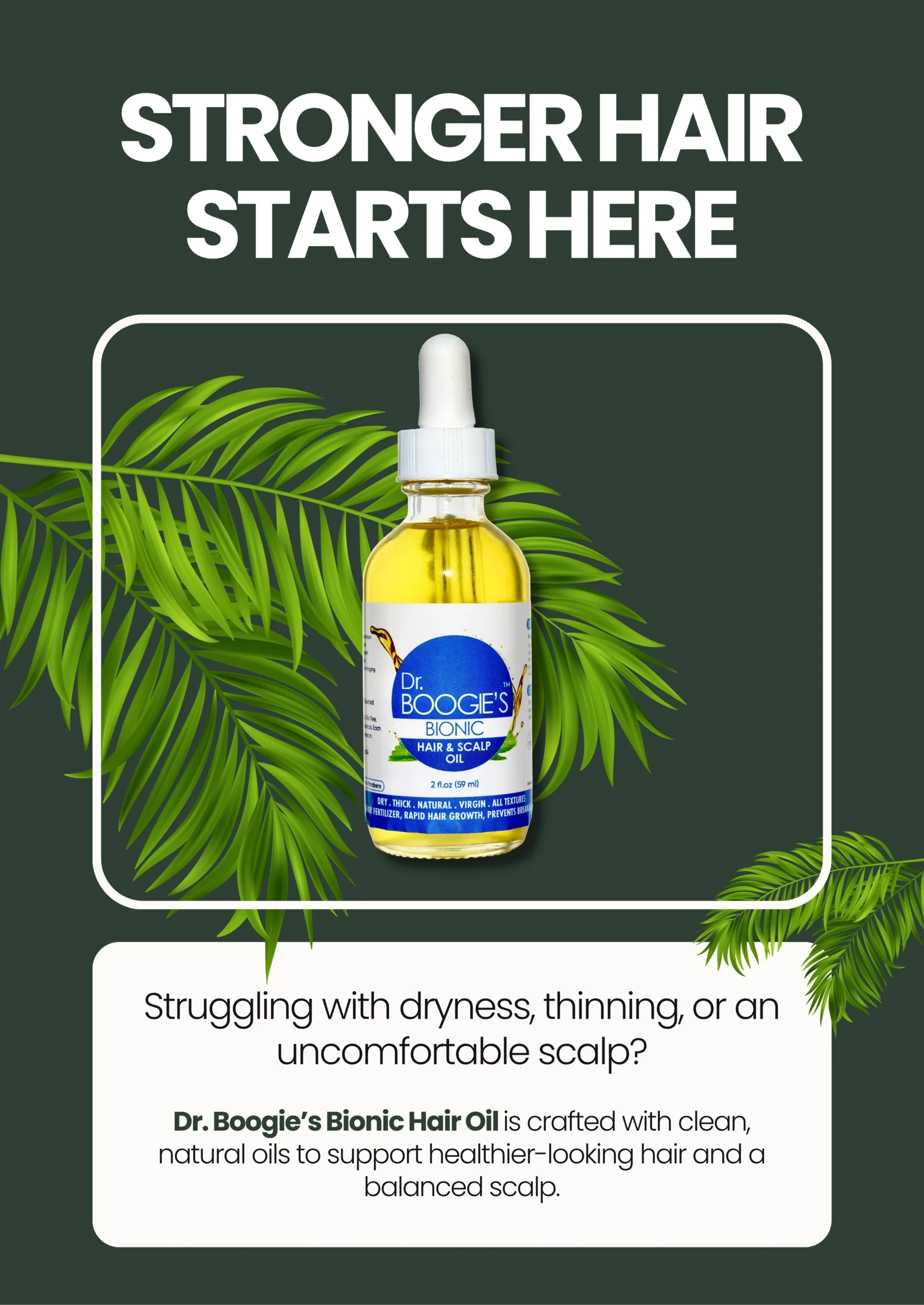
Nutrition builds hair from within, but professional results require targeted external care. Dr. Boogie’s Bionic Hair & Scalp Oil is the finishing step trusted in celebrity grooming—designed to hydrate the scalp, seal in moisture, soothe irritation, and strengthen strands for visible shine and resilience.
When Ragi Nutrition Works Best Alongside Targeted Scalp Nourishment
The real magic occurs when the power of ragi is internally combined with external treatments for the protection and nourishment of the scalp directly. When you have iron and protein circulating in your blood from the ragi, and you massage your scalp to bring that blood to the follicles, you’re getting the most from what you are putting in your mouth.
This dual approach ensures that you are tackling hair health from every possible angle. The ragi ensures that the new hair growing out is strong and thick, while a topical treatment ensures that the scalp remains flexible, clean, and free from inflammation. This combination is especially helpful for people dealing with dry, brittle hair that refuses to grow past a certain length.
Conclusion
Ragi is surely a powerful ingredient that can enhance your hair quality to a great extent by tackling common nutritional gaps such as iron and calcium deficiency. It helps to strengthen the shaft of hair, minimize hair breakage, and promotes a healthy scalp environment, making it an excellent addition to any diet aimed at beauty and wellness.
For people who wish to improve their hair care routine, using Dr. Boogie Secrets Bionic Hair and Scalp Oil, combined with a ragi rich diet, is the best treatment. By combining the internal structural support of finger millet with the external nourishment of premium botanical oils, you give your hair the best chance to become long, strong and healthy.