Introduction
This ancient practice has long been used to relieve muscle pain and enhance blood flow throughout the body, but now it’s also being taken to your head as a potential remedy for thinning hair and a lack of growth.
Scalp Cupping Therapy is the newest frontier in this trend. Though the practice of cupping has been a pillar of various forms of traditional medicine across the millennia for treating muscle pain and systemic sluggishness, its application to the scalp represents a targeted response: that tight, poorly circulated scalps are frequently starving scalps.
But does the notion of creating a vacuum on top of your head actually hold water, or in this case, hair? Scalp health is hair health. Much like a garden needs rich, nutrient-filled soil to grow, your hair needs blood and vital nutrients to grow long and strong.
This blog investigates the rise of scalp cupping, the science behind why blood flow is conducive to healthy follicles, and how incorporating a hair oil like Dr. Boogie can turn everyday physical therapy into a complete-blown hair recovery ritual.
Scalp Cupping Is Trending as a Hair Growth Technique
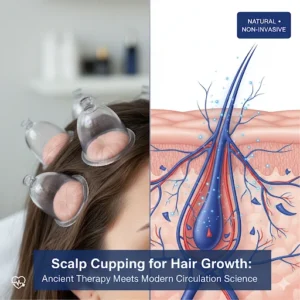
There is a buzz on social media and in the wellness era right now about mechanical stimulation to grow out your hair. Scalp Cupping is different from regular old scalp massages; it uses small, specialized silicone cups to perform scalp cupping at home or in the salon.
Cupping has become so popular because it addresses a common problem: scalp tension and blocked blood flow. The Galea Aponeurotica, that hard layer of connective tissue on top of your head, can get really tight and even calcify, which many experts believe is impeding the microcirculation you need for follicle health.
Whereas massage also operates downward, cupping employs negative pressure or suction to elevate the tissue. This lifting action allows space for blood to flow and for inactive fluid to be broken up, making it an appealing, low-cost intervention for those observing the initial signs of thinning.
Cupping Alone Cannot Guarantee Hair Growth
It is tempting to view scalp cupping as a miracle cure, but the reality is more complex. Cupping is a delivery mechanism, not a source of nutrition. Think of cupping as the plumbing that clears the pipes; if the water (your blood) doesn’t contain the necessary vitamins, minerals, and proteins, clearing the pipes won’t result in a better harvest.
Hair loss is often multifaceted, driven by genetics (DHT sensitivity), hormonal imbalances, stress, or nutritional deficiencies. Cupping cannot alter your DNA or fix a thyroid issue.
If the body is in a state of chronic inflammation or lacks essential building blocks like biotin, iron, or zinc, increased circulation will simply move nutrient-poor blood around more quickly. To see real results, the physical stimulation of cupping must be paired with internal health and external nourishment.
The Role of Scalp Nourishment and Hydration to Maximize Results
To maximize the benefits of increased blood flow from cupping, you must ensure the scalp environment is hydrated and nutrient-dense.
A dry, flaky scalp creates a barrier of dead skin cells that can clog pores and stifle new growth. Hydration works on two levels: internal (drinking enough water to maintain blood volume) and external (applying oils that mimic the scalp’s natural sebum).
When the scalp is properly nourished, the skin is more elastic, making the cupping process more effective and less irritating.
Nourishing agents, specifically essential oils and fatty acids, penetrate deeper into the follicle when applied during or after a cupping session. This is because suction opens the pores, and the increased heat from blood flow enhances the absorption of topical treatments.
Elevate Your Scalp Cupping Routine
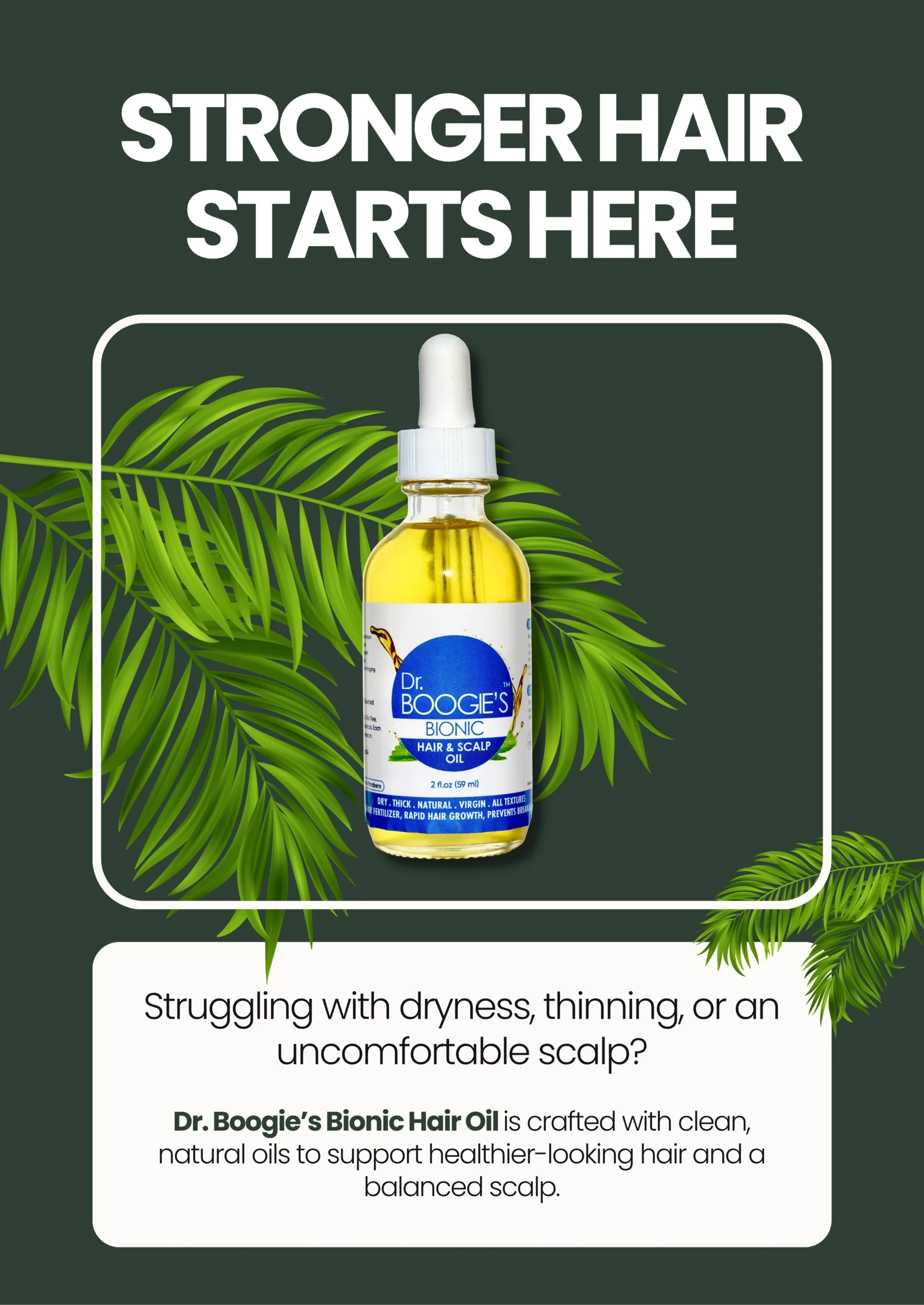
Pair scalp cupping with Dr. Boogie’s Hair & Scalp Oil to improve glide, reduce irritation,
and help botanical ingredients absorb more effectively. Designed for comfort, balance,
and long-term scalp support, it turns cupping into a complete, professional-grade ritual.
Who Should Try Scalp Cupping and Who Should Avoid It
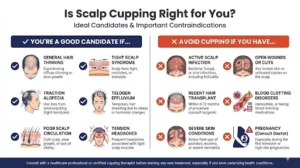
Scalp cupping is an excellent treatment for those suffering from traction alopecia, general thinning, or tight scalp syndrome. If you experience a stiff scalp or tension-related problems, then cupping’s myofascial release should be very beneficial.
However, there are clear contraindications:
- Do not use on active scalp infections, open sores, or severe psoriasis/eczema.
- Skip if you’re on blood-thinning medications; the suction can leave some heavy-duty bruising.
- If you have a history of scalp skin cancer, or very brittle, fragile hair that tends to break at the slightest touch.
- Do not use if you’ve had hair transplant surgery within the last few months; always consult with your surgeon before using suction.
Conclusion
Scalp cupping brings together ancient techniques and modern hair care philosophy. By using gentle negative pressure to lift the scalp and encourage blood flow to the hair follicles, it helps create a healthier environment that supports hair vitality over time.
However, the most effective hair care routines are never one-dimensional. While cupping provides valuable physical stimulation, its benefits are amplified when paired with high-quality scalp nourishment. Using well-formulated botanical oils alongside cupping helps support comfort, hydration, and overall scalp balance, allowing the follicles to function more efficiently.
Although scalp cupping is not a quick solution for advanced or genetic hair loss, it can be a powerful tool for those focused on improving scalp health, enhancing circulation, and taking a proactive, natural approach to maintaining hair density. Real improvement comes from consistency—combining proper nourishment with regular mechanical stimulation to support the scalp over the long term.