For curvy girls in the vast universe of natural hair, coiling is everyone’s favorite, most versatile style. From tight, springy curls to looser, cascading spirals, it’s a gorgeous way to control texture while elongating and defining natural patterns without having to fix it. But beyond the look, there is another common claim in the natural hair community: that coiling can actually make your hair grow longer.
It’s a compelling idea. Think of a hairstyle that doesn’t just look lovely but also supports hair health and length retention. But is it too good to be true? The association between hair growth and hair styling methods is frequently misunderstood.
This guide will explain the coiling mystery, explaining how this very protective style works with your hair’s natural life cycle, what to do (and not to do), and how you can incorporate it into an encompass for truly stronger, longer, and healthier strands.
Why People Believe Coiling Supports Hair Growth
The idea that coiling encourages hair growth is most likely because it can help limit breakage. Here’s why this association is frequently made:
Less Manipulation:
The more you comb, brush, and style your hair, the more likely it is to become damaged. Coiling as a protective style involves dividing the hair, twisting it, and leaving it alone for days or even weeks.
Increased Moisture:
Coils keep the hair moisturized by retaining moisture in the hair shaft. Hair dries faster when left loose. Also, the density of coils tends to create a more moist microenvironment for hair, helping prevent drying and brittleness that can lead to breakage. Well-hydrated hair is much more forgiving and less likely to break.
Shelter from Environmental Stress:
Springy hair has less contact with the elements (sun, wind) or pollutants that can cause damage. These can dry out and damage the hair cuticle, leading to split ends and breakage.
Visual Length Retention
When hair breaks less, it appears to grow longer over time. If you typically lose an inch to breakage for every inch of new growth, your hair’s length remains stagnant. By reducing breakage, coiling allows the hair’s natural growth to become more evident, giving the impression that the style itself is accelerating growth.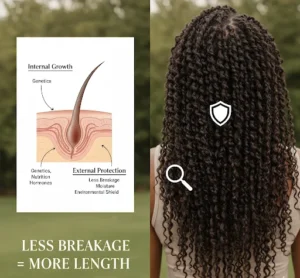
The Right Way to Coil: Preventing Damage and Breakage
Performing coils properly is the key to both benefiting and avoiding unwanted problems. More than anything, the method must be gentle and moisture-focused. Start with freshly washed, detangled hair, as any knots or snags you begin the coiling on will tighten and become more difficult to remove, and may snap off when you take the coils down. When applying products, it’s best to work in small, manageable areas gradually so products are applied evenly and pressure on each strand is even.
Initial Twist: Before you start twisting, generously dampen the hair. While you’re turning from the roots down to your tips, make sure you use consistent, gentle tension so they are not too tight at your scalp and don’t cause tension alopecia.
If you keep all the coils going in the same direction, it will give better definition and a more uniform pattern. Since your hair’s ends are its oldest and weakest parts, they should be treated carefully with finger-coiling or tiny perm rods, not tight elastics.
Lastly, patience is a virtue: let the coils dry 100% before unraveling, and manipulating wet hair equals instant frizz and a failed style.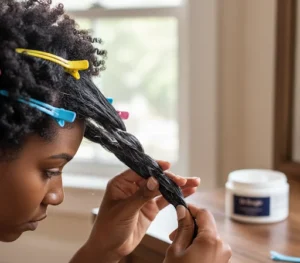
Common Mistakes People Make While Coiling Their Hair
Some practices can turn coiling from protective to destructive. The key is being aware of these pitfalls:
Coiling on Dry Hair:
This is probably the most common mistake of all. Dry hair does not stretch and is very fragile. Make sure to moisturize and add water when you want to pull your hair with rubber bands.
Too Much Pull From the Root:
Tying hair too tightly at the root puts strain on hair follicles. This constant tension can cause headaches, scalp soreness, and eventually traction alopecia: a type of hair loss caused by repeated tugging.
Distribution of Sections
Sections are unmanageable, even when manipulated as much as possible, and can cause hair to look stringy. Sections that are too big won’t dry correctly, resulting in frizz, or may fall out prematurely. Get the tension right for your hair thickness and favourite coil size.
Failure to Let Coils Dry Out:
Untwisting coils before completely drying eliminates the risk of extreme frizz, fuzzy curls, and even damage. Hair is weaker when wet.
Keeping Coils in Too Long:
Coils are indeed protective, but you’re not supposed to leave them in forever. Hair accumulates lint, dust, and product buildup over time. If you do not clean your coils for 1-2 weeks or more, matting, tangles, and scalp problems can occur.
How Protective Styling Impacts Hair Follicle Health
The implications of protective hair styles, such as coiling, for follicular health, however, can be substantial but are frequently secondarily felt.
Your follicles are tiny little organs in your scalp that produce hair, and their health dictates how strong, thick, and long each strand will be.
Protective styles serve this population by relieving the follicle of physical stress by lessening handling and manipulation. Coils also lessen mechanical tension on the hairshaft and, therefore , on the follicles.
In addition, coiling conserves the integrity of the environment in which the follicle is housed, thereby reducing exposure to damaging elements and promoting a more conducive ecosystem for healthy hair growth, rather than one that has become sterile due to constant assault.
This also optimizes product effectiveness, since well-moisturized and sealed styles allow topical treatments such as oils and serums to absorb into the scalp for longer without evaporating or being rubbed away.
Lastly, they help prevent hair fatigue by affording the strands a break from everyday styling, allowing hair to heal and preventing breakage-related thinning. In the end, protective styles enable follicles to produce healthy hair by maintaining the natural growth process.
Signs That Your Coils Are Causing More Harm Than Good
Your hair and scalp will speak to you, so it’s important to listen. Your hair will speak loudly and clearly if your coiling method is causing damage.
Scalp Soreness or Itching:
Suppose your scalp feels tender, tight, or overly itchy following a coil; that much tension is not good. That’s what your scalp is trying to communicate with you: “I’m under stress.
Redness or Bumps Along the Hairline:
These are key signs of traction alopecia. Continually pulling at the edges or nape can inflame follicles, causing redness, bumps, and ultimately hair loss in those regions.
More Breakage Upon Unraveling:
If you’re breaking more than usual when undoing the coils, you may be coiling too tightly or unraveling, or your hair may be too dry going into the process.
Unusual Thinning:
If you notice any new or increased thinning, particularly at the edges, temples, or the crown of your head, it’s time to act. This could indicate that the style is causing excessive tension on your hair follicles.
Foul Smell or Too Much Product:
If your coils begin to smell bad before you are supposed to wash them, it may indicate you’re not cleaning effectively or using too much product, potentially suffocating the scalp.
Why Coiling Alone Cannot Guarantee Hair Growth
Coiling is a great way to help retain length, but you’ve got to differentiate it from faster hair growth. Coiling is not filled with magical rituals to slow anyone’s aging. Hairstyles are mainly determined by:
Genetics:
Your natural hair growth cycle length, thickness, and maximum potential length are determined by your genes.
Diet:
Nutrition is critical: high protein, vitamins (particularly B and D), and minerals (iron and zinc). Hair growth will be affected by our internal system , whether we style it or not.
Balance Your Hormones:
Hormones are involved a lot when there are imbalances (like with the thyroid, PCOS, and postpartum). Sprouts warp because coiling only helps against what I’ve done to the hair.
General health:
Illness, stress, medications, and certain underlying conditions can all interfere with the hair growth cycle.
Scalp Health
Your scalp should be healthy, clean, stimulated, and well-circulated. But though coiling guards the hair shaft, it doesn’t cleanse the hair shaft independently or promote scalp stimulation.
Coiling is a solution to part of the puzzle, protecting the hair that does grow. Without an inside-outside growth environment and scalp health, coiling alone simply won’t give you the magnificent hair growth you long for.
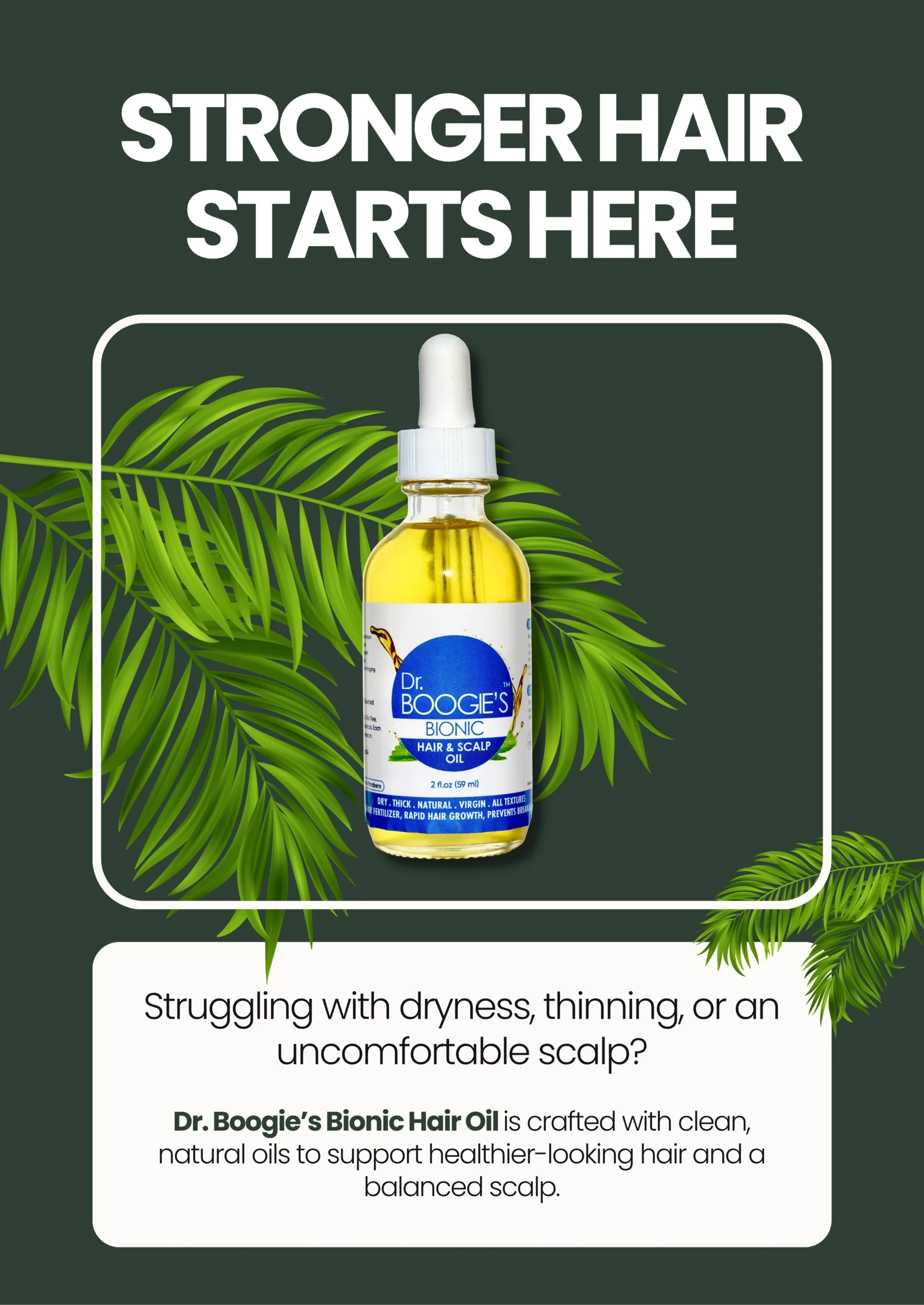
Elevate Your Coiling Routine With Dr. Boogie Hair Oil
Designed to enhance coiling techniques, Dr. Boogie Hair Oil provides the essential slip needed for smooth detangling while reducing tension and mechanical stress. Its lightweight, conditioning formula locks in moisture, keeps hair soft and flexible, and helps protect strands from breakage and splitting over time. As coils limit environmental exposure, the scalp and hair are better able to absorb nourishing ingredients, supporting stronger, healthier hair from root to tip.
Integrating Coiling With a Complete Hair Growth Routine for Stronger, Longer Hair
Coiling is most effective when viewed as one component of a holistic hair growth strategy. To truly achieve stronger, longer, and healthier hair, consider these integrations:
- Consistent Cleansing and Conditioning: A clean scalp is a healthy scalp. Use a sulfate-free shampoo and a moisturizing conditioner regularly, even when wearing coils (gentle cleansing between full washes might be needed for scalp health).
- Deep Conditioning/Treatment: Incorporate weekly or bi-weekly deep conditioning treatments. These replenish moisture and fortify the hair strands, preparing them for protective styling.
- Scalp Care and Stimulation: Don’t neglect your scalp. Regular, gentle scalp massages can boost circulation. Consider specialized scalp serums or, as explored in other discussions, even scalp cupping.
- Internal Nutrition: Support hair growth from within. Ensure your diet is rich in whole foods, lean proteins, healthy fats, and plenty of fruits and vegetables. Consider high-quality supplements if your diet lacks specific nutrients.
- Minimize Heat and Chemical Damage: Reduce your reliance on heat styling tools and harsh chemical treatments (dyes, relaxers) that can weaken the hair shaft and impede growth.
- Gentle Detangling: Always detangle with a wide-tooth comb or your fingers, starting at the ends and working up, preferably on damp, conditioned hair.
- Nighttime Protection: Protect your coils and loose hair at night by sleeping on a silk or satin pillowcase or wearing a silk/satin bonnet. This reduces friction and prevents moisture loss.
- Patience and Observation: Hair growth is a slow process. Be patient, take progress pictures, and pay attention to how your hair responds to different techniques and products.
By combining the protective benefits of coiling (enhanced by Dr. Boogie Hair Oil) with these foundational hair care practices, you create an optimal environment for your hair not only to grow but thrive.
Conclusion
Coiling, at its heart, is an art form that highlights the beauty and versatility of natural hair. It also works as an effective protective style by reducing breakage and shielding strands from daily manipulation and environmental stress. While coiling does not speed up hair growth at the follicle level, it plays a major role in length retention by helping the hair you already grow reach its full potential without unnecessary damage.
The key to successful coiling lies in proper technique, sufficient moisture, and supportive products that reduce friction and dryness. Avoiding mistakes such as excessive tension or styling on dry hair is essential for maintaining healthy strands and edges. When combined with consistent scalp care and nourishing oils, coiling becomes more than just a hairstyle—it supports stronger, more resilient hair. In the bigger picture, long and healthy hair results from balanced nutrition, scalp health, and mindful styling, with coiling serving as a valuable part of that routine.