While internal factors like genetics and nutrition primarily drive hair growth, the environment acts as a potent external modulator of the hair growth cycle. This cycle consists of three phases: Anagen (growth), Catagen (transition), and Telogen (resting/shedding).
But before diving into the effects, it is helpful to understand the basics: what is climate in the context of hair care? Simply put, it refers to the long-term patterns of temperature, humidity, and sunlight in your area, whereas weather is what happens day-to-day. Both play a distinct role in how your hair behaves.
Extremely harsh climates can push follicles out of the Anagen phase prematurely. For instance, excessive UV radiation doesn’t just burn the hair shaft; it causes oxidative stress at the scalp level. This stress can trigger inflammatory responses that signal the hair to enter the Telogen phase earlier than intended.
Furthermore, blood circulation to the scalp—the highway delivering nutrients to the follicle—is affected by temperature. Cold climates can cause vasoconstriction (narrowing of blood vessels), potentially reducing nutrient delivery. Conversely, moderate warmth can boost local circulation, which is why many report faster growth during spring and summer.
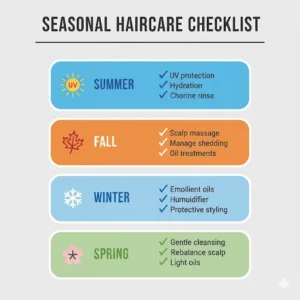
Weather and Climate: Seasonal Variations in Hair Behavior
Understanding the difference between weather and climate helps you prepare for both daily changes and seasonal shifts.
Summer: The major threats are UV exposure and dehydration. High heat intensifies internal moisture evaporation, and salt water or chlorine strips it further.
Fall: Many experience seasonal shedding here. This evolutionary remnant occurs when the body sheds hair in preparation for a new growth cycle.
Winter: Often the most severe season. The air outside is dry, and indoor heating makes it drier. This static-prone environment makes hair brittle and flyaway.
Spring: As humidity rises, the scalp can become oilier. It is a time to reset, but one must tread lightly to avoid scalp buildup.
How Extreme Weather Disrupts Scalp Balance
Your scalp is a continuation of your skin, designed to reach homeostasis (balance). Extreme weather disrupts this.
In High Heat: The scalp overproduces sweat and sebum to cool down. If not washed out, this can cause Malassezia (yeast) overgrowth, resulting in dandruff and itch.
In Cold Weather: Sebaceous glands slow down, resulting in a tight, flaky scalp. A stressed scalp cannot produce healthy, lush locks.
Climate Control Hair: The Power of Protection
Just as you use climate control in your car or home to maintain a steady environment, you need climate control hair strategies to maintain moisture levels regardless of the weather outside.
1. Protective Styling as a Barrier While topical treatments act as an external shield, your internal hydration is the engine. In extreme heat or dry cold, the body prioritizes hydrating vital organs over hair follicles. If you are dehydrated, the scalp is the first place the water supply is cut.
2. Hydration Habits Think of your blood as a delivery truck for nutrients. If you are dehydrated, blood becomes viscous and less efficient at reaching the tiny capillaries at the base of hair follicles. Increasing water intake ensures your follicles remain “plump” and active.
When Hair Loss From Climate Indicates a Serious Issue
While some seasonal shedding and texture changes are regular, it is essential to know when the climate has caused or is masking a more serious problem.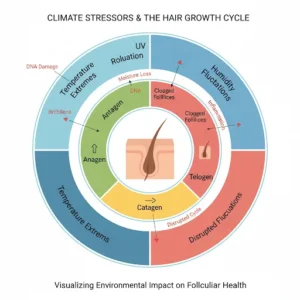
Warning Signs That Require Attention
Excessive Shedding: The Six-Week Rule
If you notice “clump shedding” (losing more than 100-150 hairs a day) that persists for more than six weeks following a change in season, it may be a sign of Telogen Effluvium.
What is Telogen Effluvium?
This is a condition in which a stressor (such as extreme environmental shock or heatstroke) triggers a large percentage of hair to enter the shedding phase at once.
Chronic Inflammation and Pain
Additionally, if the scalp becomes persistently red, inflamed, or painful despite using protective oils and hats, you may be dealing with a chronic scalp condition that the climate has exacerbated. Always consult a professional if you see:
- Visible thinning patches
- Scalp health that does not improve with environmental adjustments
Dr. Boogie Hair Oil: Your Climate Defense Solution
Changing weather, humidity, pollution, and dry air constantly steal moisture from your hair.
Dr. Boogie Hair Oil creates a protective barrier that locks in hydration, shields strands from environmental stress,
and keeps your scalp balanced in every climate. Whether it’s humid heat or dry winter air, this lightweight,
penetrating formula helps your hair stay smooth, strong, and healthy no matter the conditions.
Conclusion
Your hair is in a constant dialogue with the atmosphere. We cannot control the humidity or temperature, but we can control how we prepare our hair for the conversation.
The key to long-term growth is consistency. By maintaining scalp balance with products like Dr. Boogie’s Bionic Hair & Scalp Oil and adjusting your routine to the seasons, you ensure your follicles stay in the growth phase as long as possible. Don’t let the weather dictate your potential; with the right knowledge, you can have a good hair day in any zip code.