While brushing your hair, seeing several broken strands stuck in your brush can feel really worrying. You want something to fix the hair loss which is natural and safe. Stinging nettle is popular as an edible herb and a traditional remedy, and the results of a scientific review drew attention to the nutrient density stinging nettle can provide, with findings from one study that suggested the nutrient content in mature nettle leaves was rich in alpha linolenic acid which made up 40.7% of the fatty acids.
That kind of nutrient profile helps explain why nettle shows up in teas, capsules, and hair products. Nettle may support hair by improving the scalp environment and reducing irritation, yet the bigger hair growth claims are not a guaranteed fix on their own. Keep reading to see what nettle can realistically do for hair growth, what it cannot do, and how to use it in a routine that truly protects your hair.
Understanding Nettle as a Natural Plant
Stinging nettle, also called Urtica dioica, is a leafy plant with tiny hairs that can sting the skin. When it is cooked, dried, or processed into extracts, it becomes a widely used edible and herbal plant. Modern reviews describe nettle as rich in bioactive compounds with antioxidant and anti-inflammatory potential, which is relevant because your scalp is living skin.
Nutritional and Herbal Properties of Nettle
Nettle leaves contain vitamins and minerals as well as plant compounds such as polyphenols. These compounds are studied for the way that they may help reduce oxidative stress and calm the irritation in tissues. For hair, that matters most when your scalp feels itchy, tight, or flaky, because irritation can push you toward harsh washing and scratching that damages strands.
Nettle as an Edible Herb
Nettle can be used as a food, which is a big reason people like it. Many people use dried nettle leaf tea or cook the leaves like spinach (since heating or drying of the stinging leaves helps to get rid of the sting). Food use will not force new hair growth, but it can support general wellness habits that make hair care less difficult.
Simple ways of using nettle as an edible herb include drinking nettle tea with a meal, using nettle in soups or lentils, or blending cooked nettle into a sauce for an easy nutrition boost. If you are expecting mothers, suffering from kidney diseases, or taking prescription tablets, consult the doctor first.
Nettle as a Hair Healthy Ingredient
Most hair routines use nettle topically, like a shampoo, rinse, or scalp tonic. The goal is usually better scalp comfort and less buildup so hair feels lighter and looks shinier. That can look like better growth because you keep more length and see less breakage.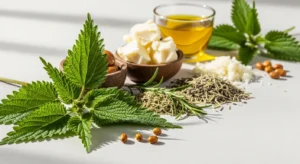
Scalp nourishment
Nettle is often discussed for anti-inflammatory and antioxidant support. This is relevant because long term scalp inflammation can disturb the hair cycle and worsen itch and flakes. If your scalp is irritated, start with gentle cleansing, then use nettle products as supportive care, not as a cure.
Moisture balance
Many people have oily roots but dry lengths, and oil is not the same as moisture. Nettle rinses may help the scalp feel fresher, but you still need conditioner on the mid lengths and ends. If your hair breaks easily, your most noticeable result will often be less snapping, not sudden new density.
Hair environment support
Think of nettle as a helper for the hair environment. A calmer scalp will decrease scratching and over washing, and it can make other products work better. Often when the environment improves, this can mean that hair appears healthier due to less tangling and it holds on to the length.
- ct “sudden new density” are sometimes disappointed, the main visible effect seems to the users is less shedding and less snapping, which translates to greater length retention.
- Potential Side Effects Natural does not always mean that there are no side effects. The European Medicines Agency compiled the safety information for nettle root preparations released in clinical trials involving more than 17,000 patients and contained potential adverse effects such as gastrointestinal complaints and allergic reactions.
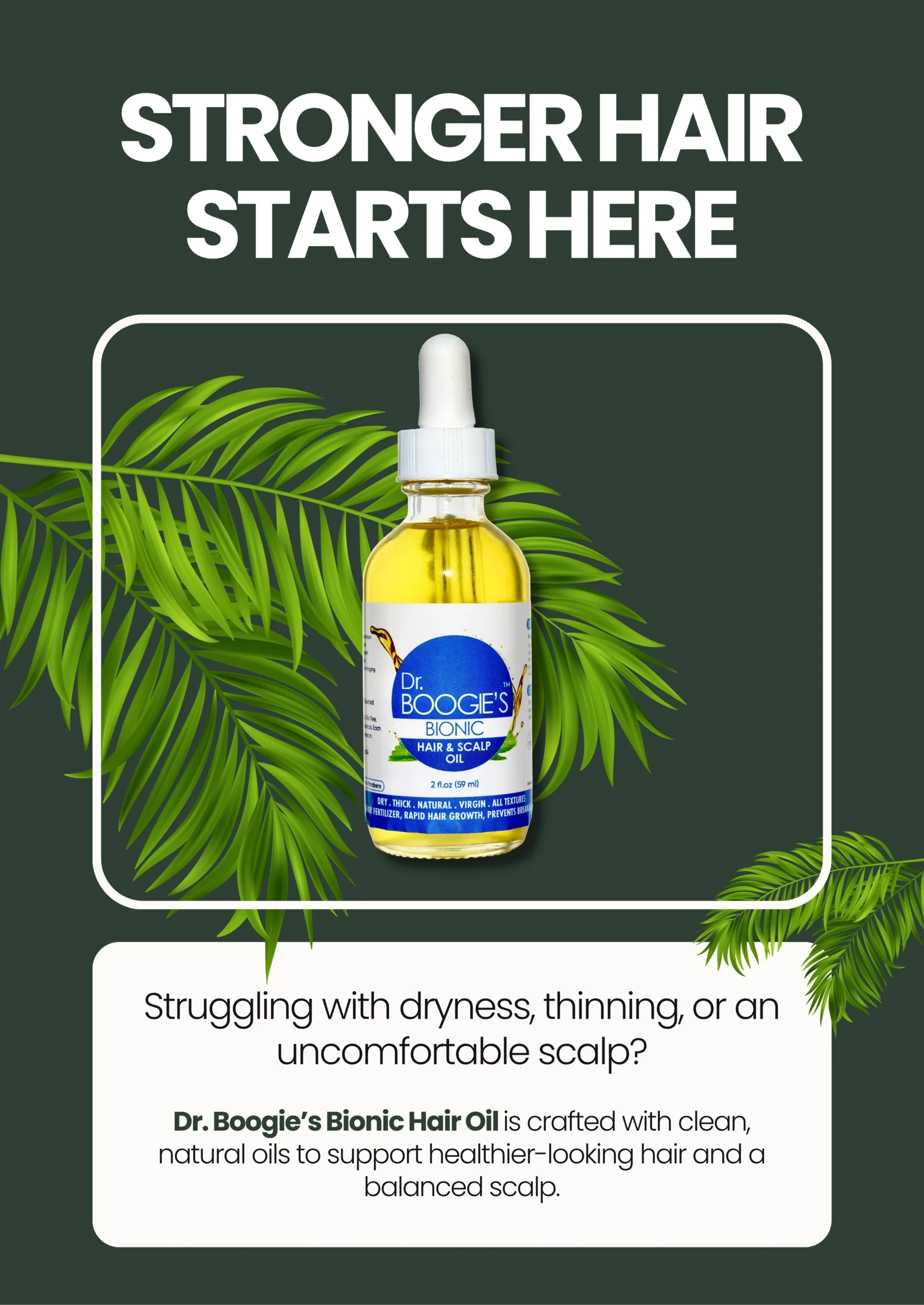
Dr. Boogie Hair Oil for Stronger and Healthier Hair
Nettle can support hair from the inside, but your scalp still needs direct nourishment. Dr. Boogie’s Bionic Hair and Scalp Oil helps calm dryness, reduce itchiness, and restore moisture to weak strands without feeling greasy. With Black Jamaican Castor Oil, Tea Tree, and Jojoba Oil, this lightweight blend supports stronger roots, balanced scalp oils, and healthier-looking hair.
Conclusion
Nettle can support hair health by improving the scalp environment and trying to reduce breakage. It may have interesting links to inflammation and hormone related pathways, but strong human evidence for dramatic regrowth is limited so set your expectations wisely.
If you want hair, which looks fuller and feels healthier, focus on consistency: gentle cleansing, moisture on the lengths, and scalp nourishment that does not clog or irritate. For a simple fix, add Bionic Hair and Scalp Oil to your regimen well-balanced scalp comfort, less breakage, and shine.