There are a variety of factors that contribute to hair growth, scalp health, moisture balance, nutrient delivery , and protection from daily stressors. As more of the population seeks plant-based herbal remedies, marshmallow root has gained notice for its calming, conditioning properties.
Rich in mucilage, plant-based support for skin and digestion is now being researched for its scalp-comforting properties, reduced hair breakage, and a supportive environment for healthy hair growth. But does Marshmallow Root really help hair grow, or does it only cater to the environment in which hair thrives?
This blog will explain the science, uses, and limitations of this renowned botanical.
Understanding Marshmallow Root as a Natural Plant
Marshmallow root is derived from Althaea officinalis, a perennial plant used in traditional medicine for over 2,000 years. The 2-4 foot tall plant has soft, velvety leaves and white or pale pink flowers in late summer. But the underground part is the most therapeutically rich.
In ancient Greece and Rome, marshmallow root was used to help wounds heal, as a mild laxative, and to ease sore throat pain. Herbalists of the past noted its soothing properties for irritated mucous membranes and its emollient (skin softening) properties, so it was an ally for internal and external use.
Where Marshmallow Root Grows
Growing in Europe, Western Asia, and North Africa, it can be found in temperate regions worldwide. It grows in damp, marshy areas near rivers, estuaries, and wetlands. The roots are normally dug up in the autumn from plants at least two years old; by this time, the mucilage content is at its highest.
Traditional and Modern Uses
Outside of its popular medicinal uses, the plant, and specifically marshmallow root, is used in modern hair care products, including cosmetics. It is of particular interest for natural beauty formulations , as plant-based derivatives are increasingly replacing synthetic ingredients.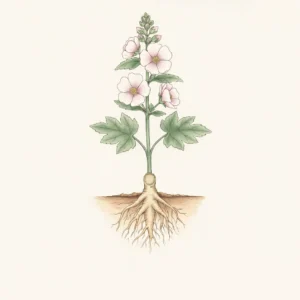
Nutritional and Herbal Properties of Marshmallow Root
Marshmallow root’s benefits stem from its rich nutritional and chemical composition. Understanding what’s inside this humble root helps explain why it’s become so popular in hair care.
Mucilage: The Star Component
The main constituent in marshmallow root is mucilage, which may make up to 35% of the dry weight of the root. Mucilage is a thick, gluey substance; when mixed with water, it becomes slippery and forms a gel. This natural polysaccharide forms a protective film that:
- Seals in moisture
- Reduces friction
- Soothes irritation
- Creates a slippery barrier so tangles are easier to remove
1-Vitamins and Minerals
Marshmallow root is nutrient-rich and has elements that are beneficial for hair health:
Vitamins: B-complex vitamins (such as niacin and riboflavin), vitamin C, and small amounts of vitamin A support cellular function and collagen production.
Minerals like calcium, zinc, and iron in jaggery help strengthen hair, which in turn supports a healthy scalp. Zinc, especially, is important for hair structure growth and recovery.
2-Amino Acids and Proteins
It contains amino acids, such as asparagine, which are involved in protein synthesis. Because hair is mostly composed of keratin (a protein), when you have enough building blocks, they help build the structures in your hair.
3-Flavonoids and Phenolic Acids
These phytonutrients offer antioxidant protection, shielding hair follicles and scalp cells from oxidative stress and the harm caused by pollution. Hypolaetin, quercetin, and kaempferol are among the key flavonoids.
4-Pectin and Tannins
Its pectin content enhances the root’s thickening properties, while tannins impart mild astringency, aiding with scalp issues and excessive oil production.
Forms of Marshmallow Root Used in Herbal Care
Marshmallow root is commonly used in different forms depending on the application:
- Powdered marshmallow root, often mixed with water to create a conditioning paste or mask
- Dried marshmallow root, used to make herbal infusions or rinses
- Liquid extracts or glycerites are added to shampoos and conditioners
- Oil-infused preparations, where the root is steeped to transfer soothing properties
Each form delivers similar benefits, but powders and dried roots are most commonly used in DIY and traditional hair care routines.
Marshmallow Root as a Hair-Healthy Ingredient
Why marshmallow root for natural hair? Marshmallow has made a name for itself as part of our natural hair care team. Its exclusive formula responds to common hair problems and is gentle for all hair types.
The Mucilage Magic
But it’s the mucilage in marshmallow root that really makes it unique for hair. When mixed with water, this becomes a slimy gel that surrounds each hair. This coating:
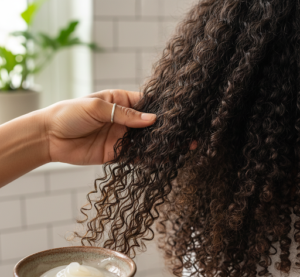
- Hair strands slide and glide over each other rather than snagging and catching; this is particularly beneficial for coily, curly, or textured hair that tends to tangle.
- Slip is a term in the natural hair community for explaining how easily fingers or combs can glide through your tresses. The mucilage from marshmallow root is so slippery that it’s ideal for reducing friction on wash days and during crying while detangling, helping minimize breakage.
- The gel-like layer helps flatten raised hair cuticles, resulting in shinier, smoother hair that reflects light more evenly.
Benefits of Marshmallow Root for Hair and Scalp
Let’s explore the specific benefits marshmallow root offers for your hair and scalp health.
1-Enhanced Detangling and Manageability
One of the most obvious uses is how it makes detangling a breeze. The mucilage delivers amazing slip, helping the hairs slide apart. This is especially transformative for:
- Wavy (2A-2C) and curly hair: Hair that tangles naturally.
- Fine hair that tangles easily
- Kids Hair
- Damaged hair with raised cuticles
The quicker we’re done detangling, the less wear and tear from pulling and tugging, resulting in length retention and healthier ends.
2-Reduced Breakage and Split Ends
Because it gives slip, it can make hair wet and coat it, and marshmallow root greatly helps minimize breakage while you’re styling or if it’s manipulated too much. The mucilage coats the delicate hair fibers, preventing them from breaking or stretching. Over time, this leads to:
- Fewer split ends requiring trimming
- Better length retention
- Fuller-looking hair
- Stronger hair overall
3-Deep Hydration and Moisture Balance
Marshmallow root treats dehydration on several fronts. It provides water-based hydration while preventing moisture loss. This double duty is ideal for:
- Heat-damaged hair with compromised cuticles
- Color-treated hair
- Hair subjected to extreme environmental conditions (sun, wind, dry air)
Hair that is properly hydrated has more stretch, so it breaks less and generally looks and feels better.
4-Improved Shine and Softness
The smoothing of the hair cuticles leaves hair visibly shinier. When your hair is smooth, and your cuticles are closed, light reflects evenly across the surface rather than bouncing off raised, damaged cuticles. Also, the conditioning benefits leave hair silky-soft without a greasy or heavy afterfeel.
5-Frizz Control
Marshmallow root tames frizz by sealing cuticles and moisturizing. This is especially useful in tropical environments, where hair absorbs extreme moisture from the atmosphere and swells, leading to frizz.
Marshmallow Root in Professional Hair Care Formulations
The professional beauty industry has recognized marshmallow root’s benefits, incorporating it into a range of commercial hair care products. Understanding how it’s used can help you choose effective products or inspire your own DIY formulations.
Common Product Types Containing Marshmallow Root
- Detangling Conditioners and Sprays: As a slip agent, marshmallow root is an excellent choice for products that make comb-out easier. Find it in leave-in conditioners and detangling sprays.
- Intensive Conditioning Masks: Marshmallow root extract is often used in deep conditioning masks, usually to help retain moisture and smooth the hair during treatment.
- Natural and Organic Shampoos: Mild, sulfate-free shampoos often contain marshmallow root to cleanse without stripping and provide conditioning benefits that traditional surfactants do not.
- Curl Defining Products: Both the natural hair and curly communities tend to love marshmallow roots. It’s often an ingredient in curl creams, gels, and defining lotions because of its ability to form curl clumps while hydrating hair.
- Scalp: Calming scalp serums and treatments use marshmallow root’s anti-inflammatory properties to minimize sensitivity and irritation.
Quality Considerations in Commercial Products
Not all marshmallow roots are created equal. Higher quality formulations typically:
- Use organic, sustainably harvested marshmallow root
- Put it into your products in levels that matter (not just tiny trace amounts designed to impress on the label)
- Mix it with other good natural substances
- Stay away from harsh sulfates, silicones , and synthetic fragrances that can work against it
The Role of Marshmallow Root in Supporting Hair Growth
So now, let’s get to the point: does marshmallow root work for hair growth? The answer is a little more transparent. The root of a marshmallow will not directly encourage the formation of new hair follicles or make the biological rate at which your hair grows any faster. Instead, it encourages hair growth by improving the conditions hair needs to grow and, just as importantly, stay on your head longer.
This marshmallow root-infused oil, made from scratch, not only adds shine and softness to the hair but also soothes the scalp. One of marshmallow root’s key components is mucilage, a slimy sort of gel that provides a protective layer on both skin and hair strands. This protective layer plays a leading role in preventing breakage, which is one of the most significant obstacles to long hair. The less your hair breaks, the more length you retain over time. And while it’s not the same as hair growing faster on your head, the results are often longer, fuller strands, since other types of hair can grow longer than those on the scalp.
The biggest pro for me is head support. Marshmallow root soothes irritation and dryness, helping your scalp reach a healthier balance so your hair follicles function properly throughout the hair growth cycle. Inflammation, itching, and excessive dryness can disrupt this cycle, leading to hair loss or breakage. By keeping the scalp comfortable, marshmallow root helps prevent such interruptions at bay.
The Growth Support Mechanism
Think of hair growth as a three-part process:
- Growth phase (Anagen): Hair actively grows from the follicle. This lasts 2-7 years, depending on genetics
- Transition phase (Catagen): Growth stops, the follicle shrinks, and lasts about 2-3 weeks
- Resting phase (Telogen): Hair is released, and shedding lasts about 3 months
Marshmallow root doesn’t extend the anagen phase or shorten the telogen phase. Instead, it ensures that during the growth phase, hair strands remain healthy, strong, and intact, maximizing your growth potential.
Limitations of Using Marshmallow Root Alone for Hair Growth
While marshmallow root is a valuable hair care ingredient, relying on it exclusively for hair growth has significant limitations.
It’s Not a Complete Solution
Hair growth and health depend on multiple factors:
- Nutritional status: Adequate protein, iron, zinc, biotin, and other nutrients are essential for hair growth. No topical treatment can compensate for nutritional deficiencies.
- Hormonal balance: Hormones significantly influence hair growth cycles. Thyroid disorders, PCOS, menopause, and other hormonal conditions affect hair regardless of topical treatments.
- Genetic factors: Your genes determine your hair’s growth rate, texture, density, and susceptibility to conditions like androgenetic alopecia.
- Overall health: Chronic stress, poor sleep, illness, medications, and other health factors impact hair growth from the inside out.
- Scalp circulation: Hair follicles need an adequate blood supply to deliver nutrients and oxygen. Topical ingredients alone can’t ensure optimal circulation.
Marshmallow root addresses the external hair care piece, but can’t override these internal factors.
When to Seek Professional Help
If you’re experiencing:
- Sudden or significant hair loss
- Bald patches or thinning areas
- Hair loss accompanied by other symptoms (fatigue, weight changes, etc.)
- No improvement despite good hair care practices
- Hair breakage despite gentle handling
Consult a dermatologist or trichologist. These may indicate underlying medical conditions requiring professional diagnosis and treatment beyond what any natural ingredient can provide.
Dr. Boogie Hair Oil for Stronger and Healthier Hair
Marshmallow root helps keep hair moist, calm the scalp, and reduce breakage—but when paired
with a more comprehensive formula, results go further. Dr. Boogie’s Bionic Hair and Scalp
Oil combines marshmallow root with hydrating carrier oils, scalp-stimulating botanicals,
and protective antioxidants to nourish hair from root to tip. This synergistic blend helps
retain moisture, improve detangling, support length retention, and create a healthier
environment for stronger, sleeker-looking hair over time.
Conclusion
Marshmallow root has earned its place in natural hair care through centuries of traditional use and modern validation by the beauty community. Its mucilage-rich composition provides genuine benefits for hair moisture, detangling, scalp soothing, and overall hair health.
However, it’s essential to understand marshmallow root’s true role: it creates optimal conditions for healthy hair rather than directly stimulating new growth. It excels at reducing breakage, improving moisture balance, and protecting existing hair, all of which contribute to better length retention and healthier-looking hair over time.
The key is patience, consistency, and realistic expectations. Hair grows slowly, about half an inch per month on average, regardless of what you use. What marshmallow root does beautifully is ensure that the hair you grow stays healthy, strong, and intact, allowing you to retain length and enjoy the full potential of your hair’s natural growth cycle.