Rose water has long been used in beauty routines. From ancient Persian perfumeries to Egyptian beauty routines, around the world, even before the advent of modern cosmetic science. Today, rose water is used in everything from toners to hair rinses, and the question of whether it actually promotes hair growth has come up again and again in natural hair care circles.
Rose water is not a hair growth accelerator in the scientific sense of the word. It will not activate dormant hair follicles, speed up hair growth, or reverse hair loss caused by hormonal imbalances or genetic factors. However, to say that it does nothing would be just as inaccurate, since what rose water does for the scalp environment, the hair shaft, and the conditions that promote healthy Hair Growth Effect is real, well-documented, and very useful.
The difference between what rose water actually does and what it cannot do is the key to using rose water effectively.Understanding the distinction between directly stimulating hair growth and supporting the conditions that promote it is key to using rose water effectively and getting the most from it.
Understanding Rose Water and Its Effects on the Scalp and Hair
Rose water is made by the steam distillation of rose petals, specifically from the Damask rose, Rosa damascena, but also from other rose species. This distillation process isolates the water-soluble aromatic compounds from rose petals, yielding a liquid containing phenylethyl alcohol, citronellol, geraniol, and various flavonoids, including quercetin and kaempferol.
Anti-inflammatory properties.
Rose water has been demonstrated in laboratory studies to suppress pro-inflammatory enzymes and cytokines. Scalp inflammation, often low-grade and asymptomatic, is increasingly recognised as a contributing factor in suboptimal hair growth. Chronic scalp inflammation can impair hair follicle function over time, and reducing it creates a more favourable environment for normal hair growth.
Antioxidant properties.
The flavonoids in rose water help counteract free radicals that cause oxidative stress in scalp tissues. Oxidative stress has been implicated in the premature ageing of hair follicles and is a contributing factor in the miniaturisation process that leads to progressively thinner, weaker hair shafts. Regular use of antioxidant-rich rose water provides some protection against this process.
Mild astringency.
The natural astringency of rose water can help tighten the skin slightly and reduce oiliness on the scalp without drying the skin. This is one of the most useful properties of rose water, especially for individuals with oily scalp conditions.
Hydrating properties.
Rose water, a water-based substance with humectant properties, helps to draw and retain moisture in the hair shaft and on the scalp surface.
Can Rose Water Directly Stimulate Hair Growth?
This is the question most people are actually asking, and it deserves a straightforward answer. No rose water does not directly promote hair growth in the same way that proven treatments such as minoxidil do. It does not enhance blood flow to the follicle via a quantifiable pharmacological response, prolong the anagen (growth) phase, or inhibit DHT (the hormone responsible for follicle miniaturization in pattern hair loss).
What rose water actually does is help create conditions under which the hair follicle can operate at its optimal level. These are not the same things, and confusing them is what leads to disappointment. If you have androgenetic alopecia, a hormonal imbalance, a nutritional deficiency, or telogen effluvium due to chronic stress, rose water will not treat the underlying cause of your hair loss. It is not a remedy for hair loss.
What it can do, over time, helps to maintain a healthier scalp environment that is less prone to creating secondary barriers to growth. A scalp that is not excessively inflamed, is properly balanced in terms of moisture and oil content, and has a healthy microbial balance is a more favorable environment for a hair
Rose Water and Hair Breakage Prevention
Dehydrated hair will no longer have the flexibility to withstand the rigors of daily life. The cuticles, which protect the cortex of the hair shaft, will become rough, brittle, and begin to lift and break off. When this happens, the hair shaft becomes susceptible to splitting, breaking during comb-out, and breaking from daily styling friction and exposure to the elements.
This constant loss of length due to breakage means that even healthy hair follicles growing hair at the rate of half an inch per month may see little to no actual growth if the breakage at the ends equals or exceeds the growth at the root.
Rose water works to counteract this problem in two ways.
- First, its hydrating properties draw moisture into the hair shaft, helping to retain the water content necessary to keep the hair flexible and resilient.
- Second, its mild pH, 5.5 to 6, is very close to the natural pH of the hair and scalp and helps flatten and smooth the cuticle layer rather than roughen it, as other water sources may. Many water sources have a higher pH that lifts the cuticle; a final rinse of rose water after

Rose Water for Oily vs. Dry Scalp
Rose water’s versatility is one of its most useful characteristics; it is genuinely beneficial for both oily and dry scalp conditions, though the mechanism of benefit differs.
For oily scalp types:
Rose water has a mild astringency that can help control sebum production and reduce scalp greasiness, which can contribute to scalp buildup, clogged pores, and the inflammation associated with oil and bacteria. As a scalp mist between washes, rose water can help control oiliness without the drying effects of alcohol toners or stripping shampoos. An oily scalp environment, especially when paired with Malassezia fungal overgrowth, can be a scalp type that is not conducive to healthy follicle function. The gentle balancing of the scalp environment by rose water is a great benefit.
For dry scalp types:
Rose water is a hydrating agent that soothes the scalp, reduces irritation and itchiness, and rebalances moisture levels that dry scalps struggle to maintain. Dry scalps often have a damaged skin barrier, and the anti-inflammatory and moisturizing properties of rose water can help calm irritated, flaky, and tight scalp skin. Unlike oil, which can sit on top of the scalp and cause its own set of problems, rose water is quickly absorbed and provides a light, non-clogging moisture boost.
For people with combination scalp oily at the root with dry, brittle mid-lengths and ends, rose water applied as a light spray works well throughout, hydrating the length and ends while gently toning the scalp surface.
How to Use Rose Water for Hair
There are several effective ways to incorporate rose water into a hair care routine, and the best approach depends on your hair type, texture, and specific concerns.
- As a pre-wash scalp treatment, apply rose water directly to the scalp using a spray bottle or cotton pad, massage gently for 2 to 3 minutes, and leave for 15 to 20 minutes before washing. This allows the anti-inflammatory and soothing compounds to penetrate the scalp surface before shampooing removes them.
- As a post-wash rinse: After conditioning, rinse with a diluted rose water solution approximately one part rose water to two parts water as a final rinse before leaving the shower. This helps restore the hair’s natural pH after washing and smooths the cuticle for improved shine and manageability.
- As a daily hydrating mist: Fill a spray bottle with pure rose water and mist lightly over the hair and scalp throughout the day to maintain moisture levels, particularly in dry or low-humidity environments. This is one of the simplest and most consistently effective applications.
- Mixed with a carrier oil: Rose water combined with lightweight oils such as jojoba, argan, or sweet almond oil creates an effective scalp massage blend that delivers both hydration and nourishment simultaneously. The water phase prevents the blend from feeling too heavy while the oil phase provides lasting moisture retention.
- As a leave-in spritz for length: Applied to damp hair before styling, rose water helps seal in moisture, provides a light hold, and reduces frizz, making hair more manageable without heavy product buildup.
Can Expired Rose Water Damage Hair?
This is a functional question that is often left unanswered, and the answer is important for anyone who is maintaining rose water as a regular part of their routine. Pure rose water will have a shorter shelf life than preserved products, usually 6 months to 1 year when stored in a cool, dark place. After opening, the rose water is more susceptible to air, light, and contamination from repeated use.
When rose water expires, it will not cause catastrophic problems in a single use, but it can lead to issues with regular use. As rose water ages, its antimicrobial properties degrade, creating an environment where bacteria or fungus can grow inside the bottle. Using expired rose water on the scalp can introduce bacteria that can lead to scalp irritation, folliculitis, or exacerbate existing scalp conditions.
The presence of expired rose water is usually evident by its characteristics, such as a sour or fermented odour, cloudiness, or sediment. If any of these are noted, the product should be discarded. For individuals who are making their own rose water at home by simmering
Rose Water vs. Other Herbal Growth Remedies
Rose water is frequently compared to other botanical ingredients marketed for hair growth, and understanding how it positions relative to these alternatives helps set realistic expectations.
- Rosemary oil has perhaps the most robust evidence base of any botanical hair growth agent. In a 2026 clinical trial published in the SKINmed Journal, rosemary oil was found to be as effective as minoxidil 2% for androgenetic alopecia over 6 months. Rosemary primarily enhances scalp microcirculation and inhibits 5-alpha reductase (the enzyme that converts testosterone to DHT). Rose water lacks any similar evidence or mechanism of action and is therefore no direct substitute for rosemary in terms of hair growth.
- Peppermint oil has been shown to have follicle-stimulating properties in animal studies through vasodilation and enhanced circulation. Again, rose water lacks a similar mechanism.
- Aloe vera shares properties with rose water, including its hydrating, calming, and scalp-regulating effects. It is therefore a similar agent in terms of its use as a scalp health agent rather than a direct hair growth agent. The two agents complement each other well and are often used together.
- Onion juice is highly effective in clinical trials for alopecia areata due to its high sulfur content, which supports keratin synthesis. Its mechanism of action is different.
How Long Rose Water Takes to Show Visible Effects
Rose water is a natural hair care ingredient that requires effective expectation management. Rose water is not a quick fix ingredient and will not result in radical, noticeable changes over a short period of time. For scalp benefits such as irritation reduction, flaking reduction, and balance, most people will see results in two to four weeks of consistent use. These are usually the first noticeable signs that the ingredient is working.
For benefits such as cuticle smoothing, frizz reduction, and shine, most people will see results in a few weeks of consistent use as a rinse or daily spray. For results on length retention through breakage reduction, measure them over a period of three to six months, as this is how long it takes for net gains in length to be measurable.
Rose water is a natural hair care ingredient that requires patience and consistency. When used sporadically, the results are negligible. When used consistently as part of a comprehensive hair care plan, the cumulative effect of rose water on the scalp, hydration, and breakage is significant.
The Limitations of Hydration for Hair Growth
- Rose water is mainly a hydrating, anti-inflammatory, and weak antioxidant.
- Hydration primarily benefits the hair shaft and scalp surface, not the hair follicle.
- It does not reach the dermal papilla, which is responsible for the hair growth cycle.
- Rose water does not affect hormonal pathways that control the anagen (growth) and telogen (resting) phases.
- It does not address nutritional deficiencies, such as iron, ferritin, zinc, or vitamin D, which are common causes of hair thinning.
- Hydration alone cannot address hormonal, stress-related, or medical conditions that cause hair shedding.
- For people with excessive hair thinning or shedding, rose water alone is unlikely to provide substantial benefits.
- Identifying the underlying cause of hair loss is the first crucial step in treating it.
- Rose water is best used as a supplement, and not as a standalone treatment.
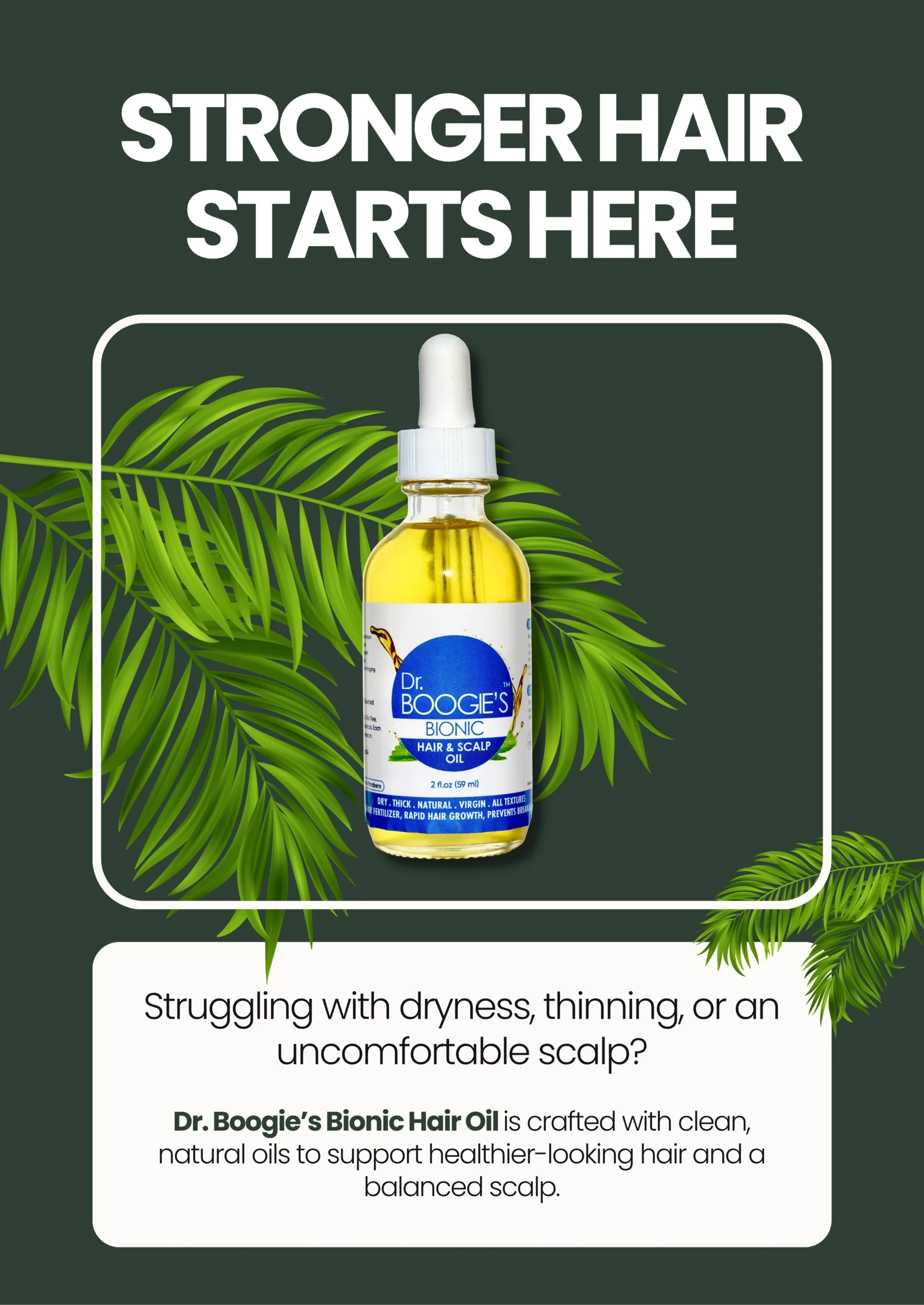
Pair Rose Water Hydration with Deeper Scalp Care
Rose water can help refresh the scalp and provide light hydration throughout
the day, but maintaining healthy-looking hair often benefits from additional
nourishment. Dr. Boogie’s Bionic Hair and Scalp Oil complements a rose water
routine by adding lasting moisture and scalp comfort with a lightweight
botanical blend. Ingredients such as Black Jamaican Castor Oil, Jojoba Oil,
Tea Tree, and plant extracts help support softness, manageability, and a
balanced scalp without leaving heavy buildup. Using a gentle rose water mist
for surface hydration and a regular scalp massage with the oil can create a
simple routine that supports smoother, healthier-looking hair over time.
Conclusion
Does rose water help hair growth? The answer is yes with clarity about what help” actually means in this context. Rose water does not accelerate follicle production, reverse hair loss, or replace medical treatment for clinical hair conditions. What it does, consistently and genuinely, is create better conditions for the hair you have to grow and be retained.
By reducing scalp inflammation, providing antioxidant protection, balancing scalp oiliness or dryness, smoothing the cuticle to reduce breakage, and hydrating the hair shaft, rose water addresses multiple factors that commonly undermine hair health from the outside in. These contributions are real, practically valuable, and supported by the genuine bioactive properties of this remarkable botanical ingredient.
Used consistently, in pure form, and as part of a broader approach that also addresses nutrition, hormonal health, and scalp nourishment ideally complemented by a product like Dr. Boogie Hair Oil, rose water earns its place in a serious hair care routine. Not as a miracle, but as a reliable, time-honored ingredient that does exactly what it’s capable of doing, reliably and gently, day after day.