If you’ve ever crossed paths with a beauty blog or watched a DIY hair-care video, you’ve likely encountered the Banana Hair Mask. Mashed-up bananas slathered on hair and scalp before a shower may not strike you as the most obvious concoction, but this humble kitchen staple has been used in natural beauty rituals throughout the ages.
The real question is: does it actually encourage hair growth, or is it all just a slippery, sweet-smelling myth?
In this blog, we will explain everything you could ever want to know about banana and hair health: the nutrients it packs in, why those nutrients are important for the growth cycle of your strands, what it does (and doesn’t do) for the rate of growth itself, and with which ingredient you should combine it to see optimal results.
Understanding Banana as a Natural Fruit
The banana is one of the most popular and widely produced fruits in the world. It was first domesticated in Southeast Asia and Papua New Guinea and is believed to have been under cultivation for at least 8,000 years (according to the Food and Agriculture Organization of the United Nations, or F.A.O.); today, it spans tropical regions from Latin America to sub-Saharan Africa to South Asia.
More than 100 billion bananas are eaten around the world every year, and it is one of the world’s top five crops. What makes the banana such a phenomenon from the point of view of health is that every part of the plant, fruit, peel, flower, and leaf has been used in traditional medicine.
In hair, modern cosmetology has a chance to give monikers like silicones and keratin proteins to the ingredients responsible for all hair-related wonders. Banana pulp has been used as a conditioning agent in folk traditions across South Asia, Africa, and the Caribbean.
The banana’s naturally pulpy softens, making it smooth enough to be mashed and used externally. Add to that its convenience and affordability, and it’s no wonder bananas have been a go-to base for homemade natural hair concoctions across the globe.
Nutritional Profile of Banana and Hair Health
- Vitamin B6 (Pyridoxine) and the Synthesis of Keratin
One medium banana (about 118 grams) provides about 0.4 mg of vitamin B6, or 25% of the adult Recommended Dietary Allowance (RDA). This vitamin is directly involved in the production of keratin, a fibrous protein (the building blocks of your body) that makes up most of your hair.
- Vitamin C for Antioxidant Protection
Bananas contain it in moderate amounts and, as antioxidants, offer some protection to scalp cells from oxidative stress while promoting collagen production around the hair follicles.
- Cell Division (Folate)
As part of the trihydroxypropane, we form numerous B vitamins, including B9, also known as folate. Folate is necessary for DNA replication and cellular division, two processes that occur continuously in rapidly dividing cells of growing hair follicles.
- Potassium for Moisture Balance
With around 422 mg per serving, potassium helps maintain the right balance of moisture in cells, resulting in more supple, elastic hair.While bananas are famous for potassium, one medium banana also provides about 1% of your daily Calcium need ?
- Magnesium for Protein Metabolism
Magnesium is involved in protein metabolism (think hair growth) and in producing energy, two things the hair follicle needs on an ongoing basis.
- The Synergistic Effect
There is no one magical nutrient in bananas that makes hair grow. But together, they provide an internal and external nutritional matrix for the biology within the follicle and beyond the limits of a hair strand.
General Health Benefits of Bananas
Hair doesn’t live in a vacuum; it’s a barometer of the body’s overall health. The bananas also promote a healthy system that supports good hair growth .
Digestive Health and Nutrient Absorption
Bananas are good for smooth digestion: the pectin in bananas helps to eliminate toxins and heavy metals from the body, while aiding a little constipated tummy. When the lining of the gut is healthy, it absorbs vitamins and minerals properly, including those that nourish hair follicles.
Heart Health and Scalp Circulation
Potassium is a well-known standard-bearer of heart health, helping control blood pressure and circulation. Better blood flow to the scalp helps ensure that more oxygen and nutrients reach each hair follicle.
Mood Regulation and Stress Management
Bananas are high in tryptophan, which is converted to serotonin. Telogen effluvium is a phenomenon in which large numbers of hair enter the resting and shedding phase early, usually in stress response, which can be triggered by chronic psychological stress. Some foods may help regulate mood, which, in turn, would indirectly protect the hair cycle.
Antioxidant Protection Against Hair Aging
The dopamine and catechins in bananas, which are antioxidants, can help you clear your scalp of free radicals, a major contributor to early hair aging and the miniaturization of your follicles.
Banana as a Hair-Healthy Ingredient
Banana, when used directly on hair and scalp, interacts with hair and skin to a greater extent than digestion alone.
There are a few different versions of topical banana treatments. Mashed banana puree alone can be mixed with coconut oil or honey for a deep-conditioning treatment, with egg for a protein-infused paste, or with avocado and olive oil for maximum moisture. Banana extract is also an emerging ingredient in commercial shampoos, conditioners, and hair serums, which are often claimed to have smoothing and strengthening effects.
The emollient nature of the natural oils and esters found in bananas provides a softening effect on the hair shaft, protecting it from peeling and moisture loss, which helps maintain the natural elasticity of hair. The natural sugars attract and draw moisture from the air into the hair fiber, helping maintain hydration throughout the day, even after a mask treatment. And banana isn’t a high-protein food, but it does contain amino acids that can gently strengthen hair’s protein structure when applied topically, making it great for chemically processed or heat-damaged hair.
Effects of Banana on Hair Texture and Manageability
One of the most consistently reported and scientifically plausible benefits of bananas for hair is improved texture and manageability. This is especially relevant for people with dry, coarse, curly, or chemically processed hair.
The humectants and natural emollients in banana penetrate the outer cuticle layer of the hair shaft, replenishing lost moisture and adding softness. Hair that feels dry and rough to the touch often has a raised, damaged cuticle. Banana’s conditioning compounds help flatten those cuticle cells, resulting in smoother hair that is easier to detangle and style.
Because bananas help seal the cuticle, they also reduce the hair’s tendency to absorb excess environmental moisture, which is the primary cause of frizz. Many people report significantly reduced frizz after a single banana mask session. Additionally, potassium and natural oils in bananas improve the hair shaft’s flexibility. Healthy hair can stretch up to 30% of its length when wet without breaking. Hair with poor elasticity snaps far more easily during brushing or styling, and regular banana conditioning treatments have been associated with stronger, more resilient hair that withstands everyday mechanical stress.
Finally, a smooth cuticle reflects light uniformly, producing the glossy, vibrant appearance associated with healthy hair. By smoothing the surface of each strand, banana treatments give hair a noticeably shinier look, something many users notice immediately after their first mask.
Banana and Scalp Condition
A healthy scalp is the soil for our hair. Issues with the scalp, including dandruff, seborrheic dermatitis (a condition that can lead to a scaly scalp), dryness, and persistent irritation, are among the most overlooked causes of hair thinning, and banana tackles many of them.
The ingredients present in bananas, such as dopamine, catechins, and flavonoids, have been shown to have anti-inflammatory effects. Chronic scalp inflammation from a skin disorder or something as simple as an itchy wool that can squeeze follicles and make your hair growth cycle go haywire.
By calming that inflammation, we create a more favorable environment for the scalp to maintain hair growth. A banana mask is not a clinical antifungal treatment, but using it regularly could potentially keep the scalp microbiome in better fettle.
Since banana is a moisturizing ingredient when mixed with a carrier oil, it can help condition the scalp, thereby hydrating it and reducing dryness and flakiness that can irritate and prevent hair follicles from functioning properly. The vitamins in bananas also help cleanse the sebaceous glands, which secrete sebum, the natural conditioner of the scalp. Healthy sebaceous glands produce enough sebum to keep hair well-protected and conditioned from the roots to the ends at the speed it needs.
Banana’s Role in Supporting Hair Growth
Hair has a known cycle: anagen (growth phase), catagen (transition phase), and telogen (rest/shedding phase). How long individual hairs grow before falling out depends not only on the genetics of the individual hair but also on the genetic clock that determines the length of its anagen phase, how long it takes a germ to grow into a fiber, and how many times it can repeat the process. Genes are swapped during reproduction through sexual activity or cloning, with brothers and sisters leaving.
Due to its vitamin B6 content, bananas contain essential nutrients, such as keratin. It is involved in protein metabolism, which is used to produce every single hair fiber during the fine-fettle growth phase of anagen.
Folate helps maintain the rapid rate of cell division in the hair matrix, the area where cells are formed. Magnesium is required as a cofactor for more than 300 enzymes, several of which are actively involved in supporting follicle energy metabolism. Taking less than the normal amount and having a low intake of these vitamins will lead to hair loss. Banana helps provide the nutritional foundation on which follicles can grow through full , healthy cycles by providing sufficient B vitamins and minerals.
Plus, by topically protecting a healthy scalp environment, bananas remove friction points and other factors that cause inflammation, dryness, and imbalance in the fungal environment, which may prematurely halt or shorten the anagen phase. Think of building the right environment rather than pushing an accelerator.
Limitations of Using Banana Alone for Hair Growth
- Pattern baldness results from DHT sensitivity in genetically susceptible follicles. You can eat bananas all your life or apply them to your scalp, but it won’t change that hormonal process.
- Hair, by definition, is not alive above the skin of the head. While ingredients on the surface of the skin can condition and coat the hair shaft, real nourishment occurs at the follicle level, and that’s largely dependent on systemic nutrition and blood supply, not on what you’re putting on it.
- Mashed banana has a starchy graininess; unless thoroughly blended and smooth before application to the hair or rinsed clean from locks, this results in unpleasant remnants left behind, especially for tightly coiled textures or girls with curls, and creates product build-up, causing scalp follicle blockage.
- The results are subtle and come gradually. You won’t see significant growth overnight when you try this banana mask. The benefits of using them accrue with regular use and are most effective when incorporated into an overall hair wellness plan.
Take Your Hair Care Beyond DIY Remedies
If you are ready to move beyond kitchen remedies and add a more consistent step to your
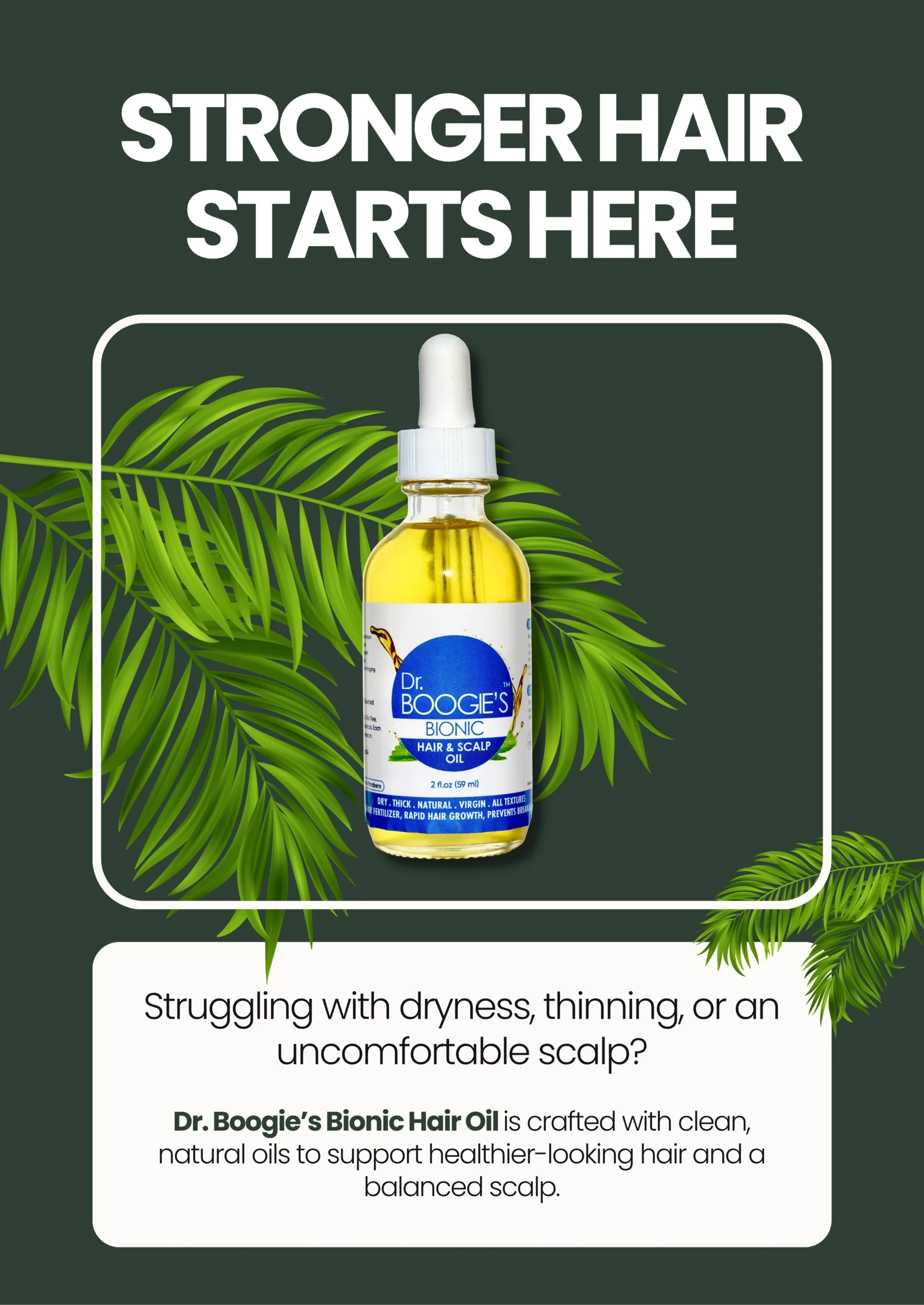
routine, Dr. Boogie’s Bionic Hair and Scalp Oil offers a professionally formulated
botanical blend designed to support scalp comfort and reduce breakage over time.
Its lightweight texture makes it easy to use several times a week without heaviness,
helping maintain moisture, improve manageability, and support stronger-looking hair.
Simply massage a small amount into the scalp and strands as part of your regular routine.
Conclusion
So, do bananas help hair growth? The answer is a qualified yes. Banana is genuinely rich in nutrients that support the hair growth cycle, particularly B vitamins, potassium, and natural conditioning compounds. Applied topically, it improves hair texture, reduces frizz, boosts shine, and helps maintain a healthier scalp environment. These effects create real conditions for hair to grow longer and stronger, without the damage and breakage that undermine growth.
However, bananas are best understood as supportive rather than transformative. It will not regrow a receding hairline or overcome a significant nutrient deficiency on its own. For those goals, bananas need to be part of a broader, consistent hair health strategy that includes good nutrition, scalp care, stress management, and targeted topical treatments like Dr. Boogie Hair Oil.
The good news is that bananas are one of the most accessible and affordable additions to any hair care routine. Whether you eat one a day or apply a banana mask once a week, you are giving your hair a genuine, if modest, boost. Pair it with the right products and lifestyle habits, and the results will speak for themselves.