Introduction
Bee pollen has a powerful reputation in the wellness world. People call it a natural superfood and often it gets associated with thicker long hair. But hair growth is slow and complex, and not every nutrient rich ingredient works like hair growth medicine. Cleveland Clinic also maintains that many bee pollen claims have not been proven and it can have serious allergy risks for some people. So does bee pollen help hair growth, or is it mostly hype. Bee pollen may provide support for the body to help improve the strength of hair and reduce breakage for some people, but certainly is not the fix to solve the problem of hair shedding and thinning. Keep on reading and you will know what it is capable of, what it is not, and how to use it wisely.
Why Bee Pollen Is Called a “Natural Superfood” for the Body
Bee pollen is produced when the bees gather pollen from flowers and mix it with nectar and enzymes. It is marketed in the form of granules or capsules. It is termed a super food because it may contain a huge variety of vitamins, minerals, amino acids, and plant compounds. One thing to keep in mind is that bee pollen is never the same from jar to jar. The flowers in the area, season, and storage are factors that affect what ends up inside. So it is difficult to guarantee the same nutrient profile each time.How Hair Follicles Respond to Nutrients Over Time
Hair follicles are living structures in the scalp that build hair fiber slowly. When your body goes under stress or you do not feed your body with adequate nutrients then the follicle can go into a resting phase and shedding can increase later on. That is why the nutrition changes do not appear overnight. You are mostly supporting the new hair that is being made now, not instantly changing the hair that grew already out.Understanding the Difference Between Hair Growth vs Nutritional Support
When someone speaks of “I want hair growth” they often refer to more length, less breakage or fuller looking hair. Those goals are also related, but not the same thing. Bee pollen is more adequate in nutritional support than actual growth stimulation. It may help your body meet basic needs that healthy hair depends on, but it is unable to override the effects of genetics, hormones or a medical condition that is causing the hair loss.How Bee Pollen May Support Hair Strength and Reduced Breakage
Hair is essentially protein and your body requires amino acids in order to build your hair. Bee pollen is rich in amino acids and other micronutrients, so it should have some of the effect of a general nutrition boost for some people. If your hair is weak and snapping, you may notice the most apparent change is less breakage occurring over time. Less breakage can feel like “my hair is growing faster,” because you are keeping more length instead of losing it at the ends. Bee pollen also contains plant compounds that are often discussed for antioxidant support, which may help overall scalp and skin balance.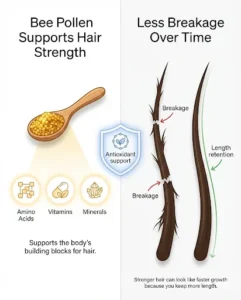
Can Bee Pollen Influence Shedding or Thinning Patterns?
Shedding is normal but heavy shedding or thinning usually has a cause. Some of the common triggers include stress, illness, poor sleep, rapid weight loss, low iron, thyroid problems, hormonal changes and genetic factors. Bee pollen may be of help only if nutrition is one of the problems. If your diet has been low-quality and your body is lacking key building blocks, supplementing the diet with something nutrient dense could facilitate recovery. But if you have ongoing thinning, it is smarter to treat bee pollen as a small support piece, not the main answer.Who Might See Benefits From Bee Pollen and Who Might Not
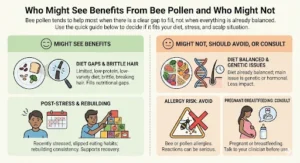
Bee pollen is best to help in most cases that have a clear gap to fill, not when everything is well balanced. Use the quick below guide to make the diagnosis as to whether or not it fits your diet, stress, and scalp situation:- You may benefit from it if your diet is limited, has low protein, or low food variety, and your hair feels brittle or sheds easily.
- You may see benefits if you recently experienced a stressful season and your eating habits slipped, and you are now getting things back on track.
- You may not notice much if you are having a nutritionally balanced diet in your body and your underlying problem is genetic thinning or hormonal hair loss.
- You should avoid it if you have bee or pollen allergies, as reactions can be serious.
- If you are pregnant or breastfeeding, talk to your clinician before using bee pollen supplements.