If you’ve ever gone into the world of hair care forums and wellness message boards online, there’s a pretty good chance that you’ve seen some claims about gelatin, the same ingredient used to concoct Jell-O and gummy bears, working wonders, literally turning limp spirals into thick, vigorous strands.
But will it really live up to its beauty potential, or is this just another addition to the over-hyped myths springing up across all areas of natural beauty treatment?
In this comprehensive guide, we will dig into the science of gelatin and hair health: what gelatin is, how it’s made, the nutrients packed inside it, its potential (and limitations) as a hair growth stimulator, and finally, how gelatin compares to other scientifically validated methods for nourishing and strengthening your locks.
Understanding Gelatin as a Protein-Based Substance
A set, transparent, tasteless protein produced from collagen by boiling skin, tendons, ligaments, and bones with water is gelatin; the animal kingdom’s most common structural protein. So when you’re eating gelatin or using collagen-containing beauty products, you’re pretty much ingesting connective tissue that’s been made more digestible and usable.
Molecularly, gelatin is a long string of amino acids. Gelatin is unique for its amino acid profile: it contains an abundance of glycine, proline, and hydroxyproline. Your average high-protein food won’t contain these amino acids, which tend to be concentrated in the skin and connective tissues of animals (chicken breast, fish, or things like whey don’t have them).
It is this unique amino acid profile that makes gelatin of interest to hair enthusiasts. Hair is formed of protein called keratin, the production and maintenance of which depend upon an adequate supply of amino acids.
For centuries, gelatin has been used not only in food but also in traditional medicine, photography (as a film coating), and as a binder for pharmaceutical capsules. Its versatility arises from its atypical hydrogel-forming properties: it dissolves in hot water and forms a hydrogel upon cooling, and is used for its various applications in the food industry.
How Gelatin Is Derived and Used
Understanding where gelatin comes from helps clarify what you’re actually consuming when you take it as a supplement or eat gelatin-rich foods.
The Extraction Process
Gelatin is made by boiling the connective tissues, bones, and skins of animals (usually cows, pigs, or fish). Collagen in bones, tendons, and skin dissolves after prolonged boiling, breaking down into smaller gelatin molecules that are dispersed in the liquid. What’s left is filtered, concentrated, dried, and milled into the powdered or sheet gelatin you see in stores.
Its process may not sound particularly appetizing, but it’s essentially a controlled version of what happens when you make bone broth at home: long simmering dissolves the collagen in bones and connective tissue, which forms a gel when the stock cools.
Common Dietary Sources
Gelatin appears in numerous foods and supplements:
- Gelatin desserts and candies: Jello, gummy vitamins, marshmallows
- Bone broth: Homemade or commercial varieties rich in naturally occurring gelatin
- Gelatin powder supplements: Unflavored powder designed to dissolve in beverages
- Capsules: Many supplements use gelatin (or vegetarian alternatives) as the capsule material
- Certain yogurts and processed foods: Used as a thickening or stabilizing agent
Gelatin vs. Collagen Supplements
It’s worth noting the distinction between gelatin and collagen peptides (also called hydrolyzed collagen). Both come from the same source animal collagen, but they’re processed differently:
- Gelatin gels when cooled and must be dissolved in a hot liquid
- Collagen peptides are further broken down and don’t gel, dissolving easily in cold liquids
For supplementation purposes, many people prefer collagen peptides for their convenience, but both provide similar amino acids.
General Health Role of Gelatin
Hair health doesn’t stop at your scalp; it’s a reflection of what you’re putting into your body and how well you’re treating it in general.
- Joint and Connective Tissue Support
There is probably the best research on gelatin and joint health. A couple of studies also demonstrate the benefits of a gelatin supplement for joint pain among people with Osteoarthritis, as well as for cartilage integrity. The glycine and proline in gelatin support the production of collagen, from which cartilage material is made, as well as muscle mass, and help balance damage to our ligaments and tendons.
- Digestive System Benefits
Here’s how gelatin might be good for your gut. It works by creating a protective layer over the gut lining, which could be useful for those with higher intestinal permeability (often referred to as leaky gut). Research shows that glycine promotes stomach acid secretion and digestive enzyme production, which can help with digestion and nutrient absorption, thereby indirectly supporting hair health.
- Skin Health and Aging
Fatty acids are great for your skin because collagen (and, by extension, gelatin) is a key determinant of its structure and elasticity. There’s some evidence that taking collagen supplements can help improve skin hydration and elasticity, as well as reduce signs of aging such as wrinkles. And since your scalp is skin, the logic follows that all of the above might also help your follicles become healthier.
- Sleep and Mood Regulation
One of the main amino acids in gelatin, Glycine, is regarded as a stress-reducing and sleep-quality-enhancing supplement. Glycine is an inhibitory neurotransmitter in the central nervous system, and some studies have found that taking glycine before bed improves sleep. High stress and lack of sleep are contributing factors to hair shedding (telogen effluvium), so any food that helps promote better stress management and sleep may indirectly benefit hair health.
Gelatin and Hair Structure Support
Now let’s get to the heart of the matter: how does gelatin specifically relate to hair?
Hair is made up mostly of keratin, a fibrous structural protein that’s not identical to collagen or gelatin. But the human body manufactures keratin from amino acids, and that’s where gelatin comes into play.
Amino Acid Building Blocks
The amino acids in gelatin, specifically glycine, proline, and hydroxyproline, don’t get utilized directly for keratin production. Still, they help create the right environment in your body to optimize protein renewal, which helps you have radiant skin. Think of it this way: your body is making and repairing proteins all the time in every tissue. If you are consuming enough protein from a variety of amino acids, the body has the building blocks it needs to make all of this, including keratin, which is used to build hair follicles.
Glycine in particular is considered a conditionally essential amino acid, which means that although the body can make it in sufficient amounts under normal circumstances, there may be certain times or conditions during rapid growth, illness, or when there’s an increased metabolic demand, when dietary intake becomes necessary. Some scientists say our diets no longer contain enough foods rich in glycine, and that we are experiencing a chronic insufficiency of the amino acid that affects tissues throughout the body.
Collagen in the Scalp
Now things become interesting: Although hair is largely made up of keratin, the tissues inside the scalp and the dermal papilla (the structure sitting at the base of each hair follicle) can both be rich in collagen. Collagen is the armature of our skin, and it also maintains the integrity of the follicle-surrounding environment.
Collagen production diminishes throughout the body, including the scalp, as we age. This loss of collagen may be linked to follicle miniaturization, in which hair follicles consistently shrink over time and produce smaller, weaker hairs. It could be hypothesized that supplementing the amino acids required for collagen synthesis via gelatin supplementation might support a healthier follicle architecture.
Effects of Gelatin on Hair Strength and Breakage
One of the most commonly reported benefits of gelatin supplementation is improved hair strength and reduced breakage. Let’s examine what might be happening here.
- Increased Hair Shaft Diameter
Reports and small studies indicate that the regular intake of gelatin or collagen may thicken hair fibers. While evidence from large clinical trials is limited, the mechanism, if anything, can make good biological sense. If gelatin supplementation improves the protein synthetic environment and further supports follicle structure, then hair produced in the anagen phase might be just a touch larger.
- Reduced Breakage and Split Ends
Hair breakage occurs when the hair shaft is weakened either from environmental damage (like heat styling, chemical treatments, or exposure to UV rays) or nutritional deficiencies that cause your body to produce weak keratin. By helping to support overall protein status through its high amino acid content and by possibly improving scalp collagen production and strength, gelatin can help create stronger hair, which is less prone to induction of (mechanical) cuticle damage.
- Improved Elasticity
Wet hair can stretch up to 30% of its length without breaking, and it is more elastic than dry hair. Hair that lacks elasticity breaks when combed or brushed normally. Because a lack of protein can undermine hair’s elasticity, and gelatin is packed with amino acids, taking extra gelatin on a regular basis might be a good way to help keep hair healthy, flexible, and strong.
Hard Gelatin and Hair Care Context
When discussing gelatin in the context of supplements, you’ll often encounter the term hard gelatin. This refers specifically to the type of gelatin used in capsule manufacturing.
What Is Hard Gelatin?
Hard gelatin capsules are the empty solid units you fill with a powdered or granulated substance. They are composed of gelatin extracted from the flesh and bones of animals (usually bovines or pigs) that has been processed into a rigid, interlocking shell. The capsules are meant to be broken down in the stomach, with their contents absorbed after that.
The expression “hard gelatin” is used to differentiate these capsules from the other type of capsule, the soft gelatin, or softgel capsule, which is a single-piece, rounded or oval-shaped unit that usually contains a liquid and can be readily deformed and filled with plasticizers (such as glycerin).
Hard Gelatin Capsules in Hair Supplements
All sorts of hair-growth supplements, including those with biotin, collagen peptides, or botanicals, come in hard gelatin capsules. When you ingest these supplements, you’re not only drinking the active ingredients; the gelatin itself is quite literally part of the capsule.
The quantity of gelatin in a capsule is usually pretty low, around 50-100 mg per capsule, so it’s not really providing much protein or amino acids on its own. But if you’re taking a bunch of different gelatin-encased supplements every day, then and only then are you getting trace amounts of the amino acids present in gelatin.
Vegetarian Alternatives
For those avoiding animal products, many manufacturers now offer supplements in vegetarian capsules made from hydroxypropyl methylcellulose (HPMC) or pullulan. These provide the same delivery mechanism without the animal-derived gelatin.
Daily Gelatin Intake and Hair Expectations
If you’re considering adding gelatin to your routine specifically for hair benefits, here’s what you need to know about dosing and realistic expectations.
Recommended Dosage
There’s no official recommended daily allowance for gelatin, as it’s not considered an essential nutrient. However, studies on collagen supplementation (which provides similar amino acids) typically use doses ranging from 2.5 to 15 grams per day.
For hair-specific benefits, many proponents suggest:
- 1-2 tablespoons of gelatin powder daily (approximately 10-20 grams)
- 1-2 cups of homemade bone broth (gelatin content varies)
- Collagen peptide supplements: 10-20 grams daily
These amounts can be divided throughout the day and mixed into beverages, smoothies, or foods.
Timeline for Potential Results
Hair grows slowly—on average, about half an inch per month. Even if gelatin supplementation improves the quality of new hair growth, you won’t see results overnight. The hair currently on your head was formed weeks or months ago, so any improvements in hair quality from gelatin would appear gradually as new hair grows in.
Most people who report benefits from gelatin or collagen supplementation notice changes after:
- 4-8 weeks: Possible improvements in hair texture, reduced breakage
- 3-6 months: Potential increase in hair thickness or growth rate
- 6-12 months: Maximum observable benefits
Individual Variation
It’s crucial to understand that gelatin supplementation doesn’t work the same for everyone. Factors that influence your response include:
- Baseline protein intake: If you already consume adequate protein from diverse sources, adding gelatin may not produce noticeable changes
- Underlying hair loss causes: Gelatin won’t address hormonal hair loss, autoimmune conditions, or genetic pattern baldness.
- Overall nutritional status: Gelatin works best as part of a complete, nutrient-dense diet
- Hair type and condition: People with damaged, protein-deficient hair may notice more dramatic improvements than those with already-healthy hair
Gelatin’s Role in Supporting Hair Growth
Let’s be clear about what gelatin can and cannot do when it comes to hair growth.
What Gelatin Can Do
- Provide amino acids for protein synthesis: Gelatin supplies abundant glycine, proline, and hydroxyproline, supporting the body’s overall protein-building processes, including keratin production in hair follicles.
- Support scalp collagen: The amino acids in gelatin may help maintain collagen in the scalp dermis and around hair follicles, potentially creating a healthier environment for hair growth.
- Improve hair quality: By supporting protein nutrition, gelatin may contribute to stronger, thicker hair shafts that are less prone to breakage, which means you retain more of the length you grow.
- Enhance overall protein status: For people with inadequate protein intake, gelatin can help fill nutritional gaps, indirectly supporting hair and other protein-dependent processes in the body.
What Gelatin Cannot Do?
Reverse androgenetic alopecia:
Pattern baldness driven by DHT sensitivity in genetically predisposed follicles requires medical treatment (minoxidil, finasteride) or hair transplantation. No amount of gelatin will counteract this hormonal process.
Regrow hair from dormant follicles:
Once follicles have miniaturized to the point of dormancy, gelatin won’t reactivate them.
Work as a standalone solution:
Gelatin should be viewed as one component of a comprehensive approach to hair health, not a magic bullet.
Compensate for severe nutritional deficiencies:
If you have significant deficiencies in iron, zinc, biotin, or calories overall, gelatin alone won’t correct these issues.
What Actually Helps Promote Healthy Hair Growth
While gelatin can play a supporting role, let’s look at the evidence-based strategies that genuinely make a difference in hair health and growth.
Balanced Nutrition
Hair follicles require a constant supply of nutrients to function optimally:
- Protein: Aim for 0.8-1.0 grams per kilogram of body weight daily from varied sources
- Iron: Essential for oxygen delivery to follicles; deficiency is a common cause of hair loss.
- Zinc: Supports follicle function and protein synthesis
- Biotin: While deficiency is rare, adequate intake supports keratin infrastructure
- Vitamin D: Plays a role in follicle cycling
- Omega-3 fatty acids: Support scalp health and reduce inflammation
Scalp Health
A healthy scalp environment is foundational:
- Regular cleansing: Remove excess oil, dead skin cells, and product buildup
- Gentle handling: Avoid aggressive brushing, tight hairstyles, and excessive heat
- Massage: Scalp massage may improve circulation and create a healthier follicle environment
- Sun protection: UV damage can affect both scalp and hair
Stress Management
Chronic stress is a major trigger of telogen effluvium (excessive shedding):
- Practice stress-reduction techniques: meditation, exercise, adequate sleep
- Address underlying anxiety or mood disorders with professional support
- Maintain consistent sleep schedules for optimal hormonal balance.
Medical Treatments for Hair Loss
For significant or progressive hair loss, consult a dermatologist about evidence-based treatments:
- Minoxidil (Rogaine): FDA-approved topical treatment that extends the anagen phase
- Finasteride (Propecia): Prescription medication that blocks DHT conversion (for men)
- Low-level laser therapy: Some evidence supports its effectiveness
- Platelet-rich plasma (PRP): Emerging treatment with promising results
- Hair transplantation: Surgical option for permanent pattern baldness
Avoiding Damage
Protecting existing hair is just as important as promoting new growth:
- Minimize heat styling or use heat protectant products.
- Avoid harsh chemical treatments (bleaching, perming) or space them out significantly.
- Use gentle, sulfate-free shampoos appropriate for your hair type.
- Protect hair from environmental damage (chlorine, salt water, sun exposure)
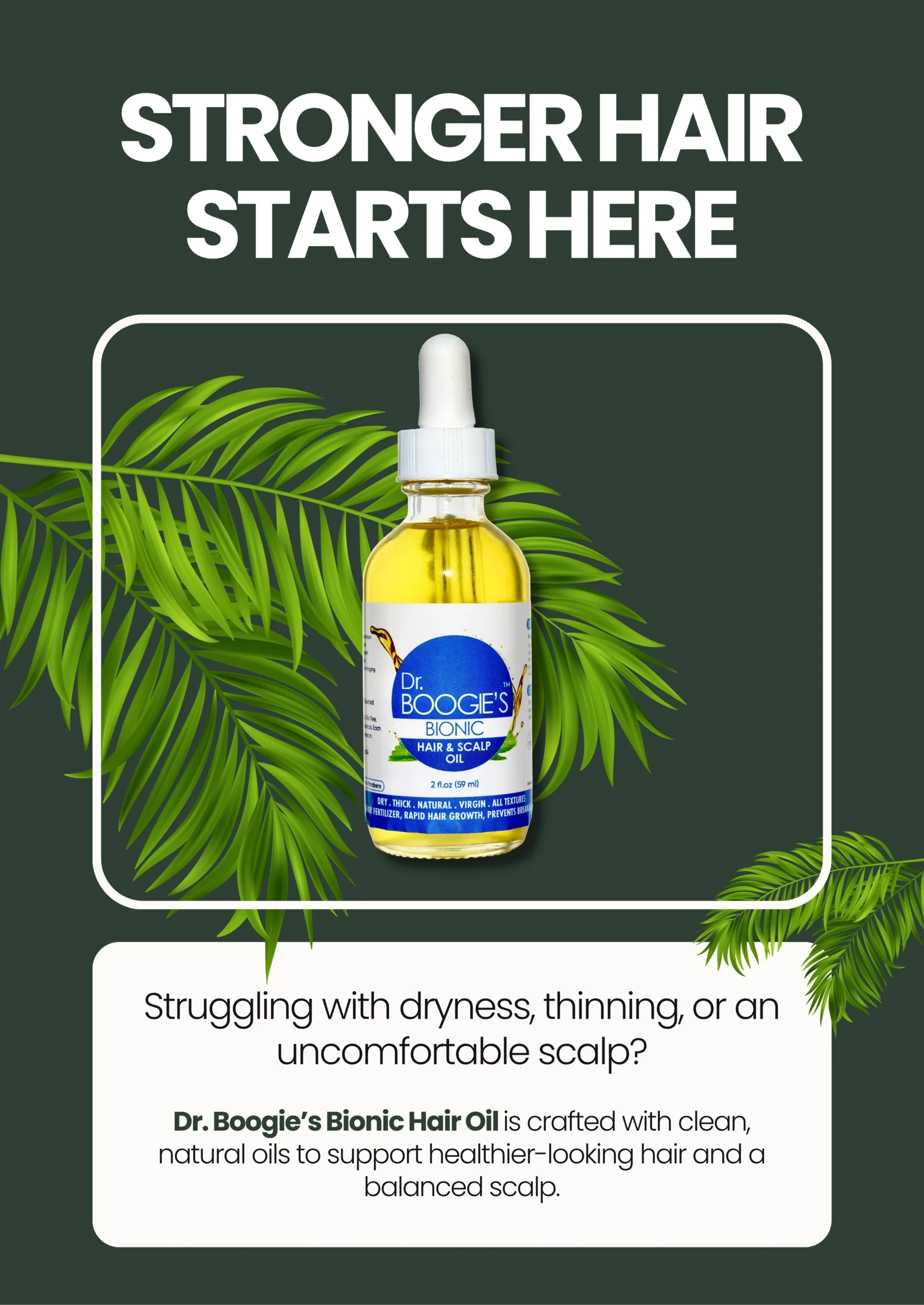
Support Your Scalp Alongside Internal Nutrition
Ingredients like gelatin may support hair health from within, but consistent
external care also plays an important role in maintaining a healthy scalp
environment. Dr. Boogie’s Bionic Hair and Scalp Oil is a lightweight botanical
blend designed to help restore moisture, calm dryness and irritation, and
strengthen fragile strands without leaving greasy buildup. With ingredients
such as Black Jamaican Castor Oil, Jojoba Oil, Tea Tree, and plant extracts,
it supports scalp comfort and improves hair manageability as part of a
balanced hair care routine.
Conclusion
Gelatin contains important amino acids that help keep the body functioning properly, including building up our stores of keratin in hair follicles and collagen on the scalp. If you don’t get enough protein in your diet, or if you’re simply looking for a way to support the health of your hair from all angles, adding gelatin through supplements, bone broth, or collagen peptides could help promote stronger, more resilient hair.
Gelatin won’t reverse genetic hair loss, make up for a poor diet, or replace sleep in terms of its ability to rapidly regrow hair on your head. The advantages are real but minor, and they work best as part of a broader hair care plan that comprises:
Gelatin is an inexpensive, easy-to-include placebo-like supplement that may have an impact beyond hair on the health of your joints, the quality of your skin, and the integrity of your digestion. If you’re already eating well and taking care of your hair, gelatin could give you that extra boost. If you have substantial hair loss, it should be one of your tools, but not the only one.
At the end of the day, hair that grows well requires a holistic approach to care: feeding your body from the inside out, protecting hair to minimize damage, and creating an environment where follicles do what they do best, make beautiful hair.
Frequently Asked Questions