Let’s be honest, if you’ve ever spent an evening scrolling through natural hair forums or searching for ways to speed up your hair growth, you’ve probably come across some interesting advice. Drinking a daily glass of dairy is your secret weapon for thicker hair. What you eat and how your hair looks are related, for sure. Hair is essentially a living record of your internal health when you’re healthy, so is your hair. When you’re not, your hair does that, too.
In an era when we have plant-based everything and 10-step Korean skincare routines are NBD, can it really be that the secret to your dream hair is nothing more than a humble gallon of milk from your fridge? We’re doing a deep dive into the science and benefits of Drinking Milk for Hair Health today, no hype, no strangers on Reddit who swear by it, just actual research into what milk can do (and also can’t do) for your hair.
We’ll discuss the nutrition behind it, consider drinking versus wearing, and help you navigate whether (or how) milk should play a part in your personal hair care regimen. So let’s find out whether milk deserves a place in your daily routine, or is another beauty myth that sounds good but isn’t as awesome as it seems.
Key Nutrients Milk Contains That Support Hair Health?
We address the question of whether milk really helps in growing hair. Let’s pop the hood. What’s actually in this stuff? Milk is often referred to as a complete food because it supplies an impressive variety of nutrients, proteins, fats, vitamins, and minerals that our bodies require. But when it comes to hair, in particular, three ingredients are especially noteworthy:
The Protein Powerhouses: Casein and Whey
Here’s something you may not have considered: your hair is basically protein. And it is made of a very tough protein called keratin. For your body to produce keratin (the protein that makes up hair), it needs a consistent intake of amino acids, the compounds that form proteins. And milk? It’s packed with two high-quality proteins that your body craves:
Casein delivers glutamine to your hair follicles, which serves as a spark plug for growth. It’s the wake-up signal for follicles that have fallen asleep on the job. Without an adequate intake of protein, your hair basically gives up. It enters what’s known as the telogen (resting) phase far too soon, leading to thinning and increased shedding. Nobody wants that.
Calcium and Vitamin D
So you likely knew milk is known for calcium, but here’s what’s important: it is essential for hair health as well. Vitamin D, which is found in milk (and often added to it), plays a significant role in waking dormant hair follicles. Contrary to popular belief among women that we rely on Vitamin D for strong hair, they are not wrong. Scientific researchers have demonstrated that active vitamin D receptors are required for the hair growth cycle. In truth, vitamin D deficiency and hair loss are often correlated with alopecia, or general thinning of the hair. The type where you find way too much in your brush than is standard has been associated with a lack of the vitamin.
Research also suggests that calcium help hair growth because it is not just a bone builder; it helps your body absorb iron and contributes to the secretion of biotin. Both are nonnegotiable for the creation of healthy cardiovascular cells. Milk also contains Vitamin A (which is good for your skin glands) and helps regulate sebum production. Now, sebum might not sound sexy, but it’s the natural oily substance that nourishes your scalp and prevents your hair from getting dry and breaking.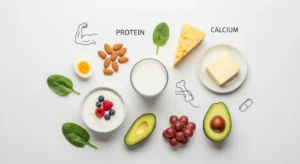
Difference for Hair when consuming Topical vs. Drinking Milk
| Feature | Drinking Milk (Internal) | Milk Rinses (Topical) |
|---|---|---|
| Primary Goal | Actual Growth & Thickness | Surface Shine & Softness |
| How It Works | Nutrients enter the bloodstream to feed the Dermal Papilla. | Proteins and fats coat the Hair Cuticle. |
| Scientific Impact | Influences the biological growth rate and structural integrity. | Acts as a temporary “filler” to smooth frizz. |
| Reach | Deep penetration reaches the root where growth begins. | Surface level only; molecules are too large. |
| Longevity | Permanent: Builds stronger hair from the moment it is created. | Temporary: Effects usually last until next shampoo. |
| The “Catch” | Requires patience (the “Long Game”); results take months. | Can leave a sour smell; no long-term growth. |

The Balanced Approach That Actually Makes Sense
Here’s our recommendation after assessing the evidence: use milk if you want actual growth, but use special topical products if you wish to maintain and protect. Because while milk is working to enrich from the inside, a good hair oil will seal the cuticle to prevent breakage and stimulate your scalp with a cheeky massage. It just makes sure the new length you’re growing out is staying on your head instead of breaking off. You require both methods to work together—internal nutrition for growing and external protection for length retention.
The Reality Check: Diet, Genetics, and Follicle Health
Let’s have an honest talk for a minute: milk is not a magic wand. We wish we could tell you that drinking three glasses of milk a day will give you waist-length hair in a month, but that’s just not how biology works. Hair growth is actually governed by a complex intersection of three main factors:
Factor 1: Your Genetics (The One You Can’t Do Anything About)
Every single hair has a terminal length, the maximum length it would reach before it sheds naturally and starts over. The average person grows about 1/2 inch of hair each month, and genes determine the rate of growth. What milk cannot do: Grow past your genetic ceiling by avoiding nutritional deficiencies that could impede growth or cause you to shed too much. It cannot overrule your DNA so you can grow 3 inches of hair in just a week. Milk can help you be the best version of yourself, but it’s not going to turn you into someone with entirely different genetics.
Factor 2: Your Follicle Environment (The One Thing You Have Control Over)
Your hair follicles are among the most metabolically active parts of your body. But here’s the catch: your body also classifies them as non-essential tissue. When you don’t eat well, your body actually robs these nutrients from your hair to keep your more vital organs, such as the heart, lungs, and liver. Drinking milk regularly gives you a reserve of nutrients for your follicles and keeps them from ever going hungry. You are essentially removing hair from the chopping block of priorities.
Factor 3: Your Full Diet (The Grand Scheme of Things)
Milk is an excellent base, but there’s more to the story. Your follicles also require iron (for oxygen transport), zinc (for tissue repair), and Omega-3 fatty acids (for scalp health). Feeding on a single food (in this case, milk) in the long run will create imbalances. Think of it like milk—the star of a team, not the whole team. You also need leafy greens, lean proteins, and healthy fats to flourish.

Setting Realistic Expectations: The Timeline Nobody Talks About
When it comes to hair care, patience is the most valuable ingredient. This is what a timeline that’s real might look like:
- Month 1: Your body is adjusting. Beneath the surface, your follicles are beginning to receive better nutrition.
- Month 3: Hair follicles that were trapped in the resting phase because of poor nutrition start to ripen. You may see less hair coming out when you brush.
- Month 6: Here is where you start to experience the real magic. The new hair fed by all those nutrients is long enough to see and feel. It should look shinier and feel stronger.
Your Practical Game Plan: How to Actually Use Milk
Step 1: Optimize Your Intake
If you’re not lactose intolerant: Try to eat one to two servings of high-quality dairy per day. Grass-fed, organic milk nutritionally gives you more bang for your buck. If you do not eat dairy, search for fortified soy or pea milk with similar protein profiles—just ensure they have Vitamin D and B12.
Step 2: Don’t Forget Your Scalp
Your hair can’t grow without a stimulated scalp. The milk is the fuel, but blood flow is the car that delivers it. Applying a few drops of oil while engaging in a five-minute nightly scalp massage can help stimulate that flow. Think of it as fertilizer: if the soil doesn’t have good drainage, you won’t have lush growth.
Step 3: Protect Your Length
There’s a significant distinction between hair growth and length retention. Milk gets you the growth, but those ends have to be safe from splits. Keep your ends hydrated, limit heat, and get split ends snipped before they creep up the hair shaft.
Step 4: Manage Your Stress and Sleep
High cortisol levels can shut down your hair growth cycle regardless of what you drink. Make sure you’re getting 7-8 hours of sleep. This is when your body performs cellular repair work.
Dr. Boogies Hollywood Secret
True hair growth comes from combining internal nutrition with consistent external care. Using Dr. Boogie’s Bionic Hair and Scalp Oil during a nightly scalp massage helps stimulate blood flow and supports nutrient delivery to the follicle, strengthening the environment where growth begins.
Support Healthy Growth Now
Fuel from within and protect from without. Shop our Bionic Oil to complete your hair care system.
Conclusion
After reviewing the science, the honest answer is yes, milk can support hair growth, but it works as a nutritional foundation rather than a miracle solution. Milk provides important nutrients such as amino acids, Vitamin D, and B-vitamins that help hair follicles function properly and maintain a healthy growth cycle. By filling nutritional gaps, it can reduce excessive shedding and support stronger, healthier hair over time. The best results come from consistency and a balanced approach.