Introduction
Millet gets talked about for hair because it is a simple food that quietly adds useful nutrients to your plate. For example, the University Hospitals health library lists that 1 cup of cooked millet has about 6.11 grams of protein and about 76.56 milligrams of magnesium. Those numbers matter because hair strands are made mostly of protein, and your follicles rely on steady nutrition to keep growth and strength on track.
But millet is not a magic switch that turns on new hair overnight. What it can do is support the basics that help hair feel stronger, especially if your diet has been inconsistent or low in key nutrients. Keep reading and I will explain when millet can help hair growth, when it will not, and how to use it in a realistic way.

Millet as a Traditional Grain Making a Comeback in Hair Nutrition
For centuries, millet was a staple food in Asia and Africa known for its ability to thrive in harsh environments along with its amazing nutritional density. In the last few decades, however, convenience crops such as refined wheat and white rice have dominated the world market, and nutrient rich grains such as millet have been left on the sideline. This change in diet has gone alongside a series of nutritional deficiencies which tend to show physically as weak nails, dull skin, and thinning hair. The resurgence of millet in the wellness world is not just a trend but a return to consuming a food which is more functional than simply being convenient.
The reason why millet is gaining specific momentum in hair care circles is due to its uniqueness in the biological composition. Hair is mostly composed of protein, in fact keratin. To synthesize keratin, the body needs certain amino acids in particular methionine and lysine which is often low or absent in other common grains. Millet is one of the very few grains that are found to provide a big dose of these essential building blocks. By reintroducing this ancient grain into your daily meals you are providing your body with the raw materials it needs to synthesise hair strands that are thicker and more resilient to damage.
Mineral Rich Diets and Their Connection to Hair Density and Strength
A diet that is rich in minerals is the non negotiable foundation for a healthy scalp and voluminous hair. The blood transports oxygen and nutrients to the hair follicle. If your blood has a deficiency of the minerals, the follicle becomes dormant or produces weak hair that will break very easily. Millet is a powerful delivery system of three of the most important minerals needed for hair density, iron, zinc, and magnesium.
- Iron deficiency is a major cause of hair loss, especially in women, as iron is required in the formation of hemoglobin, which is responsible for transporting oxygen to the cells that produce hair. Without adequate oxygen, these cells are unable to function and they shed.
- Zinc performs a different but equally vital role and that is to repair the hair tissue and keep the oil glands located around the follicles functioning properly.
- Magnesium helps as it stops magnesium sulfate buildup on the scalp which can choke the follicle and restrain growth.
Types of Millet That Support Healthier Hair
Not all millets are created equal, and different varieties offer specific benefits depending on your unique hair needs. Here are the primary types of millet that are most beneficial for restoring hair health:
- Finger Millet: This variety is extremely high in calcium and has a component called methionine which is an amino acid. Methionine is very important as it is involved in forming sulfur bonds that form the structure and strength of hair and prevent hair breakage.
- Pearl Millet: Known for having a high iron content, pearl millet is a good option for people who are suffering from anemia-related hair loss. It helps to increase the oxygenation to the scalp, which is needed to make sure that follicles have the energy required to grow.
- Foxtail Millet: This is high in protein and helps in the formation of collagen. Collagen wraps all the way around the hair strands, however, it also contributes to the support of the skin on the scalp so that the roots are set firmly in place.

Millet Consumption Methods That Align With Hair Health Goals
incorporating millet into your diet does not have to be complicated or tasteless. The key is to prepare it in ways that preserve its nutritional integrity while making it easy for your body to absorb the vitamins and minerals. Boiling or steaming millet is generally better than frying, as high heat can degrade some of the sensitive water soluble vitamins like Biotin.
Consider these simple and effective ways to add millet to your weekly routine:
- Morning Porridge or Malt: One of the most traditional ways to eat millet is as a warm porridge. Cooking Finger Millet powder with water or milk and sweetening it with jaggery makes for a breakfast rich in iron and calcium that is easily digested.
- Millet Flatbreads: You can substitute a portion of your regular wheat flour with Pearl Millet flour when making flatbreads. This is an excellent way to get a steady intake of minerals without drastically changing your meal plan.
- Grain Salads: Cooked Foxtail millet has a fluffy texture similar to couscous or quinoa. Tossing it with leafy greens and lemon juice adds vitamin C, which further helps your body absorb the iron present in the grain.
Situations Where Millet Improves Hair Quality and Reduced Breakage
There are specific seasons in life where the body demands more nutrients than usual, and hair is often the first thing to suffer during these times. During periods of high stress, the body depletes its stores of magnesium and zinc to manage cortisol levels. This leaves the hair follicles starved of nutrients, leading to telogen effluvium, a condition where hair sheds rapidly. Consuming millet during stressful periods helps replenish these vital stores, acting as a buffer against stress induced shedding.
Another critical situation is during postpartum recovery or after a significant illness. The body prioritizes healing vital organs over growing hair, which is considered a non essential function. By flooding the system with the concentrated nutrition found in millet, you provide enough surplus energy and minerals for the body to restart the hair growth cycle. Furthermore, for individuals with brittle hair caused by heat styling or chemical processing, the protein content in millet helps reinforce the hair shaft from within, making new growth stronger and less prone to snapping.

External Scalp Care as the Missing Layer Beyond Diet Alone
While internal nutrition is the foundation, it is rarely the complete solution for those seeking dramatic transformation. Diet improves the quality of the hair growing out of the scalp, but it cannot always repair damage to the existing hair or address immediate scalp dryness and inflammation. The scalp is skin, and like the skin on your face, it requires topical hydration and protection to remain healthy.
Relying solely on food means waiting months to see results, as hair grows slowly. Integrating external care bridges this gap. A nourished scalp provides a fertile ground for the nutrients from your diet to work effectively. If the scalp is dry, flaky, or inflamed, the blood flow is constricted, and even a perfect diet may not yield the best results. Therefore, a holistic approach that combines mineral dense foods like millet with high performance topical care is the gold standard for hair restoration.
Complete Your Nutrition-Focused Hair Routine
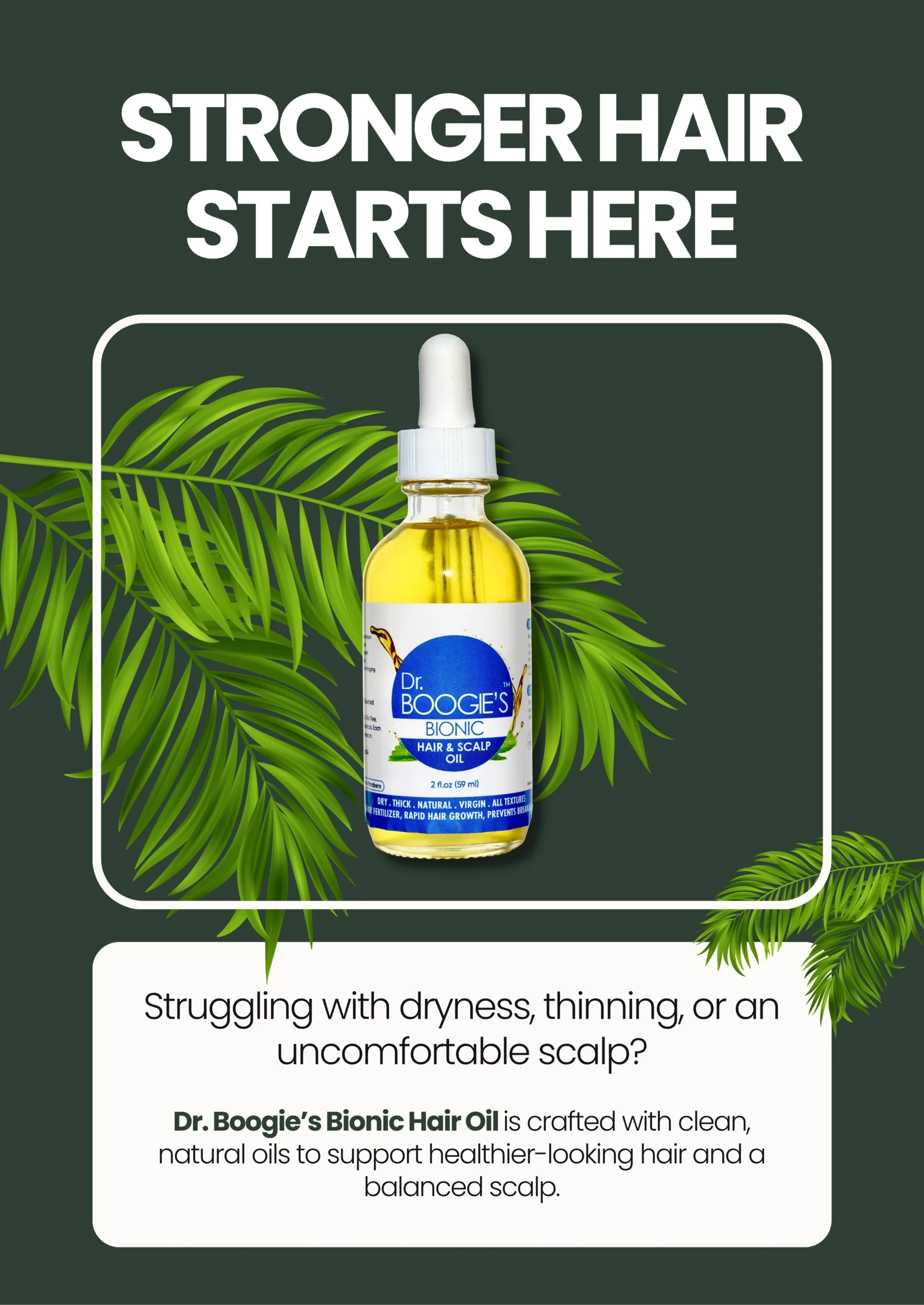
Nutrition works from the inside, but your scalp needs protection and stimulation from the outside too. Dr. Boogie’s Bionic Hair and Scalp Oil seals in moisture, calms irritation, and strengthens weak strands without weighing hair down. Trusted for over 20 years by Hollywood insiders, this lightweight botanical blend creates the ideal environment for healthier, shinier hair with just a simple scalp massage.
Conclusion
The journey to restore hair that is thick and healthy is never solved by a supernatural cure, but more through the mix of habits that are consistent. Millet provides a great, natural, and strong solution that will fix internal deficiencies that are often the cause of hair loss.
However, nutrition is only one part of the puzzle. If you want to enhance the results, pair your food habits with good scalp care. For a simple add on, check out Dr Boogie Secrets and use Bionic Hair and Scalp Oil a couple of times a week to help calm dryness, support a healthier scalp feel, and help hair look stronger from the root to the tip.