It’s quite natural to search for a simple, natural solution if your hair appears sparse, you’re finding more hairs in the drain, or the ends are always splitting. Moringa is currently very well known, as people employ the plant as a food, a powder, or an oil, and it’s well regarded for being full of nutrients. Moringa leaves contain nutrients like vitamin B6, vitamin C, iron, vitamin A from beta carotene, and magnesium.
Hair growth, however, is slow and picky. The American Academy of Dermatology states that a lack of sufficient nutrients like iron and protein, or not consuming enough calories, can cause hair to fall out, and that blood work can show up any shortages. In this guide, you will learn where moringa can help, where it cannot, and how to use it the smart way, so keep reading.
Understanding Moringa as a Nutrient Dense Plant
Moringa oleifera is a plant and its leaves are eaten in numerous cultures as a food. Its popularity is due to what it is made of, as the leaves naturally hold a mix of vitamins, minerals and compounds from plants. This is why moringa is frequently labelled a plant with plenty of nutrients in health and nutrition discussions.
Hair follicles are active tissue. They are constantly cycling through growth, rest, and shedding phases. When your body is stressed or under fueled, it often shifts resources away from hair first, which is why inconsistent eating, heavy stress, and low protein periods can show up as thinning or shedding later. Moringa can support the bigger nutrition picture, but it is not a direct hair medicine.
General Health Benefits of Moringa
People use moringa for general wellness because it adds plant nutrition and antioxidant rich compounds to their routine. Think of it as support, not a cure.
- It can help increase overall micronutrient intake when your diet has been inconsistent.
- It contains nutrients and antioxidants that are commonly linked with general health support.
- It is often used as a simple add in for smoothies, soups, and teas when someone wants more greens.
- It may support the body through stressful seasons by helping people stay more consistent with nutrition.
These benefits can help hair indirectly because hair reflects what is happening in the body. But moringa cannot overpower strong causes like genetic thinning, thyroid issues, or scalp disease, and those need targeted care.
Moringa Powder and Its Nutritional Profile
Moringa powder is dried leaf ground into a fine powder. It is often used for micronutrients and plant compounds, but the exact amounts vary by brand, storage, and processing. That is why one person may love a product and another person feels nothing from it.
Start small because tolerance matters. If you go from zero greens to a large scoop daily, your stomach may complain. Moringa is nutrient packed, but it is still a supplement style product for many people, so moderation and quality matter.
Using Moringa Powder for Hair Care
You can use moringa powder inside and outside. Eating it supports overall nutrition, which may reduce shedding when poor intake was part of the problem. Topical use is mostly about hair feel and scalp comfort, like softness, shine, and less dryness.
A simple approach is to mix a small amount into conditioner, apply to the lengths, and rinse well. This can reduce breakage over time, which helps you keep the length you already grew. Just patch test first, especially if your scalp is sensitive, because irritated scalps rarely grow happy hair.
Moringa and Daily Consumption Timing
Morning versus night is mostly about what feels best and what you can stick to. Morning time is good if you have smoothies, yoghurt, or a simple breakfast drink anyway. Evening might suit you if you’d rather have warm tea and a more peaceful routine, provided it does not cause indigestion.
If you notice it feels energizing, have it earlier in the day. However, if it causes stomach trouble, take it alongside food and reduce the amount. Also, if you are expecting a baby, nursing, or on prescription drugs, it’s wise to ask a doctor before using strong herbal powders every day.
Drinking Herbal Seeds and Hair Growth Myths
Hair myths spread fast because shedding feels scary and people want quick answers. Many viral “seed water” and “herbal drink” claims ignore one simple truth: hair cycles slowly.
- If you drink this, your hair will grow quicker in seven days.
- Just because something’s natural doesn’t mean it’s safe in large doses.
- Tingling sensation on the scalp shows your follicles are becoming active.
- One herb can sort out hair loss caused by hormones.
- Taking more supplements will always mean more hair.
Moringa’s Role in Supporting Hair Growth
Moringa can help hair to grow, but only when poor diet or damage is part of the problem. If you haven’t been eating well, moringa might be a useful addition to help you get a better, more balanced diet overall. That matters because the American Academy of Dermatology links low iron, low protein, and low calorie intake with hair loss.
Moringa can also help you with routine consistency. When someone gets into a daily practice, they frequently get better at other things too like eating breakfast, drinking enough water, or not missing meals. Hair benefits most from that full package, not from one ingredient alone.
Limitations of Using Moringa Alone for Hair Growth
Moringa is unlikely to reverse hair loss caused by genetics, hormones, thyroid problems, scalp inflammation, or medication side effects. In those cases, you need the right diagnosis and a plan that matches the cause, not just a supplement.
Also, even proven approaches take time. Cleveland Clinic notes that with many hair loss treatments, people often start seeing results after three to six months, and regular treatment for months is common. So if you try moringa, judge it on long term consistency, not a two week test.
What Actually Helps Promote Healthy Hair Growth
If you want fuller hair, focus on the habits that keep follicles supported and protect the length you already have. These steps are simple, but they work when done consistently.
- Eat enough protein daily because hair is made from protein.
- Do not crash diet, since low calories can trigger shedding.
- Check iron and other deficiencies if shedding is persistent, rather than guessing.
- Be gentle with heat and tight styles to reduce breakage and traction.
- Treat scalp issues like dandruff or inflammation, because scalp health affects growth comfort.
- Give it time, because hair progress is measured in months, not days.
One more underrated piece is recovery. Stress and poor sleep can push your body into a higher stress state, and hair often reacts later. That is why many people wonder whether sleep plays a role in hair growth, and honestly, it is a fair question to take seriously.
Support Stronger Hair Beyond Moringa
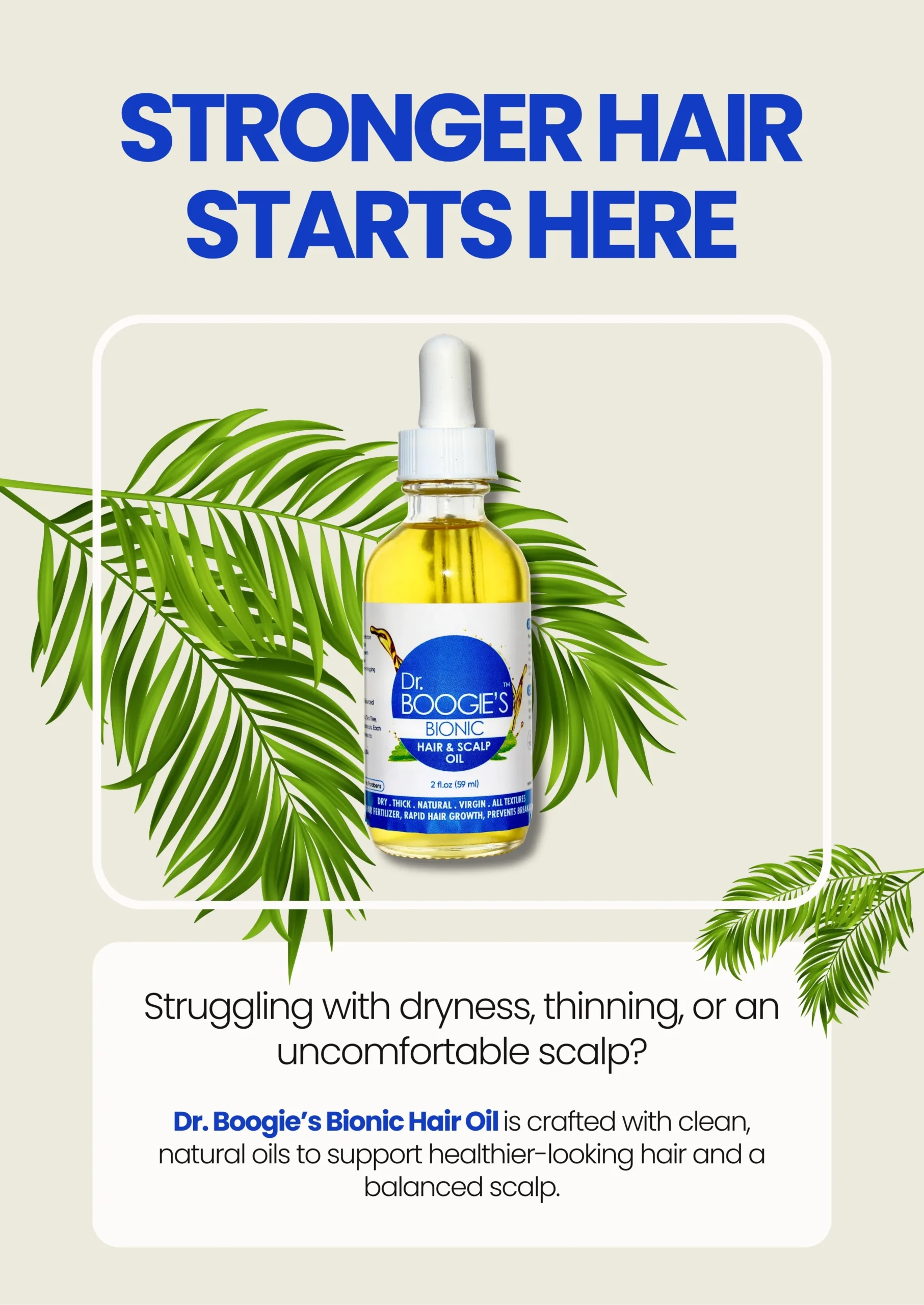
Moringa is valued for its vitamins, antioxidants, and nutrients that support overall scalp health and may help reduce dryness and breakage over time. But healthy-looking hair usually needs both internal nourishment and direct scalp support. Dr. Boogie’s Bionic Hair and Scalp Oil complements ingredients like moringa by restoring moisture, calming irritation, and strengthening fragile strands without leaving a heavy or greasy feel. With Black Jamaican Castor Oil, Jojoba Oil, Tea Tree, and botanical extracts, it helps create a balanced scalp environment where hair can look fuller, softer, and more resilient.
Conclusion
In short, moringa has a lot of good things in it, and this can help hair when shedding or breakage is linked to poor eating, not enough protein, or a way of life which doesn’t give enough energy. But if hair loss is caused by family history, hormones, thyroid problems, or illness of the scalp, moringa won’t be enough by itself. Make a plan which is built around nutrition, gentle hair care, the health of the scalp, and patience, and use moringa as something which aids your hair routine.
If you desire a simple, consistent action you can continue using Dr Boogie Secrets Bionic Hair and Scalp Oil into your plan. Rub a few drops into the scalp several nights a week to aid blood flow, soothe dryness, and make the appearance of weak hair stronger over time. Shop from Dr Boogie Secrets and start your healthier hair routine with a formula made to nourish, not weigh hair down.