We’re told all the time that sleep is the pillar of physical health, mental clarity, and even glowing skin. There’s a reason we call it beauty sleep. But when the subject turns to hair growth, we tend to overlook pills and serums and focus on shampoos instead.
What we don’t realize is that the strongest hair-growth treatment in the world may be free and take place while we’re asleep.
During sleep, your body switches into repair mode. Cells regenerate, hormones rebalance, inflammation lowers, and blood flow is redirected to vital tissues, including the scalp. If sleep is consistently disrupted or insufficient, these processes suffer, and hair follicles are often among the first to show signs of stress.
Curious about the data? A 2025 study explores how night owl habits and altered circadian rhythms contribute to early-onset hair loss in young adults. You can read the complete survey of PubMed here to see how your sleep schedule impacts your strands.
In this guide, we’re taking a deep dive into the science behind sleep and hair health to find out why your pillow is as important as your protein intake.
How the Cycle of Sleep Works for Hair Growth
After all, hair grows in cycles, and sleep helps create the right environment for the body through hormone regulation and cellular repair.
The hair cycle consists of three principal phases:
1-Anagen (Growth Phase)
This is the phase during which hair grows actively.
2-Catagen (Transition)
Growth decelerates
3-Telogen (resting/shedding phase):
Hair comes off naturally
During sleep, when you are helping to encourage the anagen phase, Sleep is championing the anagen phase -that’s where you find out length and thickness.
- Growth hormone is secreted, promoting tissue repair and follicular activation.
- Melatonin increases, which may normalise hair cycling.
- Cortisol (the stress hormone) decreases , which means less follicle inflammation.
- Improved blood circulation carries vital oxygen and nutrients to the scalp.
Disruption of this balance by insufficient sleep pushes the follicles into a premature resting or shedding phase. Over time, hair can look weaker and thinner, grow in more slowly, and that’s regardless of the rest of your routine.
What Happens When You Don’t Get Enough Sleep
Chronic sleep deprivation affects hair health in several interconnected ways.
- First, cortisol levels remain elevated. High cortisol is one of the most destructive things for hair follicles; it reduces blood flow, hinders nutrient delivery, and causes inflammation around the root.
- Second, cell repair slows down. The hair shafts themselves are made of keratin, a structural protein that requires regular cellular turnover. Without proper rest, this rejuvenation process becomes ineffective, resulting in weaker hair and more snapping.
- Third, scalp health declines. Sleep deprivation weakens the scalp’s skin barrier, leading to conditions such as dryness, itching, oil imbalance, and sensitivity. A stressed-out scalp is no place for hair to live.
- Lastly, chronic lack of sleep can cause telogen effluvium, an excessive shedding that results when stress interferes with the hair’s growth cycle, and more hairs than normal enter this phase. Though typically short-lived, it can be scary and emotionally draining.

How Much Sleep Do You Really Need for Hair Health?
For optimal hair health, most adults need 7–9 hours of high-quality sleep each night. It isn’t only a matter of quantity; consistent, deep sleep counts too.
The time when we are in deep sleep or slow-wave sleep:
- Growth hormone peaks
- Cellular repair accelerates
- Inflammation decreases
- Blood flow to the scalp is increased
This process is disturbed by regular sleep of less than 6 hours. Even if you catch up on weekends, irregular sleep patterns can still stress your hair follicles.
For hair-specific benefits:
- Get 7 hours of sleep a night at least
- Maintain a consistent sleep schedule
Hair is very slow to respond, so what you’re seeing today probably took months to improve with better sleep or a change in diet.
Nighttime Habits That Help Hair Growth
Getting the most out of your hair growth while you sleep is a combination of inner prep and outer protection. Here are the best habits to start tonight:
The Silk or Satin Switch:
Cotton pillowcases are porous and can cause friction. While you’re forgetting to start counting sheep, the cotton is grabbing your hair, causing breakage and knots. Silk or satin lets hair slide, keeping the cuticle intact.
The Pineapple or Loose Braid:
Never go to bed with a tight ponytail. That pulling can cause traction alopecia (thinning at the hairline). Instead of struggling with knots, put hair in a very loose top knot or a loose braid.
Scalp Stimulation:
Rub your scalp for 2 minutes before bed. This manual arousal will stimulate blood flow just as you begin to enter the most reparative phase of sleep.
Cool Room Temperature:
Cool rooms (at approximately 18°C-20°C) promote sounder sleep, resulting in higher production of growth hormone.
What Realistic Results Can You Expect From Sleeping Better
Better sleep won’t mean instant hair growth, but it does yield quantifiable, long-term results.
Here’s what most people find:
- Reduced shedding
- Less scalp irritation
- Improved hair texture and softness
After 2–3 months:
- Stronger strands with less breakage
- Better moisture retention
- Improved scalp balance
After 3–6 months:
- More noticeable length retention
- Hair loss is reduced for fuller-looking hair
Sleep helps support the hair you already have. Growth begins to show when breakage decreases and follicles remain active for an extended period.
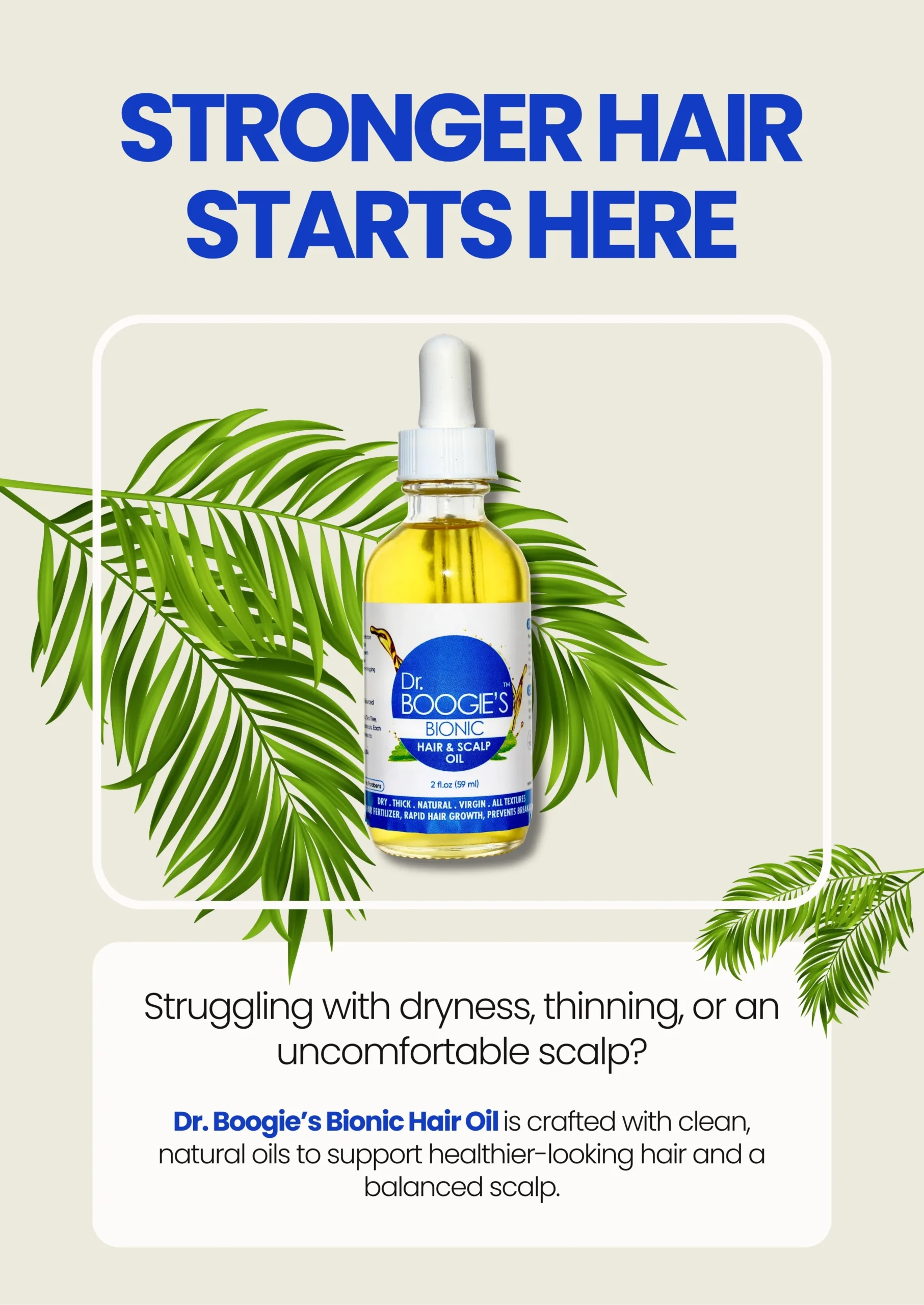
Dr. Boogie Hair Oil Complements Good Sleep for Stronger Hair
While quality sleep supports your body’s natural repair processes, your scalp still
benefits from gentle external care overnight. Applying a few drops of Dr. Boogie’s
Bionic Hair and Scalp Oil before bed helps lock in moisture, calm the scalp after a
long day, and reduce dryness while you rest. Its lightweight blend forms a breathable
layer that supports comfort without heaviness, working alongside your body’s nighttime recovery to promote stronger, more resilient hair over time.
Conclusion
Hair growth is a holistic journey. You can use the most expensive shampoos in the world, but if you aren’t giving your body the time it needs to rebuild, you are fighting an uphill battle. Sleep is the time when your biological construction crew shows up to work.
By prioritizing 7–9 hours of quality rest, protecting your strands with silk, and supporting your scalp with Dr. Boogie’s Bionic Hair Scalp Oil, you are covering all the bases. You are fueling the growth from the inside and protecting the results on the outside