If you’ve ever gone searching for hair growth remedies on YouTube or in online forums, you may have come across videos and posts suggesting that Vicks could make your hair grow. Understandably, this is so appealing: It’s affordable, accessible, and produces a tingly sensation when you use it.
The truth is more complicated than the viral posts imply. Vicks definitely gives your scalp a tingling sensation, but knowing what’s really going on beneath the surface undermines it as a viable home remedy. Understanding the distinction between what seems to be working and what actually creates a sustainable outcome is a matter of life and death.
In this guide, we’ll get into what Vicks VapoRub is and why it makes your skin tingle. You’ll find out exactly what your hair follicles need to grow healthy hair, and why there’s no better solution than nourishing the scalp, not simply irritating the skin. At the end of this, you’ll be equipped to make informed choices about what really supports your hair growth goals.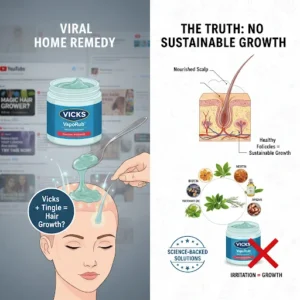
The Origin of Vicks as a Household Remedy
Vicks VapoRub was introduced in 1894 by pharmacist Lunsford Richardson. Vicks was formulated specifically as a topical ointment to relieve cough symptoms and chest congestion associated with colds and respiratory infections.
The original formula combined menthol, camphor, and eucalyptus oil in a petroleum jelly base, ingredients chosen for their ability to create cooling and warming sensations that provided subjective relief from congestion when applied to the chest, throat, and back. The menthol vapor released when applied to warm skin created the sensation of easier breathing, even though it didn’t actually open airways or cure the underlying illness.
Over the decades, Vicks gained a reputation as a versatile home remedy, with people using it for everything from muscle aches to toenail fungus applications far beyond its designed purpose. This expansion into off-label uses stems from a common pattern: when an inexpensive product creates a noticeable physical sensation, people assume it must be doing something beneficial, regardless of whether that sensation addresses their actual concern.
Why Menthol and Camphor Create a Tingling Sensation on the Scalp
To understand why Vicks feels so alive on your scalp, consider its two main active ingredients: menthol and camphor. These compounds interact with your sensory nerves, producing unique physical sensations. Still, these sensations are neurological responses and have nothing to do with tissue regeneration or follicle activation.
Menthol’s Cooling Effect
The menthol activates the TRPM8 receptors in your skin, the same cold-sensing channels that are triggered by real temperature decreases. When menthol attaches to these receptors, it sends the same neural message that your body sends when you’re hit with something cold, even though the temperature of your skin remains unchanged. This is how menthol gives you that cooling sensation.
This sensation feels so strong on your scalp that you might be thinking so, because your scalp has an exceptionally high concentration of sensory nerve endings. This sensitivity to environmental factors (potential insect bites, irritation) makes it responsive to agents such as menthol. The cooling you feel is your nerves firing, not anything dropping in temperature on your scalp or being stimulated in your follicles.
Camphor’s Counter-Irritant Action
Camphor, on the other hand, has a different method of action. It also has a counter-irritant effect; that is, its mild irritation distracts your nervous system so you feel warmth and tingling rather than pain. This feeling can temporarily dominate or distract from other pain (which is why it’s added to muscle rubs). Still, at its core, it’s creating controlled discomfort that bandages over the other feelings.
If you rub camphor on your scalp, it causes localized irritation and increased blood flow to the region, not because it’s feeding your tissue, but because your body is trying to eliminate the irritant and displaying a mild inflammatory response. Your immune system recognizes camphor as an intruder and sends more blood to the area for protection.
Tingling Sensation vs Actual Hair Growth Signals
| Feature | Tingling Sensation (Sensory Response) | Actual Hair Growth (Biological Process) |
| Primary Driver | Chemical irritants (Menthol, Camphor, Peppermint). | Stem cell division and protein synthesis. |
| Location | The scalp surface and upper dermal layers. | Deep within the follicle bulb (the “hair factory”). |
| Biological Purpose | A protective alert system for the nervous system. | Sustained tissue regeneration and keratinization. |
| Sensation | Cooling, stinging, or “buzzing” feeling. | Completely silent and invisible. |
| Blood Flow Type | Acute Inflammation: A temporary rush of blood to fight a perceived threat. | Steady Perfusion: Constant nutrient and oxygen delivery via microvessels. |
| Longevity | Short-term (minutes to hours). | Long-term (months to years of the Anagen phase). |
Is Vicks Good for Hair Growth in Real-World Use
The Absence of Clinical Evidence
There is no scientific evidence that Vicks VapoRub can help hair growth. The manufacturer never tested or marketed the product for this use. When a product truly stimulates hair growth via an established mechanism, such as minoxidil, extensive research demonstrates this effect.
The evidence for Vicks and hair growth is purely anecdotal, shared on social media and message boards. These are not controlled, not properly documented, and do not take into account. Because when a person claims she’s got hair where there wasn’t any before, thanks to Vicks, we have no way of knowing if:
- The growth would have happened anyway (hair does naturally cycle)
- They changed other variables (the diet, the level of stress, and exposure to other products) at the same time
- So they are experiencing confirmation bias (they see what they want to see).
- Before and after pictures look different because of lighting, wetness, or styling
Potential Negative Effects
Now, instead of making your hair grow, applying Vicks to your scalp can do several things:
Clogs Follicles:
Since the base of petroleum jelly can clog the follicle openings, sebum and dead skin cells are trapped. This leads to a perfect breeding ground for bacteria and can even damage the function of your follicles.
Scalp Irritation and Inflammation:
In addition to the expected tingling, some people develop itchy or red skin, while others develop contact dermatitis. The issue with chronic inflammation is that it breaks down follicles over time and can actually drive hair loss rather than block it.
Dryness and Damage:
The inability to remove Vicks from hair often leads to overwashing, stripping the scalp of its protective oils. This can lead to a vicious cycle of dryness, irritation, and impaired scalp skin barrier function.
Hair Growth Needs Follicle Nutrition, Not Surface Irritation
Understanding what hair follicles need to produce healthy hair reveals why Vicks falls short and which approaches actually work. Hair growth is fundamentally a nutritional and biological process, not one driven by external irritation or temporary stimulation.
The Biology of Healthy Hair Follicles
Hair follicles are among the most metabolically active tissues in your body. They require:
Essential Fatty Acids: Omega-3 and omega-6 fatty acids support cell membrane integrity, reduce inflammation, and help follicles maintain the anagen (growth) phase longer. These must come from your diet or be delivered directly to follicles through topical oils that can penetrate effectively.
Vitamins and Minerals: B-vitamins (especially biotin and niacin), vitamin E, vitamin D, iron, zinc, and selenium all play specific roles in follicle function. Deficiencies in any of these can impair the hair growth cycle.
Proteins and Amino Acids: Hair is made of keratin, a protein. Follicles need adequate protein supplies and specific amino acids (especially cysteine and methionine) to construct hair shafts.
Adequate Blood Flow: Follicles receive nutrients and oxygen through tiny blood vessels in the dermal papilla. Healthy, sustained circulation—not inflammatory spikes—ensures consistent delivery of these essential components.
Hormonal Balance: Hair follicles respond to various hormones, including androgens, thyroid hormones, and growth factors. Imbalances can prematurely shift follicles out of the growth phase or cause them to miniaturize over time.
Why Stimulation Alone Is Not Enough for Long-Term Results
With chronic use of Vicks, your skin becomes less sensitive, making your scalp less sensitive to menthol and camphor. Something that once felt immensely tingly might eventually feel like nothing. This finding suggests that the sensation is a neural response that ramps up and down momentarily, rather than an ongoing biological phenomenon underlying hair growth.
Likewise, the inflammatory blood flow response to camphor is reduced with repeated exposure. This time around, your system identifies the irritant as benign and tones down its inflammatory response.
The Inflammation Paradox
Acute inflammation (short-term, triggered by tissue damage or irritation) is part of the healing process. This chronic inflammation (long-term, repeated exposure) is very harmful. The problem is that if you constantly irritate your scalp with Vicks over time, it can lead to chronic, low-level inflammation that actually damages follicles.
The research connects the chronic inflammation of the scalp to:
- Follicle shrinkage (follicles gradually produce thinner and shorter hair)
- Abnormally early entry into telogen (resting phase), resulting in more loss
- Formation of scar tissue around the follicles, which makes it difficult for hair to grow normally
- Hair cycles that are disrupted and never recover
- The fleeting buzz that seems productive could, with repeated use, have the opposite effect of what you crave.
Replacing Harsh Home Remedies With a Premium Scalp Oil Ritual
If Vicks and similar harsh home remedies aren’t the answer, what is? The solution lies in replacing temporary irritation with sustained, genuine nourishment through carefully formulated scalp oils designed specifically for hair health.
Not all oils are created equal. Premium scalp oils differ from kitchen ingredients or cheap commercial products in several key ways:
Targeted Botanical Selection: Quality formulations include oils and extracts chosen for specific, research-backed benefits to scalp and hair health. For example:
- Rosemary oil has emerging research suggesting it may be as effective as minoxidil for promoting hair growth
- Peppermint oil (properly diluted) may enhance blood circulation without harsh irritation
- Castor oil contains ricinoleic acid, which has anti-inflammatory properties and may support follicle health
- Argan oil delivers vitamin E and fatty acids that nourish both scalp and hair shaft
Proper Formulation: Premium oils are blended in ratios designed for optimal penetration and benefit. Essential oils are diluted to therapeutic but non-irritating concentrations. Carrier oils are selected for their ability to penetrate the scalp rather than just coating the surface.
Purity and Quality: High-quality oils are cold-pressed, organic when possible, and free from synthetic fragrances, fillers, or harsh preservatives that can irritate the scalp or clog follicles.
Complementary Ingredients: The best formulations include biotin, antioxidants like vitamin E, and sometimes peptides or other compounds with specific benefits for follicle function.
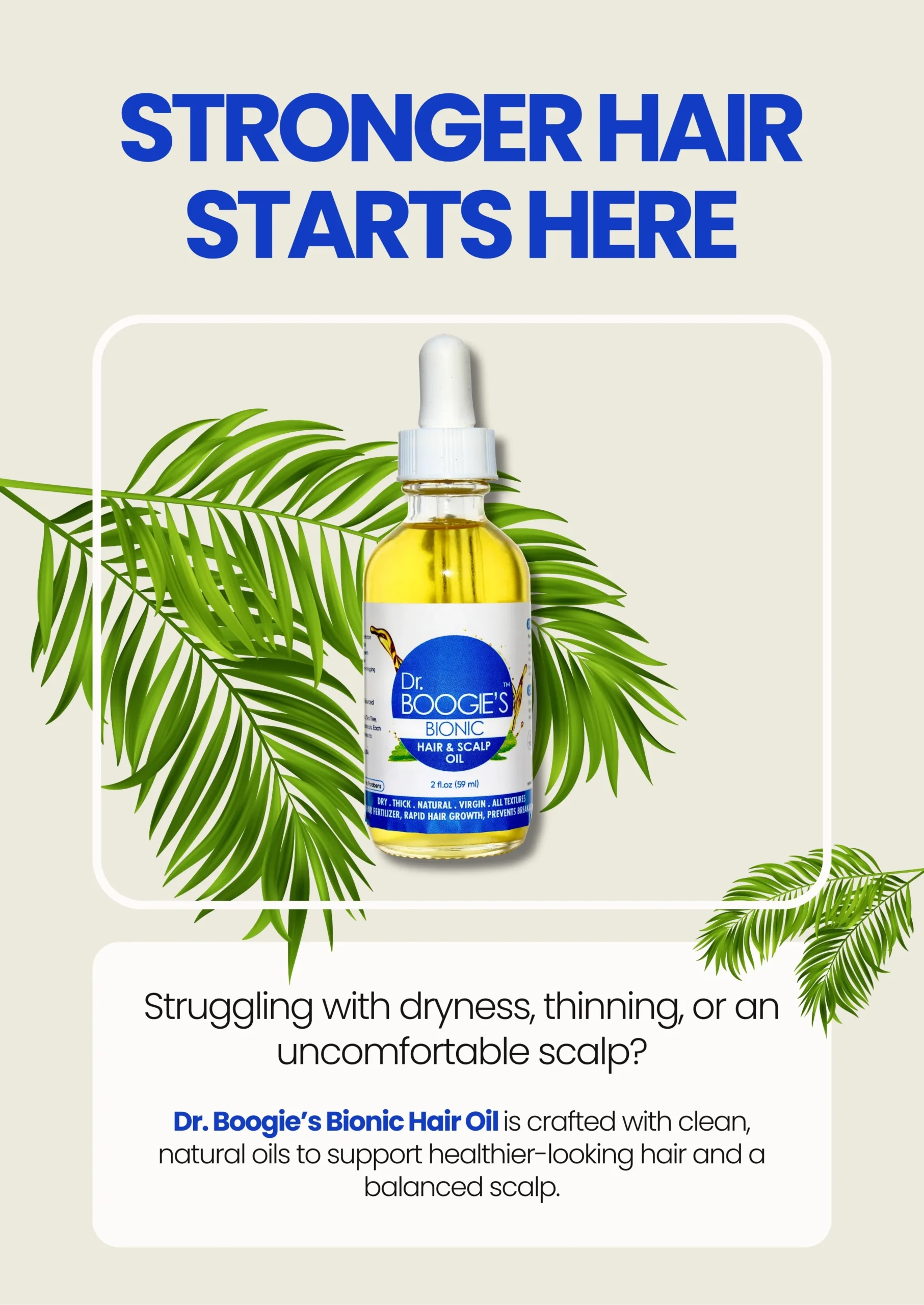
Premium Products Like Dr. Boogie Hair & Scalp Oil
Generic grocery-store oils may offer short-term relief, but professionally formulated
products like Dr. Boogie Hair & Scalp Oil deliver a real upgrade. This premium botanical
blend combines therapeutic oils in precise ratios to nourish the scalp and follicles
directly—without irritation or buildup. Unlike harsh home remedies that create sensation
without results, Dr. Boogie works quietly to support scalp health, strength, and
long-term hair vitality. One bottle lasts months, making it a smarter and more
cost-effective choice over time.
Conclusion
The viral trend of using Vicks VapoRub for hair growth represents a common pattern in the search for quick fixes: confusing sensation with action and temporary stimulation with genuine nourishment. While Vicks certainly creates noticeable tingling and warmth on your scalp, these sensations reflect nerve activation and mild irritation, not the follicle activity that produces hair growth.
The science is clear: Vicks was formulated for respiratory relief, contains ingredients that irritate rather than nourish scalp tissue, and has no evidence supporting its use for hair growth. The petroleum jelly base can clog follicles; the active ingredients provide temporary sensation without penetrating to the follicle depth; and repeated use may cause chronic inflammation that actually impairs hair growth over time.
Sustainable hair growth requires that Vicks deliver essential nutrients to follicles consistently, support a healthy scalp environment, and protect against inflammation rather than irritation. This is why replacing harsh home remedies with properly formulated scalp oils makes such a difference. Premium scalp oils deliver targeted nourishment, penetrate to reach follicles, and support the biological processes that actually produce healthy hair.
If you’ve been using Vicks in hopes of hair growth, consider this your opportunity to shift from a strategy based on sensation to one based on science. Invest in a quality scalp oil ritual, commit to consistent application over 2-3 months, and give your follicles what they actually need to thrive. The tingling might be less dramatic, but the results, stronger, healthier hair growing at its optimal natural rate, will be far more impressive than any temporary sensation could ever be.