If you have been a long-time smoker and have noticed your hair feels thinner, drier, or more fragile, you may wonder if smoking is the cause. Hair loss may seem like a minor issue compared to lung or heart issues, but your scalp is living tissue. It requires a constant flow of blood, oxygen, and nutrients, and smoking can impact this. According to the Cleveland Clinic, nicotine damages the lining of blood vessels and reduces their size, which impacts blood flow throughout the body.
The question is whether quitting smoking can help your hair bounce back or not. The answer is that quitting smoking can help, but it’s not a simple process because hair loss has many causes. In this guide, I will walk you through how smoking may impact your hair follicles, what happens after quitting, and how to care for your hair while your body heals.
The Impact of Smoking on Overall Body Health
Smoking doesn’t just affect the lungs. The chemicals from the smoke enter the bloodstream and spread throughout the body, including the scalp. This can increase inflammation and make it harder for the body to transport oxygen where it is needed. This is important for tissues that renew frequently.
Nicotine can cause blood vessels to thicken and become narrower, increasing the risk of clots. This indicates that smoking can be hard on the circulation system. When this happens, the body prioritizes maintaining healthy vital organs. Since hair is not essential for survival, it is often the first area where changes are noticed, such as dullness, dryness, or slow growth.
Smoking and Hair Health Connection
Hair growth occurs in cycles. A hair follicle spends time growing, resting, and shedding. When the body is exposed to chronic stressors like smoke toxins, that cycle can get disrupted. This can lead to increased shedding, thinner hair, or hair that breaks before it can grow long.
Some research indicates a connection between smoking and hair thinning due to androgens. A meta analysis found that men who have ever smoked had a higher risk of male pattern baldness than men who never smoked. This doesn’t mean that smoking is the sole cause, but it can make an already bad situation worse if your family genes are already leaning in that direction.
Changes in the Body After Quitting Smoking
When you quit smoking, your body begins to repair rapidly. One positive change for hair growth is improved circulation over time. Cleveland Clinic describes improved circulation in the months after quitting, as the body steps away from the constant irritation smoking causes to blood vessels.
There is also a longer healing time. A review on the cardiovascular effects of smoking and smoking cessation states that quitting can significantly decrease and sometimes reverse the negative effects on the blood vessels. This means that the blood flow to the scalp is more consistent, creating a healthy environment for hair follicles.
Hair Thinning and Smoking Related Shedding
Two patterns that cause hair changes are thinning and shedding. Thinning occurs when hair grows thinner over time, and this is often due to hormones and genetics. Smoking can accelerate this process. Shedding is often due to stress, illness, large life changes, and changes in nutrient availability.
Some people experience more shedding after quitting, but this is not because quitting is a bad thing. It is because the body is adjusting. Changes in sleep patterns, appetite, and stress can temporarily cause more hairs to shed. The good news is that this shedding is often reversible once your routine is back to normal and your body feels safe.
Hair Regrowth Expectations After Quitting Smoking
Seeing improvements in hair regrowth can take a long time because hair grows at a steady rate and because of the hair cycle. If blood flow issues from smoking are making your hair dry, brittle, or causing scalp irritation, you might see improvements in the hair after quitting smoking which would lead to less breakage and make it look better and thicker.
Even if your hair loss is of a genetic basis, quitting smoking may not reverse the process. In this sense, quitting smoking is like taking a weight off your body. While it may not allow follicles to grow back after they are lost, it can slow down the loss of hair and make other treatments work effectively.
Quitting Smoking as a Supportive Step for Hair Growth
The quitting smoking aspect is the most important part as it opens up the potential for other things like better hair growth due to less inflammation, better oxygen delivery, and more blood flow. Healthy hair also requires proper nutrients such as protein, iron, zinc, vitamin D, and a calm scalp.
You might notice that other good habits form after smoking cessation, such as drinking more water, increasing physical activity, and eating healthier. When someone has the sense of taking responsibility for their well-being, they also tend to have better hair, skin, and nails.
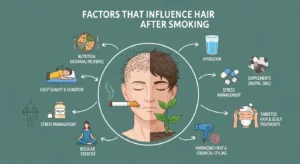
Factors That Influence Hair Recovery After Smoking
The rate at which your hair regrows after quitting smoking depends on your previous lifestyle, current health, and surroundings.
Here are the key factors that influence your hair recovery:
- Previous smoking habits: Frequent and prolonged smoking causes more damage to blood vessels, and thus, it takes longer to heal compared to occasional smoking.
- Blood vessel recovery: Hair regrowth is influenced by the rate at which blood vessels recover and expand to supply oxygen and nutrients to the scalp.
- Diet and nutrition: Smoking reduces Vitamin C and collagen. Without replenishing these nutrients and iron, hair growth remains slow.
- Genetics and age: Genetics and advanced age can slow down the rate at which you can regrow your hair, even if you lead a healthy lifestyle.
- Stress: Quitting smoking stress or high levels of cortisol can lead to telogen effluvium or shedding of your hair; slowing down the rate at which you grow new hair.
- Underlying health conditions: Unaddressed conditions such as thyroid disorders and anemia slow down hair growth even after quitting smoking.
- Environmental and climate factors: Climate does not alter your genetic makeup, but extreme weather conditions can affect your hair. Cold and dry air makes your hair brittle and prone to breakage, while hot and humid weather can cause sweat and oil buildup in your hair follicles, clogging them.
- Hydration: Dehydration caused by smoking can be reversed to make your hair more elastic and less likely to break.

Supporting Hair Health During Lifestyle Changes
After quitting smoking, maintain a regular hair care routine. Avoid overusing harsh shampoos, tight hairstyles, and excessive heating, which can reverse some of the body’s positive changes. The aim is to minimize hair stress until the scalp heals.
If you experience excessive shedding, concentrate on proper sleep, adequate protein, iron-rich foods, and stress management. If shedding persists for more than three to four months or if you spot balding areas, consult a dermatologist or healthcare provider to eliminate other underlying issues.
The Role of Hair Oils After Quitting Smoking Hair Care
Hair oils do not affect hormone or genetic factors but can be useful in other aspects. They soften the hair, reduce friction, and soothe dryness that causes hair to break and appear thinner.
Applying a few drops of hair oil to your scalp through a massage can be very comforting during the quitting process, especially when anxiety from cravings arises. Scalp massage helps you maintain regularity, and regularity is essential for healthy hair.
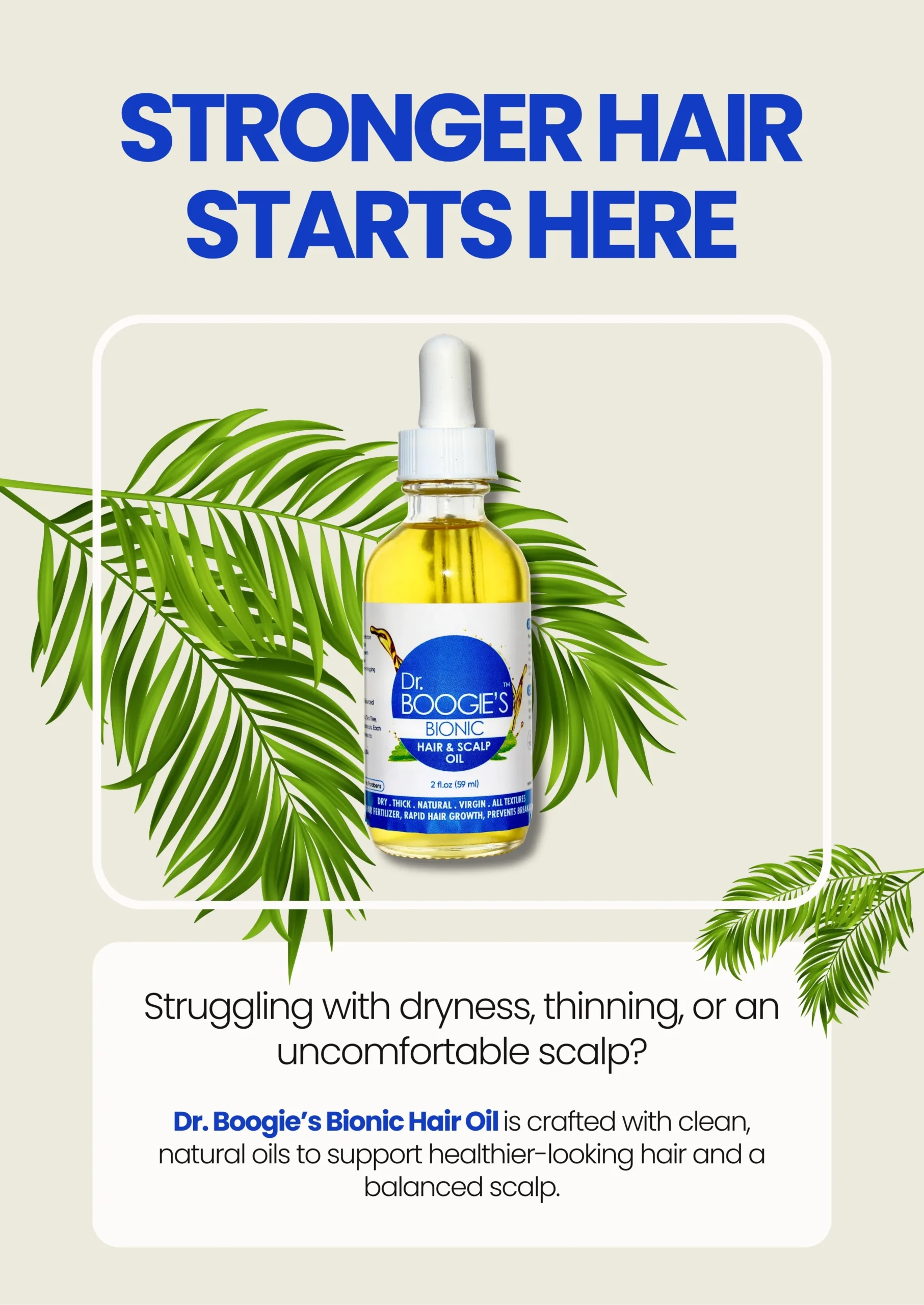
Support Stronger Hair During Recovery
Quitting smoking can help improve circulation over time, but your hair also benefits
from consistent external care. Dr. Boogie’s Bionic Hair and Scalp Oil is a botanical
blend developed over two decades to help restore moisture to dry, brittle strands and
calm irritated scalps. With Black Jamaican Castor Oil to support stronger roots, Jojoba
Oil to help maintain balance, and Tea Tree Oil to ease flakes and discomfort, this
lightweight formula helps improve softness, shine, and resilience without leaving a
greasy feel.
Conclusion
In summary, quitting smoking can improve your hair because it increases blood flow and reduces stress from smoking. It may not increase a lot more hair growth, but it can make your hair better and provide a better environment for your hair follicles.
To aid in the healing process, maintain a simple hair care routine that you can follow. Use low heat on your tools, be gentle with wet hair, and take good care of your scalp. For a simple tip, try Dr. Boogie Secrets and our Bionic Hair and Scalp Oil as a daily scalp massage to soften your hair, calm your scalp, and make your hair look better.