For generations, shea butter has been a significant support in traditional African societies, valued not only for its moisturizing power for the skin but also for the incredible benefits it can give hair.
Should shea butter be used for hair growth? The role of shea butter in hair growth is complicated. It is a potent natural remedy, but its effect has far less to do with biochemical stimulation (as with minoxidil) and more to do with delivering the ideal conditions for healthy, undisturbed growth.
Shea Butter isn’t a magician; it’s maintenance, the kind of maintenance that saves from breakage, locks in moisture, and makes sure that the new hair growing out of your scalp reaches its fullest possible length.
This article cuts through the noise and gets straight to the real, evidence-backed facts about what shea butter can do for your hair. We’ll examine its nutrient value. So, if what you want is healthier, stronger hair that doesn’t stop growing, just keep reading: the answer comes in the form of perseverance and learning to master this all-natural wonder.
Nutrients in Shea Butter That Support Hair Health
Shea tree nuts have the highest content of compounds that actively promote strong hair due to their powerful composition. Those are due to a particular fatty acid profile and non-saponifiable elements (i.e., compounds that don’t turn to soap when exposed to lye).
Moisture and Flexibility
The main constituents of shea butter include oleic acid (55-60 percent), stearic acid (20-50 percent), linoleic acid (3-11 percent), and palmitic acid (2-9 percent). Those lipids are the building blocks of its moisturizing power.
Oleic Acid:
Works to moisturize and condition the hair deeply. This is important to avoid the dryness and brittleness that can come with breakage, especially in very curly or chemically treated hair.
Stearic Acid:
Rests on the outside of the hair, acting as a barrier. It creates a shield to combat environmental factors such as humidity, heat, and wind while nourishing your hair. When hair holds moisture, it is soft and supple, not stiff or dry, and therefore less subject to breakage.
Vitamin A and E High (Protect & Repair)
Shea butter comes from the kernels of an African tree and is an oil that acts as a barrier to both hair and scalp, helping protect against environmental free-radical damage.
Vitamin A:
Necessary for cell growth, which includes hair cells. This is not something that will directly stimulate growth, but it ensures that any new hair that grows from your follicle is structurally sound.
Vitamin E:
An antioxidant charged with squashing free radicals. Pollution and UV radiation can induce oxidative stress, which damages hair follicle cells. Vitamin E contributes to protecting cells from oxidative stress, which in turn provides an optimal environment for follicles to function.
Shea Butter Plays an Indirect Role in Hair Growth
Shea butter does not magically make hair grow from the scalp. Several factors influence hair growth, including genetics, hormones, overall health, and scalp blood flow. No butter or oil you apply topically can cancel out those biological processes.
But shea butter is so essential for growth, though indirectly.
How Shea Butter Promotes Length Retention
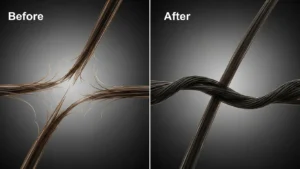
People who feel like their hair “isn’t growing” are actually experiencing breakage, for the most part. It grows at the slow rate of roughly half an inch per month, and then: dryness, friction and breakage occurs at just about that same speed.
Shea butter helps by:
- Reducing dryness and brittleness
- Restore elasticity so hair can stretch instead of breaking
- Temporarily sealing your split ends off to keep them from getting worse
- Preserving hair from heat, wind , and environmental damage
As breakage decreases, the hair will appear to grow longer over time, even though the rate of growth does not actually increase.
When Shea Butter Works Best
The best for shea butter:
- Chemically treated or color-treated hair
- Heat-damaged or environmentally stressed hair
- Strands that resist soaking up moisture
Tips for Using Shea Butter Effectively on Different Hair Types
Shea butter is versatile, but its heavy, rich texture means application methods must be tailored to different hair porosities and densities to avoid weighing the hair down. Always start with unrefined, raw shea butter for the highest nutrient content.
Coily hair is often highly porous and prone to dryness, making shea butter an ideal sealant.
1-For Coarse and Coily Hair (Type 4)
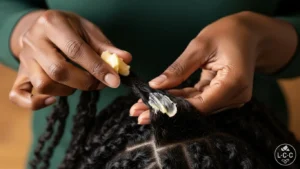
- Method: The LOC or LCO Method. Shea butter should be used as the “C” (Cream/Butter) or “O” (Oil) step after applying a water-based leave-in conditioner. This locks the water content into the hair strand’s highly textured surface.
- Application: Section hair and apply a generous pea-sized amount per section, focusing heavily on the ends, which are the oldest and driest parts of the hair. Use for twist-outs or braiding for maximum moisture retention.
2-For Curly and Wavy Hair (Type 2 & 3)
Curly and wavy hair types can be easily weighed down or look greasy if too much butter is applied.
- Method: Light Sealing or Pre-Poo Treatment. Use it sparingly as a final sealant, or use it before washing.
- Application: Light Sealing: Emulsify a dime-sized amount (rub it vigorously between your palms until it melts) and lightly smooth it over the hair surface to control frizz and seal the ends. Pre-Poo: Apply liberally to dry hair ends 30 minutes before shampooing to protect them from the stripping effects of the cleanser.
3-For Fine or Straight Hair (Type 1)
Due to its density, pure shea butter is often too heavy for fine or straight hair, leading to a greasy, flat appearance.
- Method: Scalp Treatment Only. Focus its benefits purely on the scalp and roots, or use it in an oil blend.
- Application: Melt a tiny amount (less than half a pea) and massage it into the scalp overnight to soothe dryness, washing it out thoroughly in the morning. Do not apply to the hair shaft. Alternatively, look for pre-blended products that include shea butter as an ingredient, not the sole base.
Common Mistakes When Using Shea Butter
Even with the best products, incorrect usage can reduce effectiveness. Avoid over-applying, applying on very dry hair without pre-misting, or skipping emulsification. Pairing with Dr. Boogie Hair Oil correctly ensures better absorption and prevents hair from looking greasy or weighed down.
2. Shea Butter for Scalp Health
Shea butter not only protects strands but also supports scalp wellness. It helps reduce dryness, flakiness, and itchiness, creating an optimal environment for follicles to thrive. Combined with Dr. Boogie Hair Oil, it maintains microbial balance and prevents scalp irritation that can hinder growth.
3. Tips for Preventing Hair Breakage
To retain maximum length, reduce breakage while using shea butter. Detangle gently, use protective hairstyles, and avoid heat styling immediately after application. Layering with Dr. Boogie Hair Oil locks in moisture while strengthening strands, making hair more resilient over time.
Conclusion
Shea butter is not a miracle growth ingredient, but it is one of the most effective natural tools for protecting hair and helping it reach its full growth potential. By strengthening strands, sealing moisture, calming the scalp, and preventing breakage, shea butter creates the ideal conditions for length retention.
Proper hair growth is a long-term process influenced by internal health, scalp care, and consistent routines. When shea butter is used correctly and paired with other nourishing hair care practices, it becomes part of a powerful, realistic strategy for healthier, longer hair. The key is understanding what shea butter does best: protecting, nourishing, and preserving the hair you already have. When breakage stops, growth finally shows.