For generations, people have associated sunshine with good health, energy, and life. But for hair, the advice can seem different. Sun exposure can damage your strands, but sunshine makes you feel good. So, does sunlight really promote hair growth, or is that just a myth?
Sunlight doesn’t just magically send up hair sprouts; it stimulates an essential process in your body: vitamin D production. Vitamin D in hair is more of a powerful hormone that is essential for beginning and maintaining the hair growth cycle.
In this ultimate guide, we’ll get in-depth into the science of the sun-hair relationship, examine why Vitamin D is an essential factor, and offer practical advice on how to properly leverage the sun’s benefits for a thicker head of hair.
Does Sunlight Really Help With Hair Growth?
Sunlight is the primary natural source of Vitamin D for most human beings. The process is a fascinating piece of biochemical engineering:
When UVB radiation from the sun penetrates the skin, it interacts with a molecule called 7-dehydrocholesterol (7-DHC), which is stored in the epidermis. This interaction converts 7-DHC into pre-vitamin D, which is then quickly converted into cholecalciferol (Vitamin D).
Vitamin D then travels through the bloodstream to the liver and kidneys, where it is further processed into its active hormonal form, calcitriol, which the body uses.
Calcitriol is essential for calcium absorption, immune function, and, crucially for our discussion of cellular differentiation and regulation, for hair follicle function.
How Vitamin D Supports Stronger, Healthier Hair
Think of Vitamin D not just as a vitamin, but as the signaling hormone that tells your hair follicles to get to work. Its primary role in hair health is within the hair growth cycle.
- Anagen Phase (Growth)
This is the growing phase of hair, during which new hair continually grows. It can last for many years, and vitamin D is involved in inducing and maintaining this growth activity.
- Catagen Phase (Transition)
This is a brief 2–3 week stage in which the growth of hair ceases, and the follicle starts to revert. It primes the hair to transition from actively growing to the resting phase.
- Telogen Phase (Rest/Shedding)
It is the resting phase in which the hair follicle lies dormant, and there is no growth. The old hair falls out after a few weeks or months, allowing a new hair to replace it.
As with other body tissues, hair follicles are rich in vitamin D Receptors (VDRs)9. Studies have demonstrated that these receptors are most abundant in both keratinocytes and dermal papilla cells, which form the hair follicle engine.
When the biologically active form of Vitamin D (calcitriol) binds to these VDRs, it activates genes that control the hair cycle. More particularly, Vitamin D is thought to be important in initiating anagen, waking up resting hair follicles, and prompting rapid growth. With inadequate Vitamin D stimulation of the receptors, follicles can enter a resting phase (telogen) too early, where they become thin and shed.
The Consequences of Vitamin D Deficiency on Hair
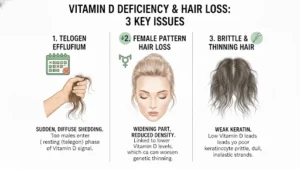
As Vitamin D is an essential hormonal signal, deficiency can visibly and disappointingly affect the health of your hair. Even though severe deficiency is associated with conditions such as Rickets, mild to moderate deficiency is routinely directly related to common hair issues:
Telogen Effluvium: It is a transient disorder characterized by diffuse hair loss. It’s one of the most prevalent types of hair loss associated with a Vitamin D deficiency because not receiving enough of the vitamin’s signal can cause too many follicles to enter the resting (telogen) phase at once.
Female Pattern Hair Loss (Androgenetic Alopecia): Research has shown that women with female pattern hair loss have lower serum Vitamin D levels than those with healthy hair. This indicates that being low in Vitamin D can either lead to the disease or make it worse
General brittleness and thinning: A lack of Vitamin D leads to reduced keratinocyte production, making the strands brittle, inelastic, and generally dull-looking.
If you are suffering from significant hair thinning, shedding more than seems normal, or simply struggling to maintain your preferred hair density, a simple blood test may reveal that a correctable Vitamin D deficiency is a key contributing factor.
Sunlight vs. Scalp Damage: Finding the Right Balance
Using sunlight to produce Vitamin D also requires balance. The ideal amount of sun exposure is very individual and depends on several factors:
- Latitude and Season:
UVB radiation is highest (closest to the equator) and during the summer months. In the north, UBB can be too low to have a significant effect on Vitamin D formation during the winter months.
- Time of Day:
UVB strength depends on the angle of the sun. As a rule, the ideal time for Vitamin D production is when the UV Index is above 3, usually from around 10:00 AM to 3:00 PM (solar noon).
- Complexion:
Melanin (Which Causes dark tones) is a natural sun blocker. Those with darker skin need much more time in the sun to produce the same amount of Vitamin D as those with lighter skin.
- Surface Area of Skin Exposed:
The more skin available, the better for creating a market.
Sun Damage to Hair and Scalp
UV rays act directly on the hair shaft and degrade keratin, similar to damage discussed when exploring whether straightening hair affects growth. This results in:
- Fading and Dryness: Especially on colored or chemically treated hair.
- More Breaking: Undermining the integrity of the fiber.
- Scalp Sunburn: A sunburned scalp can lead to inflammation that irritates the hair follicles, perhaps pushing them into telogen, the resting phase of hair growth.
Safely Maximizing Benefits
To increase their synthesis without harmful side effects, consider brief, targeted exposure to just enough bare skin (arms, legs, and back) while minimizing your hair and scalp during those moments. Spray on a UV protection mist, especially formulated for hair, or, better yet, cover up with a wide-brimmed hat or a light scarf if you’ll be outside for an extended period.
Why Your Hair Still Needs Topical Nutrition
During winter, or for individuals concerned about UV exposure, relying solely on sunlight for optimal Vitamin D is impractical. Fortunately, there are reliable alternatives:
- Dietary Sources: Few foods naturally contain therapeutic levels of Vitamin D. Fatty fish (salmon, tuna, mackerel) and fortified foods (milk, cereal, orange juice) can contribute but often fail to provide sufficient amounts.
- High-Quality Supplements: This is the most consistent and controllable way to ensure adequate intake, especially during non-peak seasons. Vitamin D (cholecalciferol) supplements are the bioidentical form your body makes from the sun and are highly recommended if blood tests show deficiency.
- UV Lamps: Though effective, these should only be used under medical guidance due to cost, inconsistent results, and potential risks.
Always consult your healthcare provider before beginning supplementation. A simple 25-hydroxyvitamin D blood test will determine your current level and guide appropriate dosing.
When to See a Professional If Hair Loss Continues
While sunlight and supplements can address basic Vitamin D-related thinning, not all hair loss is solved with a simple lifestyle change. Knowing when to see a professional is key to promptly treating underlying conditions.
Seek a consultation with a dermatologist or trichologist if:
- Shedding is Sudden and Severe: If you lose a large amount of hair rapidly, regardless of your Vitamin D status, it may signal an underlying autoimmune issue, hormonal disorder (like thyroid dysfunction), or severe stress (acute Telogen Effluvium).
- Thinning is Persistent or Localized: If your hair loss follows a distinct pattern (receding hairline, crown thinning) or does not improve after 3–6 months of appropriate supplementation.
- You Have Scalp Symptoms: Pain, burning, flaking, or inflammation may indicate a scalp infection (fungal), dermatological disease (like alopecia areata or scarring alopecia), or severe inflammation requiring prescription treatment.
Conclusion
Sunlight actually affects hair growth primarily by boosting vitamin D production, which promotes active, flourishing hair follicles. When you have enough vitamin D (thanks to sun, supplementation, or a combination of the two), it can help regulate the hair cycle and boost growth without excessive shedding, and it also makes strands stronger from the roots.
But light can also be squandered. An even amount of exposure is significant; extreme exposure, not so much , for your hair or scalp. Combine natural sunlight with topical care, such as Dr. Boogie’s Hair Growth Oil, to create a well-rounded environment that promotes stronger, more resilient hair growth.
For general hair thinning due to diet, stress, or seasonal changes, focusing on safe sun exposure, supplementation, and healthy habits like whether drinking water supports hair growth. is a significant first step. However, a professional diagnosis is essential for long-term health and management of hair loss.