If you straighten your hair frequently and it never seems to grow longer, it makes sense to wonder whether the flat iron is preventing your hair from growing. You see smooth hair, then you see split ends, then you see little pieces of broken hair around your shoulders and it starts to feel like your hair is stuck at the same length forever. Most of the time, what happens is not that your scalp stopped growing hair. It is that the hair that you already grew is getting weaker and breaking before you can enjoy the length.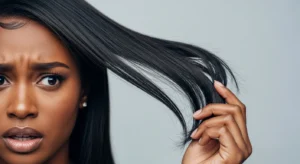
According to the American Academy of Dermatology Association, excessive heat can damage hair and recommends limiting hot tools and using low or medium heat with a heat protectant. In this guide, we explain what straightening really does to hair, why it can create the illusion of slower growth, and how to keep your sleek style without sacrificing length.
Understanding Hair Growth and Why Heat Tools Get Blamed
Hair growth occurs beneath the skin. A strand starts within a follicle, grows upward, and you only see it when it emerges out of the scalp. That is why hair can be growing normally even when your overall length appears to be stuck. Healthy hair grows about 1/2 inch in a month. Heat tools get blamed because they affect the visible part: the hair length. When the ends break off, the tape measure does not move. The real question is: are you losing growth at the root, or losing length from damage on the strand? This distinction is vital, especially if you’ve wondered does hair fall mean new hair growth or just breakage.
What Heat Actually Does to the Hair Shaft
A hair strand has layers; the outside layer consists of overlapping shingles designed to protect the core. When you straighten, high heat and pressure force the strand into a flatter shape. Repeated heat can rough up that outer layer, causing it to lose flexibility. A critical rule often missed is that flat irons must be used on dry hair only. To help repair the lipid barrier, many stylists recommend treatments like avocado for hair growth to restore the shaft’s natural oils.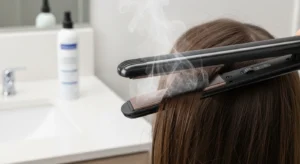
Frequent Straightening and Its Impact on Hair Strength
Damage from heat is cumulative. One session may not make much of a difference, but repeated sessions add up. Here is how your straightening habits translate into real-world results:
| Habit | Impact Over Time | Better Move |
|---|---|---|
| High heat for speed | Dries out the strand and weakens the cuticle. | Use low or medium heat and be patient. |
| Many passes on one spot | Repeated wear causing short broken bits. | Do fewer passes; use smaller sections. |
| Ironing damp hair | Internal structural snapping and crunchiness. | Only use flat iron on 100% dry hair. |
Managing New Hair Growth After Regular Straightening
New growth is healthier but more susceptible since it hasn’t been “weathered” yet. To manage this growth, boost your internal nutrient supply with elderberry for hair growth, and ensure your external routine includes heat protectant every time and smooth, moving strokes with the iron.
Scenarios Where Straightening Leads to the Illusion of Slower Growth
- Your ends are splitting and snapping, so every inch you grow gets lost.
- Straightening the top layer more than the bottom creates “thin spots.”
- Daily re-straightening pieces during the week adds extra stress.
- Brushing more when hair is straight adds friction and wear.
Growth Happens at the Scalp, Damage Happens on the Length
Growth comes from the follicle. Straightening rarely “stops growth,” but it can stop length. If you notice widening part lines or sudden heavy shedding, it is worth seeing a dermatologist. For those using protective styles, it is also important to understand if dreadlocks cause hair loss through similar mechanical tension.
Why Heat Styled Hair Needs Recovery Focused Scalp Care
Recovery starts with the scalp because that is where new hair is formed. A calm, balanced scalp supports healthier new growth. To keep the scalp stimulated and resilient, applying ginger for hair growth treatments alongside your heat routine can ensure new strands emerge stronger.
The Celebrity Styling Routine That Protects Hair Despite Heat
Celebrities use systems that limit damage. They prep hair so the iron does less work, use heat protectants, and keep the heat lower than people think. Instead of daily touch-ups, they preserve styles with a silk wrap. To keep the scalp refreshed between styles, many use apple cider vinegar for hair growth to remove buildup from heat styling products.
Support Hair After Heat Styling
A few drops of Dr. Boogie’s Bionic Hair and Scalp Oil can help restore moisture and improve shine after frequent heat styling. Its lightweight botanical blend helps keep hair manageable and comfortable between sessions.
Restore Shine & Moisture
Recover from heat stress with the professional-grade botanical blend used by the stars.
Conclusion
Straightening your hair does not stop it from growing at the scalp, but it can weaken the shaft and lead to breakage. The good news is you can retain the sleek look and still retain the length by reducing heat stress and building a daily scalp ritual. Massage Dr. Boogie’s Bionic Hair and Scalp Oil into your roots to promote a calmer scalp and stronger hair strands that stay glossy, soft, and full over time.