Dreadlocks are a profound commitment to hair health, yet many enthusiasts fear that the weight of the style causes premature thinning. Understanding the biological hair growth cycle is key to peace of mind. According to the American Academy of Dermatology, it is physiologically normal to shed between 50 and 100 strands per day. In loose hair, these fall away; in locs, they remain woven into the matrix, making your first ‘wash day’ after a retwist appear more alarming than it actually is.
Locs can make normal shedding look bigger because shed hairs tend to remain trapped within the locks. When you finally wash or separate sections, those hairs release together and it may look like sudden hair fall. In this blog, you will find out that the real risk is usually not actually the loc. The danger is repeated tension, additional weight, as well as a scalp that is always irritated. Many people often ask dreadlocks cause hair loss, but the answer lies in the maintenance, not the style itself.
Do Dreadlocks Naturally Lead to Hair Loss?
Dreadlocks do not naturally lead to hair loss. Hair can lock and still grow well when the scalp is healthy and the roots are not under constant pulling. Many people keep locs for years with strong length and good density. What matters most is how your scalp feels. If your roots feel tight, sore, or constantly itchy, your follicles are being asked to work under stress.
When hair loss happens with locs, it is usually linked to how the style is installed and maintained. Tight roots, aggressive retwists, heavy extensions, harsh handling, and untreated scalp conditions can stress follicles and create thinning. So instead of asking, do locs cause hair loss, ask, are my locs creating too much stress at the root.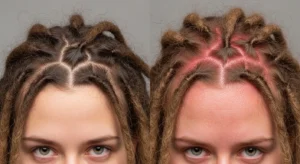
Common Myths About Dreadlocks and Hair Thinning
A lot of fear comes from mixing up normal shedding, breakage, and true hair loss at the root. Once you understand the difference, it becomes much easier to protect your hairline and keep your locs healthy.
- Myth 1: Dreadlocks always make hair thinner
Many people assume locs automatically reduce density, but locs do not “thin” hair on their own. What usually causes thinning is long term tension, poor scalp health, or rough maintenance. - Myth 2: Big hair fall on wash day means the locs are falling out
Because locs encapsulate hair, the daily shedding is physically trapped. When you clarify your scalp, months of accumulated shed hair are released at once. However, if you see “widening parts,” you might be facing tension issues. It is important to know does hair fall mean new hair growth or if it is a sign of stress. - Myth 3: Pain after a retwist is normal
Pain is not a “normal” part of loc care: it is a warning sign. If your scalp feels sore, tight, or you get bumps after maintenance, the roots are being pulled too hard.
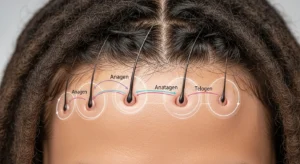
Signs Your Locs May Be Too Tight
Your scalp usually warns you before real damage sets in. If you notice these signs, it is time to loosen the routine:
- Tender scalp, throbbing, or headaches after maintenance
- Bumps, redness, or burning along part lines
- Thinning at temples, edges, or hairline
- Short broken hairs around the base of locs
- Parts that keep widening over time
Dr. Boogies Hollywood Secret
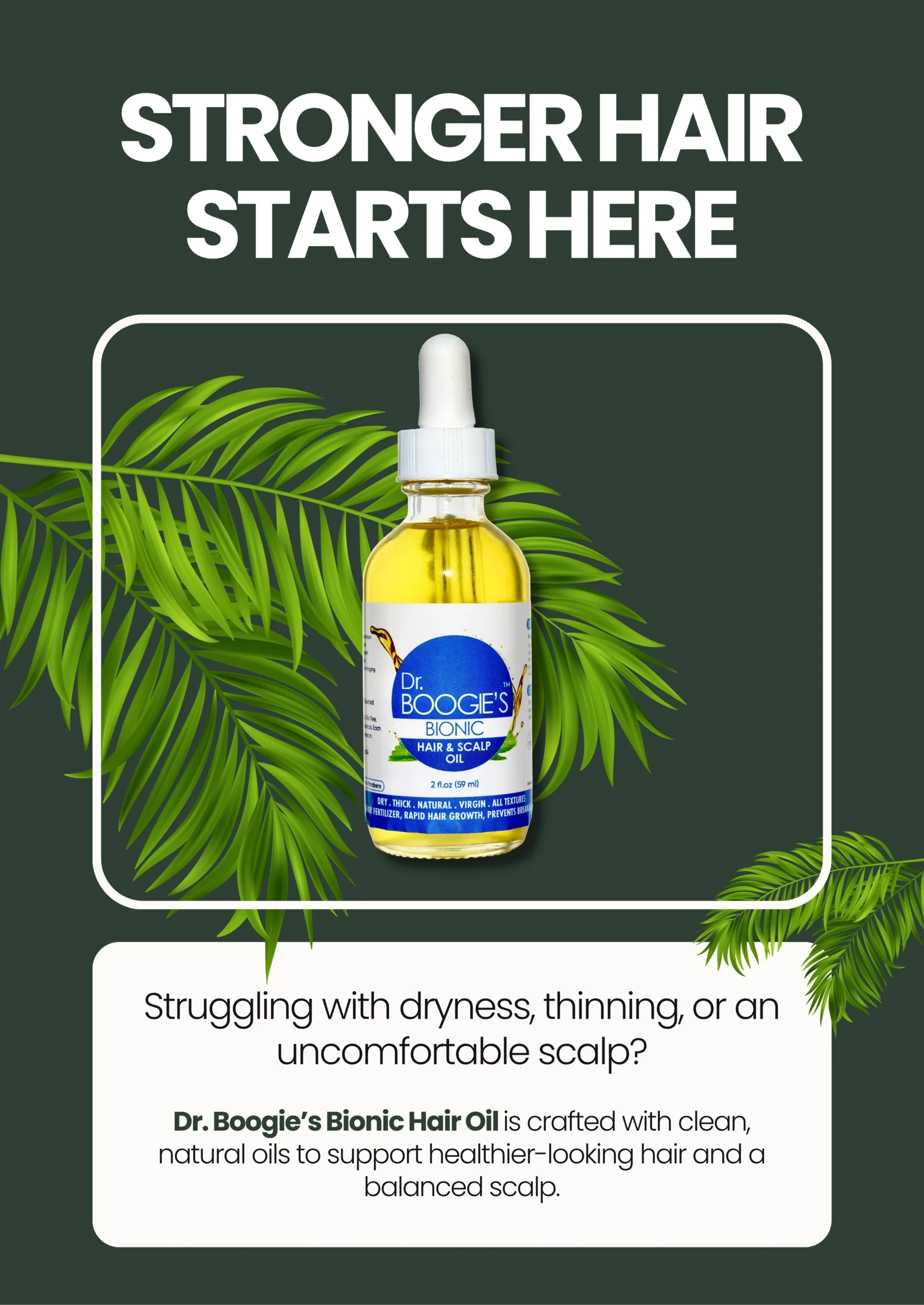
Most generic oils are too heavy, clogging your follicles and leaving behind stubborn white buildup. Dr. Boogie’s Bionic Hair & Scalp Oil is different. It provides instant relief from the tightness of a fresh retwist while feeding your roots with Black Jamaican Castor Oil. It absorbs deep into the scalp to stop inflammation without leaving a greasy residue.
How to Maintain Healthy Dreadlocks
Healthy locs are built with patience, not pressure. Use these habits as a simple maintenance plan:
- Keep installs and retwists gentle.
- Retwist less often if your scalp is sensitive.
- Avoid heavy add-ons and heavy accessories.
- Cleanse your scalp and rinse well.
- Protect locs at night with satin or silk.
- Be careful during separation and take down.
Soothe Your Scalp Now
Stop the frustration and give your locs the professional-grade recovery they need to stay thick, healthy, and pain-free.
Conclusion
Dreadlocks cannot automatically cause hair loss. Most of the problems can be attributed to chronic tension, heavy hairstyles, aggressive maintenance, or a dry and inflamed scalp. If you have locs that feel comfortable, are stable, and your hairline is not thinning or receding, then you can wear locs in the long run while allowing your hair to grow steadily over time. Dr. Boogie Secrets Bionic Hair and Scalp Oil is meant to soothe, strengthen, and support the balance of the scalp for any texture, including locs.